{"success":true,"result":"Tech Product Animations: A Visual Marketing Guide | XO3D
\"XO3D\"
Product Animation

Tech Product Animations: A Visual Marketing Guide

\"XO3D

Tech product animations exist to solve one specific problem: showing how something works when a static image only shows what it looks like. For technically complex products, that distinction is the entire value of the format.

\n

Tech product animations have become a standard part of how considered tech purchases get marketed, precisely because they close the comprehension gap a photograph leaves open.

\n

Why Choose Tech Product Animations?

\n

Detailed Product Visualisation

\n

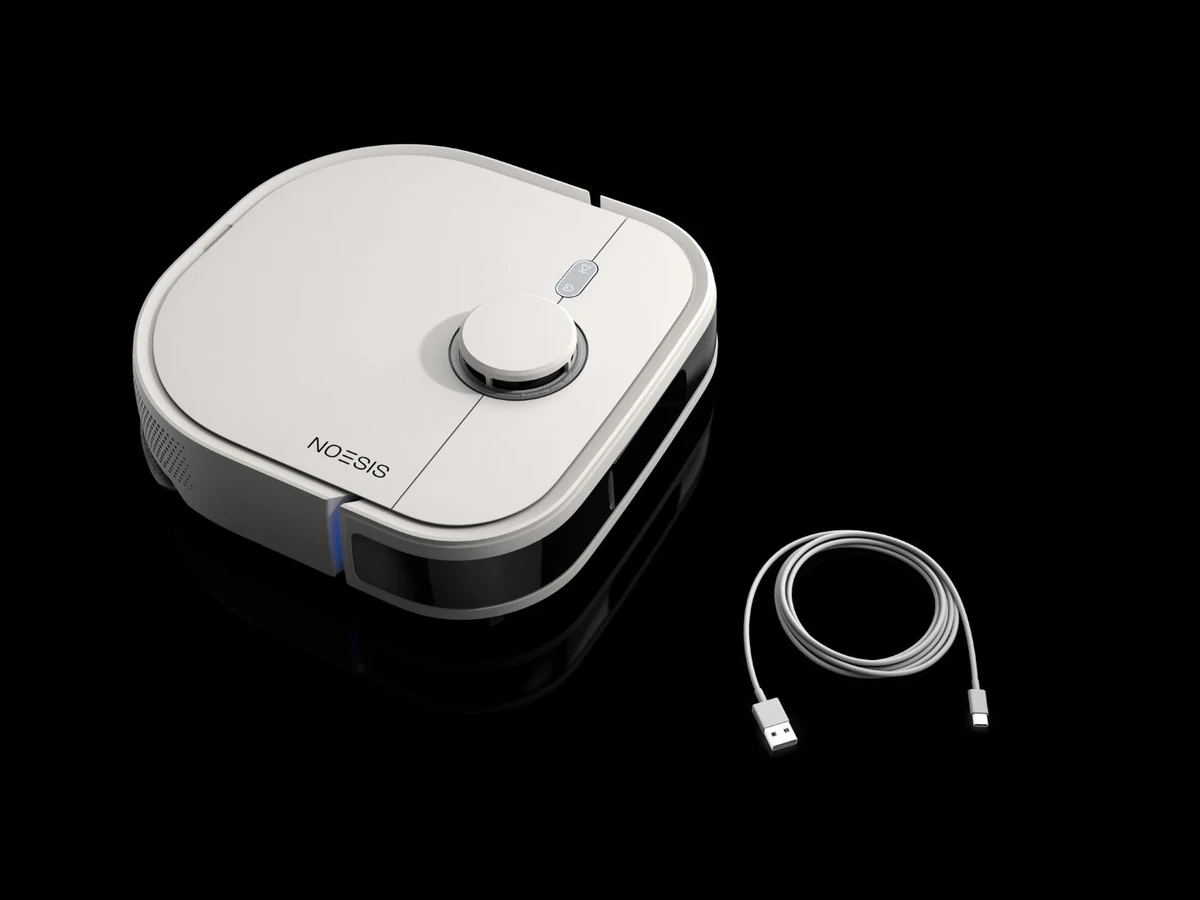
Tech product animations allow for an in-depth, accurate representation of a product’s specific features and mechanics. Detailed 3D models can highlight what sets a product apart in a way that gives a potential customer something close to a virtual hands-on understanding of how it works.

\n

That accuracy depends on a handful of pacing techniques that determine whether a viewer can actually follow what they’re being shown. An exploded view, where a product’s components separate and hang in space before reassembling, is one of the most effective ways to communicate internal structure, because it shows how parts relate to each other without requiring the viewer to imagine it. A reveal sequence, where an outer casing fades, slides away or becomes transparent to expose what’s underneath, works well for products where the internal mechanism is the actual selling point rather than the housing around it. A cutaway shot, a clean cross-section through the product, suits mechanisms where the interior geometry itself needs to be legible, airflow paths, internal chambers, layered materials, in a way an exploded view can’t always show.

\n

Choosing between them is a question of what the viewer actually needs to understand. An exploded view answers “how does this go together.” A reveal sequence answers “what’s inside this.” A cutaway answers “how does this actually function.” Using the wrong one for the message, an exploded view when the real question is about internal function, is a common source of an animation that looks impressive but doesn’t actually clarify anything.

\n

Timing matters as much as the choice of technique. An exploded view that separates every component simultaneously asks a viewer to parse a dozen relationships at once, and most won’t manage it before the animation moves on. Staggering the separation, largest or outermost components first, then progressively smaller internal parts, gives the eye a sequence to follow rather than a single complex moment to decode. The same logic applies to reassembly: parts should return in a way that visibly confirms how they connect, not simply reverse the separation at the same speed. A brief pause at full separation, holding the exploded state long enough for a viewer to actually register the layout before it reassembles, is a small adjustment that measurably improves how much of the structure people retain afterwards.

\n

Enhanced Engagement and Interactivity

\n

In a marketing landscape dominated by interactive formats, tech product animations hold attention by engaging more of the senses than a static image can. Combined with AR and VR, they can put a customer inside an environment built specifically to deepen their connection with the product.

\n

\n

How Sound Design Pairs With the Visual

\n

Sound is easy to treat as an afterthought on a tech animation, added once the visuals are locked, but it does specific work the visuals alone can’t. A mechanical click timed precisely to a button press or a latch closing gives a viewer physical confirmation of an interaction that’s otherwise silent on screen. A low ambient hum under a powered-on sequence signals that a product is active without needing an on-screen indicator to say so. Subtle whooshes timed to camera movement or a part sliding into place reinforce the sense of physical weight and material quality that visuals alone can only imply.

\n

The pairing has to be precise rather than decorative. Sound that’s slightly out of sync with the motion it’s meant to accompany reads as wrong even to a viewer who couldn’t say exactly why, in the same way a badly dubbed film feels off before you consciously notice the lip-sync gap. Getting that timing right during the edit, rather than laying a generic sound bed under the finished animation, is what makes the sound design feel like part of the product rather than music added on top of it.

\n

Simplifying Complex Concepts

\n

Technical products often carry concepts that are difficult to explain through text alone. Animation translates abstract mechanics into visuals a viewer can follow intuitively, and there’s substantial evidence that animated explanation improves both understanding and retention of complex information.

\n

Boosting Engagement

\n

Visual content reliably increases viewer engagement, and tech product animations are no exception. Their dynamic, interactive nature increases dwell time, lowers bounce rates, and encourages a viewer to take the next step rather than move on.

\n

Brand Differentiation

\n

In a competitive market, tech product animations are a way to stand apart. They demonstrate a commitment to craft and clarity in how a product gets explained, which is itself a signal about the brand behind the product.

\n

The Benefits of Tech Product Animations

\n

Key Benefits of Tech Product Animations

\n
    \n
  • Improve customer understanding
  • \n
  • Increase engagement
  • \n
  • Strengthen brand differentiation
  • \n
  • Maximise reach across channels
  • \n
  • Support consistent branding
  • \n
  • Improve customer satisfaction
  • \n
\n

Boosting Customer Understanding

\n

Tech product animations break complex product features and functionality into digestible visual content, closing the gap between technical detail and what a typical customer can actually follow. Combining narrative with dynamic visuals is what makes that translation work.

\n

Increasing Engagement

\n

Animation is inherently more engaging than static imagery: it attracts attention and holds curiosity in a way a fixed image structurally can’t. Tech product animations extend that further by turning a technical explanation into an immersive, interactive experience.

\n

Improving Understanding at the Point of Decision

\n

A well-executed tech product animation gives a prospective customer confidence in how a product works before they buy, which is exactly the kind of clarity a purchase decision depends on. Animation also extends across a full marketing funnel, useful at initial awareness and just as useful at the final decision stage.

\n

Maximising Reach

\n

Digital animation is inherently shareable. That makes it an effective way to extend a product’s reach across a website, social platforms, email campaigns and trade shows, all from the same underlying asset.

\n

Creating Distinctiveness

\n

In saturated markets, tech product animations offer a way to differentiate a brand and leave a lasting impression, built on how clearly and how well a product’s function gets communicated.

\n

Promoting Consistent Branding

\n

Animation supports a uniform brand image and message across every platform it appears on, which matters for the kind of brand recognition that compounds over repeated exposure.

\n

Supporting Customer Satisfaction

\n

Better understanding and engagement at the marketing stage tend to produce more satisfied customers post-purchase, because expectations set by the animation match what the product actually delivers.

\n

\"Tech

\n

Creating Compelling Tech Product Animations

\n

1. Understanding Your Audience

\n

The first step in building an effective tech product animation is understanding who it’s actually for. Are they technically fluent, or new to the category? What do they need to know to decide? Clear answers here shape everything that follows.

\n

\n

2. The Role of a Specialist Studio

\n

A 3D visualisation studio brings expertise most in-house teams don’t have on hand: how to showcase a product’s strengths, how to use lighting to reveal mechanics clearly, and how to balance realism against clarity of communication.

\n

Expert Knowledge and Skills

\n

3D visualisation is a technical discipline requiring design fluency, software expertise, and close attention to detail. The team at XO3D works in advanced rendering software to accurately represent a product in 3D and build animation that highlights the features that actually matter to a viewer.

\n

Efficient Workflow

\n

Building a tech product animation involves conceptualisation, modelling, texturing, lighting, animating, rendering and post-production, a complex pipeline to manage well. A specialist studio runs this process routinely, which is part of what makes the difference between an animation that looks considered and one that looks rushed.

\n

A Customised Approach

\n

Every product and brand needs its own considered approach. Working closely with a studio on product, brand, audience and marketing goals is what produces a tech product animation that actually resonates, rather than a generic template with a new product dropped in.

\n

Staying Current

\n

3D visualisation and animation continue to evolve technically. A studio that stays current with technique and tooling brings that currency into the work, keeping animations feeling considered rather than dated.

\n

An Ongoing Creative Relationship

\n

A relationship with a specialist studio can extend well beyond a single project. As a product range evolves, the same creative partner can carry brand and material knowledge forward into every new animation, rather than starting from zero each time.

\n

Start a conversation to talk through what a tech product animation could do for an upcoming launch.

\n

3. Creating a Story

\n

Good tech product animations don’t just show a product, they tell its story. Whether that’s how it’s assembled or how it fits into daily use, narrative is what makes an animation engaging rather than just informative.

\n

4. Optimising for Different Platforms

\n

Animation built for a website doesn’t automatically work on a smartphone or a social feed. With mobile usage as high as it is, animations need to be built, or adapted, with each destination platform’s constraints in mind from the start.

\n

Common Mistakes That Undermine a Tech Animation’s Clarity

\n

The technical execution of a tech product animation can be strong and the piece can still fail to communicate, usually because of one of a few recurring mistakes.

\n

Too much motion happening at once. When the camera moves, the product rotates, components separate and a background element animates all in the same few seconds, a viewer’s attention has nowhere to settle. The eye can only track one primary motion at a time. Sequencing movements, letting one resolve before the next begins, does more to aid comprehension than any amount of added visual complexity.

\n

Unclear visual hierarchy. If every surface has the same level of detail, the same lighting emphasis and the same colour saturation, nothing in the frame tells the viewer where to look first. The features that matter most to the message need to be visually foregrounded, through focus, lighting or motion, while secondary detail recedes. An animation that renders every component with equal weight is technically accomplished and communicatively flat.

\n

Pacing mismatched to the platform. A slow, atmospheric build that works well on a website hero section will lose most of its audience in the first two seconds of a social feed, where a viewer decides whether to keep watching almost instantly. Conversely, a fast-cut animation edited for social attention spans can feel rushed and hard to follow when it’s the centrepiece of a considered product page. Building distinct edits for distinct platforms, rather than trimming one master edit down, is what keeps pacing appropriate to where the animation actually appears.

\n

No clear point of focus in a busy frame. A tech product with several moving parts can tempt an animator into showing all of them working simultaneously, on the logic that it demonstrates more capability. In practice, a viewer presented with several independent motions in one frame tends to track none of them properly. Isolating one mechanism at a time, even briefly cutting away from the rest of the product to focus on a single moving part, communicates more than a single wide shot trying to hold everything at once.

\n

Inconsistent lighting between shots. When lighting direction, colour temperature or intensity shifts noticeably between cuts, a viewer’s brain registers the discontinuity even without consciously identifying the cause, and it reads as a rougher, less considered piece of work. Keeping a consistent lighting setup across a sequence, adjusting only where the story calls for a change in mood or setting, keeps the animation feeling like one coherent piece rather than a series of separately rendered clips stitched together.

\n

Conclusion

\n

Customer engagement now depends on more than static images and text. Tech product animations answer that shift directly: they improve understanding, deepen engagement, and communicate function in a way static marketing structurally can’t.

\n

The most effective ones aren’t the ones with the most polish for its own sake. They’re the ones built around a specific product’s actual mechanics, with a story that makes those mechanics matter to the viewer.

\n
\"Thomas

Written by

Thomas Howcroft

Founder | Director

Engineering-led realism · Campaign-ready visuals · Senior client partner

FAQ

Common questions, answered.

Why do tech product animations matter for marketing?

They reveal internal mechanics, movement and function that a static image can't show, and they let a viewer understand a complex product faster than a written description would.

How do animations change viewer engagement?

Motion and interactivity hold attention longer than static imagery, and exploded or reveal-style animation makes technical detail genuinely easier to follow.

What should a 3D visualisation partner bring to a tech animation project?

Category-relevant expertise, a defined creative process with clear ownership of the outcome, and a portfolio that demonstrates handling similarly complex mechanics accurately.

Start the conversation

Got a product worth showing? Let’s talk about what it needs to do.

We reply to every brief personally, usually within one working day.

","meta":{"status":200,"title":"Tech Product Animations: A Visual Marketing Guide | XO3D"}}