Contact us: [email protected] | Phone: +442034883437

Product Launch

Creating successful product launches that drives sales.

Thomas-Howcroft-XO3D founder
Thomas Howcroft

Founder of XO3D | Product Rendering Expert
BA Honours Design & Marketing

WHAT IS A PRODUCT LAUNCH?

Definition.

A product launch is the process of introducing a new product into the market. It involves a strategic, coordinated effort that aims to make the market and potential customers aware of the new product, highlight its features and benefits, and encourage them to make a purchase. A successful product launch can significantly impact a company’s trajectory, helping to build momentum, capture market share, and establish brand credibility.

Do you have a project in mind?

MEMORABLE PRODUCT LAUNCHES

Noteworthy.

Several product launches have become famous for their success, innovation, and the buzz they generated. Here are a few notable examples:

Each of these launches was successful due to a combination of innovative product design, clever marketing strategies, and often, an alignment with broader technological or cultural shifts. These companies managed to not only introduce a new product but also create substantial market demand and shift consumer habits.

HOW TO PLAN A PRODUCT LAUNCH

Planning.

A product launch plan is a detailed blueprint outlining the strategies, actions, and timelines for introducing a new product to the market. This plan is essential for coordinating various activities across departments like marketing, sales, product development, and customer service to ensure a smooth and effective launch. Here’s what typically goes into a product launch plan:

Market research

Before planning the launch, thorough market research is necessary to understand the target audience, competitive landscape, and market needs. This includes identifying potential customers, understanding their preferences, and analyzing competitors to find a unique positioning for the product.

  • Audience Research: Determine who your target audience is. Using demographic segmentation can refine your approach, making it more effective.
  • Audience Breakdown: Understand who your audience is and utilise market segmentation to deliver tailored messages and campaigns.
  • The Buyer Journey: Analyse how potential customers interact with your business and identify the signals indicating they are ready to purchase.
  • Market Landscape Assessment: Evaluate the complete landscape of your product, brand, and category offerings to pinpoint potential areas for growth. Before developing new products, gather insights into consumer preferences, motivators, and obstacles to purchase.

Clearly define the product, including its features, benefits, and unique selling propositions (USPs). This step is crucial for setting the direction for marketing messages and the overall promotion strategy.

Set clear, measurable goals for the launch. These might include sales targets, market penetration rates, or specific milestones like the number of units sold within the first month.

Define who the product is for. Segment your audience based on demographics, psychographics, and buying behaviours to tailor your marketing strategies effectively.

Develop the branding and key messages that will be communicated across all marketing materials. This includes the creation of a product name, logo, tagline, and the overall story that conveys the product’s value.

Plan and outline the marketing strategies and promotional activities to be used. This can include:

  • Product Advertising: Paid media such as online ads, TV, radio, or print.
  • Public Relations: Getting media coverage through press releases, events, or influencer partnerships.
  • Social Media: Using platforms like Facebook, Instagram, Twitter, and LinkedIn to engage with potential customers and spread awareness.
  • Content Marketing: Blogs, articles, white papers, and videos that provide valuable content related to the product.
  • Email Marketing: Campaigns to nurture leads and inform potential customers about the launch.

Outline how the product will be sold. This includes setting pricing strategies, determining sales channels (online, in-store, direct sales, etc.), and preparing sales teams with necessary product training and sales materials.

Determine how the product will be distributed to reach your customers efficiently. This involves logistics planning, inventory management, and coordination with retailers or distributors.

Create a detailed timeline for all tasks leading up to and following the launch. This should include key milestones, deadlines for each phase of the launch, and a schedule for when different marketing and sales activities will be rolled out.

Establish metrics and KPIs to monitor the success of the product launch. This involves tracking sales data, customer feedback, media coverage, and the effectiveness of marketing campaigns.

Plan for activities following the launch, including customer support, addressing potential issues, and strategies for maintaining momentum, such as follow-up marketing campaigns or iterative product enhancements.

A well-constructed product launch plan is crucial for ensuring that the introduction of a new product is as successful as possible. It aligns all parts of the business, helps manage resources effectively, and sets a clear path toward achieving specific business outcomes.

Product Launch Animation for Tech Brands - Noesis Florio Robot Vacuum

WHAT DOES A PRODUCT LAUNCH INCLUDE?

Involved.

Product Launch Imagery for Plumis

DIFFERENT TYPES OF PRODUCT LAUNCH EVENTS

Examples.

Product launch events can vary widely in format, scope, and audience, each tailored to introduce the new product best and capture the interest of the intended market. Here are some common types of product launch events:

Each event type has unique strengths and can be effective depending on the product, audience, and marketing goals.

PRODUCT LAUNCH CHECKLIST

Project Checklist.

A well-organized product launch checklist is essential to ensure all aspects of the launch are covered and executed efficiently. Here’s a comprehensive checklist you can follow for your product launch:

Pre-launch preparation
  1. Product Readiness:

    • Finalize product design and features.
    • Complete all necessary product testing and quality assurance.
    • Secure patents and trademarks if applicable.
  2. Market Research:

    • Conduct target market analysis.
    • Perform competitor analysis and identify market positioning.
    • Define unique selling propositions (USPs).
  3. Target Audience:

    • Identify and segment your target audience.
    • Create detailed buyer personas.
  4. Branding and Messaging:

    • Develop product branding (name, logo, tagline).
    • Create key marketing messages and value propositions.
    • Prepare packaging and labelling.
  5. Marketing and Promotion Plan:

    • Plan marketing strategies across various channels (digital, print, media).
    • Develop promotional content (ads, social media posts, blog articles).
    • Organize marketing materials (brochures, flyers, product datasheets).
  6. Sales Strategy:

    • Determine pricing strategy.
    • Set up distribution channels.
    • Prepare the sales team with product training and sales scripts.
  7. Launch Event Planning:

    • Decide on the type of launch event (in-person, virtual, hybrid).
    • Plan the event details (venue, date, guest list, agenda).
    • Organize logistics and technical support for the event.
  1. Media and PR:

    • Send out press releases.
    • Engage with influencers and industry leaders for promotions.
    • Arrange interviews and media appearances.
  2. Digital Marketing:

    • Launch digital ad campaigns.
    • Update website with product information and dedicated landing pages.
    • Kick off email marketing campaigns to notify subscribers and prospects.
  3. Social Media:

    • Announce the launch on all relevant social media platforms.
    • Use hashtags, live videos, and interactive content to engage followers.
    • Monitor social media for customer reactions and engage actively.
  4. Launch Event:

    • Execute the launch event according to plan.
    • Capture event highlights and customer feedback.
    • Stream the event live or post updates real-time if applicable.
  1. Customer Feedback and Support:

    • Set up customer support channels (helpdesk, live chat, FAQs).
    • Collect and analyze customer feedback.
    • Address customer issues and queries promptly.
  2. Performance Monitoring:

    • Track sales and key performance indicators (KPIs).
    • Analyze marketing campaign effectiveness.
    • Adjust marketing and sales strategies based on performance data.
  3. Continued Engagement:

    • Continue to engage customers with follow-up campaigns.
    • Release updates, additional features, or improvements based on feedback.
    • Plan and execute secondary events or promotions to maintain momentum.

This checklist serves as a guide to help you manage a product launch smoothly and effectively. Tailor it to fit your specific product and market needs to maximize your launch success.

Product Launch Imagery Smart kettle

ENHANCING PRODUCT LAUNCHES

Elevate.

Launching a new product is a critical event for any business. It represents a significant investment in time and resources, and its success is vital to the company’s future. In today’s digital age, the traditional methods of product presentations and advertising are being supplemented—and often surpassed—by innovative technologies like 3D visualisation. This is where XO3D steps into the spotlight, offering transformative solutions that can elevate product launches to new heights.

Marketing Animations.

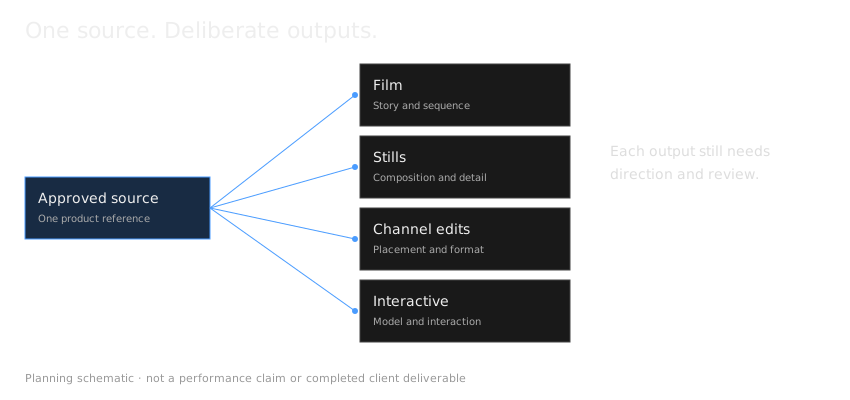
Marketing animations elevate product launches by visually showcasing product features and benefits, engaging audiences through storytelling, and simplifying complex processes. Their versatility ensures consistent messaging across various platforms, from social media to presentations, while their shareability amplifies brand visibility and awareness. Animations effectively demonstrate how products solve customer pain points, fostering emotional connections and driving interest and demand. With their ability to capture attention and differentiate brands in crowded markets, animations play a vital role in creating excitement, educating audiences, and ultimately contributing to the success of product launches.

Marketing Imagery.

Marketing imagery plays a crucial role in product launches by visually communicating the value proposition of the product to potential customers. High-quality and compelling imagery captures attention, creates desire, and drives engagement, effectively showcasing the features, benefits, and unique selling points of the product. Whether through photographs, illustrations, or graphics, marketing imagery evokes emotions, tells stories, and communicates brand identity, establishing a connection with the audience. By presenting the product in an attractive and aspirational light, marketing imagery builds anticipation, generates buzz, and ultimately contributes to the success of the product launch by attracting interest, driving traffic, and increasing conversions.

Product Lifestyle Image Marketing Noesis Robot

3D Product Turntables.

3D product turntables enhance product launches by providing dynamic and interactive visualizations of products, allowing potential customers to explore them from all angles. This immersive experience increases engagement and excitement, effectively showcasing product features and benefits. The versatility of 3D turntables enables seamless integration across various marketing channels, from websites to presentations, ensuring consistent messaging and branding. By offering a realistic and detailed view of products, 3D turntables help to differentiate brands in competitive markets, driving interest, and ultimately contributing to the success of product launches.

Interactive 3D Visuals.

Interactive 3D visuals play a pivotal role in enhancing product launches by providing engaging and immersive experiences for potential customers. These visuals enable users to interact with products in real-time, allowing them to explore features, functionalities, and customizations, ultimately increasing their understanding and appreciation of the product. By offering a dynamic and personalized experience, interactive 3D visuals capture attention, drive engagement, and foster emotional connections with the brand. Additionally, their versatility allows for seamless integration across various marketing channels, amplifying reach and impact. Overall, interactive 3D visuals significantly contribute to the success of product launches by creating excitement and differentiation and driving customer interest and conversion.

3D Product Augmented Reality.

Product augmented reality (AR) transforms product launches by providing immersive, interactive experiences for potential customers. By overlaying virtual representations of products onto the real world, AR enables users to visualize and interact with products in their own environments, fostering deeper engagement and understanding. This technology facilitates virtual product trials, allowing customers to experience products firsthand before making purchasing decisions, thus reducing uncertainty and increasing confidence. Moreover, AR enhances storytelling by enabling brands to showcase product features and benefits compellingly and memorably. With its ability to captivate audiences, differentiate brands, and drive excitement, product AR emerges as a powerful tool in modern product launches, contributing to increased interest, customer satisfaction, and, ultimately, sales success.

Online Product 3D Configurators.

Online product 3D configurators revolutionize product launches by empowering customers to customize and interact with products in real-time, tailoring them to their preferences and needs. These configurators offer an immersive and engaging experience, allowing users to explore various options, from colors and materials to features and accessories, fostering a sense of ownership and connection with the product. By enabling customers to visualize their personalized configurations before purchase, 3D configurators reduce decision-making uncertainty and increase confidence, leading to higher conversion rates. Moreover, the data collected from user interactions provides valuable insights into customer preferences and trends, informing future product development and marketing strategies. With their ability to enhance customer engagement, streamline the purchasing process, and drive sales, online product 3D configurators emerge as indispensable tools in successful product launches.

FREQUENTLY ASKED QUESTIONS

FAQ.

What is a product launch?

A product launch refers to the planned and coordinated effort of bringing a new product to the market and making it available for purchase. It involves various strategies and steps to ensure the product reaches the right audience effectively.

A product launch is crucial as it directly impacts the initial success and long-term viability of a product. An effective launch can increase brand awareness, generate buzz, and drive initial sales, setting the foundation for future market performance.

Key components include thorough market research, clear target audience identification, strategic marketing and promotion, robust distribution strategies, and continuous monitoring and adaptation based on market response.

The duration of a product launch plan can vary depending on the product and market complexity. Typically, planning starts several months to a year before the actual launch to ensure all elements, from product development to marketing, are aligned and executed well.

Common mistakes include inadequate market research, unclear targeting, poor timing, insufficient testing, lack of resource allocation, and weak marketing efforts. Avoiding these pitfalls can significantly increase the chances of a successful launch.

Yes, products can be launched successfully on a limited budget by focusing on cost-effective marketing strategies such as digital marketing, leveraging social media, and engaging directly with potential customers through grassroots marketing efforts.

Success can be measured through various metrics such as sales figures, market penetration, customer feedback, media coverage, and social media engagement. Setting clear goals and using analytics tools can help track these metrics effectively.

Effective strategies include building anticipation through teasers and previews, creating a compelling narrative around the product, engaging with influencers and media, hosting launch events, and implementing a follow-up strategy to maintain customer engagement.

The request is missing an API key. Or, The key parameter is invalid.
Thomas-Howcroft-XO3D founder
Thomas Howcroft

Founder of XO3D | Product Rendering Expert
Lecturer of Product Rendering @ University of Hertfordshire
BA Honours Design & Marketing

Thomas Howcroft started his journey into 3D rendering while learning his degree on product design and marketing at Hertfordshire university. He got his BA Hons in Product Design & Marketing in 2013. Shortly after getting a job as a CAD Engineer learning 3D modelling. In his spare time, he practiced his love for 3D animation and rendering. In 2017, he founded XO3D, a creative consultancy specialising in 3D content for marketing. In this time, he was asked to lecture product rendering at the university of Hertfordshire, teaching students what he had learnt throughout his career since founding XO3D in 2017.