
6 Basics of AR and 3D for eCommerce

TL;DR
Bringing AR and 3D into an e-commerce platform requires six things done properly: a clear roadmap, rigorously built 3D models, skilled 3D artists, seamless site integration, structured data capture, and disciplined benchmarking before scaling further.
Bringing AR and 3D into an e-commerce platform is not a single technical decision; it’s six of them, and getting any one wrong undermines the rest. This breaks down what each one actually requires, regardless of whether the underlying platform is Shopify, Magento, Salesforce or something else entirely.
Why visual commerce has changed customer expectations
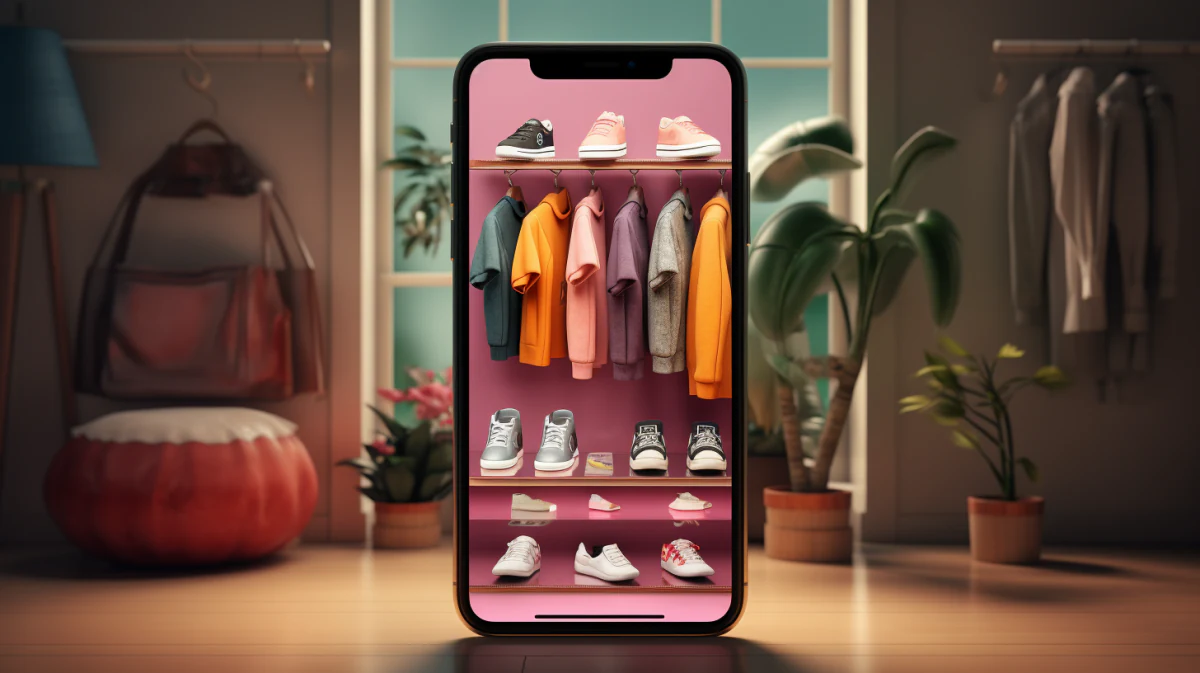
Visual e-commerce has shifted what customers expect from an online product page: an interactive, graphical representation rather than a fixed photo set. Product configurators let customers touch, swipe and manipulate items directly on a touchscreen, and some forward-thinking retailers have taken the same interaction into physical storefronts.
The reason this shift has stuck is straightforward: engaged customers behave differently. According to the SAP/eCommerce Foundation 2019 USA eCommerce Report, engaged consumers spend 60% more per transaction and purchase 90% more frequently. That’s the underlying commercial logic behind AR and 3D’s continued growth in online retail.
What AR actually does in commerce
Augmented reality lets a customer preview a product, or a service, inside their own daily environment before committing to buy. AR commerce places a 3D product model into the buyer’s journey with the ability to view it at true size and scale in their real space, which builds a level of trust in both the product and the retailer that a flat image can’t replicate.
Retailers use it across web, social, search and in-app contexts, in categories ranging from beauty to furniture to footwear.
What 3D commerce actually does
3D commerce embeds 3D models directly into web pages and apps, giving customers a visual, interactive picture of a product without needing a dedicated AR session.
It goes by several names, 3D eCommerce, 3D modelling commerce, immersive commerce, but the underlying goal is consistent: give the customer something closer to an in-person inspection than a photograph can offer.
Why WebAR is changing who can actually use this
Early AR commerce required a dedicated app, a real barrier to adoption since most customers won’t download an app for a single browsing session. WebAR removes that barrier by running directly inside a mobile browser, no install required.
A customer taps an AR icon on a product page and the experience loads immediately, using the same device camera and screen they’re already browsing with.
That shift matters commercially because it collapses the gap between seeing an AR icon and actually trying the experience. Every extra step, downloading an app, creating an account, finding the right in-app section, loses a share of customers who would otherwise have engaged.
WebAR’s near-zero friction is a major reason AR commerce adoption has accelerated: retailers can offer the experience broadly rather than only to customers willing to install a dedicated app.
The six essentials
1. A clear digital roadmap
AR and 3D can enter an e-commerce strategy through several channels: social ads, on-site product pages, or both. A roadmap defines which channel comes first and why, tied to a specific objective, brand lift, buying intent, or engagement, rather than adopting the technology because it’s available.
Scale is one of the genuine obstacles here: the diversity and volume of SKUs a retailer carries determines how much process and infrastructure needs to exist before 3D content can be produced consistently. A roadmap that starts with a small, well-chosen product set, rather than attempting the full catalogue at once, gives a retailer room to refine the process before committing to scale.
2. Rigorously built 3D models
3D and AR experiences depend entirely on the models behind them. Models need building, formatting for web or app delivery, and keeping current as products and designs change.
Laser scanning, photogrammetry and direct 3D modelling are the common production routes, handled either by an in-house creative team or a specialist studio. Whichever route a retailer takes, a genuinely robust creative pipeline is essential; without one, teams get overwhelmed managing 3D assets at scale.
Each route has different strengths: photogrammetry and laser scanning capture an existing physical product with high fidelity but require the product to already exist, while direct modelling can begin before manufacturing but depends more heavily on artist skill to achieve the same accuracy.
3. Skilled 3D artists
An AR experience is only ever as convincing as the model behind it, which makes artist skill directly consequential for e-commerce, because customers expect the digital model to reflect the physical product’s quality and finish. Before buying, a customer needs to judge how a product will actually look and fit in their space, and that judgement depends on the model being built with real material accuracy, not an approximation.
A retailer scaling 3D content across many SKUs needs a pipeline of artists capable of consistent quality across every one of them, whether that pipeline sits in-house or with a partner studio. Consistency across a catalogue matters as much as quality on any single model: a customer who encounters one exceptional 3D model and one noticeably weaker one on the same site loses confidence in both, because the inconsistency itself reads as a quality signal.
4. Seamless site integration
Embedding a 3D model can look like a simple line of code, but the underlying platform work, hosting and fast delivery of the model into an iFrame, is what actually determines whether the experience works. Google research has found that 53% of mobile users abandon a page that takes longer than three seconds to load, so integration has to be fast, not just functional.
Choosing a provider with an existing plug-in for the platform already in use is usually the more reliable route than building integration from scratch. File size optimisation matters directly here: a 3D model compressed and formatted specifically for web delivery loads in a fraction of the time an unoptimised export would take, without a customer-visible drop in quality.
5. Structured data capture
Every AR and 3D interaction is a data opportunity, and any integration should be built to capture and analyse it from day one. Interactive 3D gives customers a clearer way to understand a product, and gives a retailer a correspondingly clearer view of how customers actually perceive it, insight that’s difficult to gather any other way.
Which angles a customer rotates to, how long they engage with a model before adding to cart, which configuration options they explore, all of this reveals preference data that a standard analytics setup tracking page views alone simply doesn’t capture.
6. Disciplined benchmarking
Before scaling across a full catalogue, start with a manageable set of products whose baseline performance is already understood, and benchmark new 3D and AR experiences directly against it. Structured A/B testing across different flows, CTAs and interaction types refines what actually works before wider rollout, rather than assuming the first version is the right one.
This is where the roadmap from essential one and the benchmarking from essential six connect directly: a roadmap that starts narrow gives a retailer a baseline to benchmark against before the harder work of scaling begins.
Why AR and 3D are meeting a customer expectation
Anticipating how customer behaviour shifts over time has always been central to sustainable e-commerce growth, and personalised purchasing experiences have become an expectation rather than a nice-to-have.
A large share of buyer frustration in online shopping comes from the absence of the sense-check a physical shop naturally provides; without it, customers are more likely to order the wrong item and return it.
AR and 3D product modelling directly close that gap, replicating a version of an in-person “try before you buy” experience online. A few concrete examples make the mechanism clear.
Speedo’s augmented reality experience, used both in-store and online during checkout, let customers preview a product against their own face or body before buying, exactly the kind of confirmation static imagery can’t give.
AR previewing for furniture lets a customer see how a specific piece will look in their own room before ordering, catching scale and style mismatches before they become a delivery problem.
Bumbleride, a stroller retailer, saw a 33% lift in conversion rate and a 21% increase in average time on site after adding 3D models to its online store. Overstock saw conversion gains between 10 and 200% after combining AR with 3D modelling, evidence that the underlying mechanism (closing the inspection gap) holds across different product categories.
Where AR and 3D matter most by category
Not every product category gets equal value from AR and 3D, and understanding where the mechanism is strongest helps prioritise where to build first.
Beauty and cosmetics benefit from AR’s ability to preview a product directly on a customer’s face in real time, addressing one of the hardest categories to sell online: shade and finish, which photographs alone struggle to represent accurately across different skin tones and lighting.
Furniture and home goods benefit from scale accuracy above almost anything else. A customer who can confirm a sofa will actually fit their room before ordering removes the single biggest source of furniture returns: a piece that looked right in a photo but was the wrong size in reality.
Footwear and apparel benefit from AR try-on addressing fit uncertainty directly, and from 3D models letting a customer examine construction detail, stitching, sole design, material texture, that a flat product photo can only partially convey.
Consumer electronics benefit from 3D models that let a customer inspect ports, dimensions and build quality closely, detail that matters disproportionately to buyers comparing technical specifications across competing products.
The takeaway
AR and 3D commerce reward the retailers who treat all six essentials as a connected system: a clear roadmap, models built to a real standard, artists capable of sustaining that standard at scale, integration fast enough not to lose the customer before they see it, data capture built in from the start, and disciplined benchmarking before scaling further.
Skip any one of the six, and the others struggle to deliver what they’re capable of.
Start the conversation
Have a product worth showing?
We reply to every brief personally, usually within one working day.
FAQ
Common questions, answered.
How does AR reduce product returns?
AR lets a customer preview a product in their own environment, at correct scale, before buying, which catches fit and sizing mismatches that would otherwise only surface after delivery.
Why does page load speed matter for 3D and AR commerce?
Google research has found that 53% of mobile users abandon a page that takes longer than three seconds to load, so a 3D or AR experience that isn't built for speed can lose the customer before it's ever seen.
What's the difference between AR commerce and 3D commerce?
AR commerce overlays a 3D model onto a customer's real environment through their device, showing scale and placement directly. 3D commerce embeds interactive 3D models into a web page or app so a customer can inspect a product from any angle. For where a studio sits inside that wider picture, and where it stops, see [CGI for e-commerce](/use-cases/cgi-for-ecommerce/).
What's the first step to bringing AR and 3D into an e-commerce platform?
A clear roadmap. Deciding whether to start with social commerce, on-site product pages, or another channel, and defining the specific objective (brand lift, buying intent, engagement) before any 3D asset gets built.

Start the conversation
Got a product worth showing? Let’s talk about what it needs to do.
We reply to every brief personally, usually within one working day.