XO3D Studio · Use Case
CGI for Paid Social Advertising.
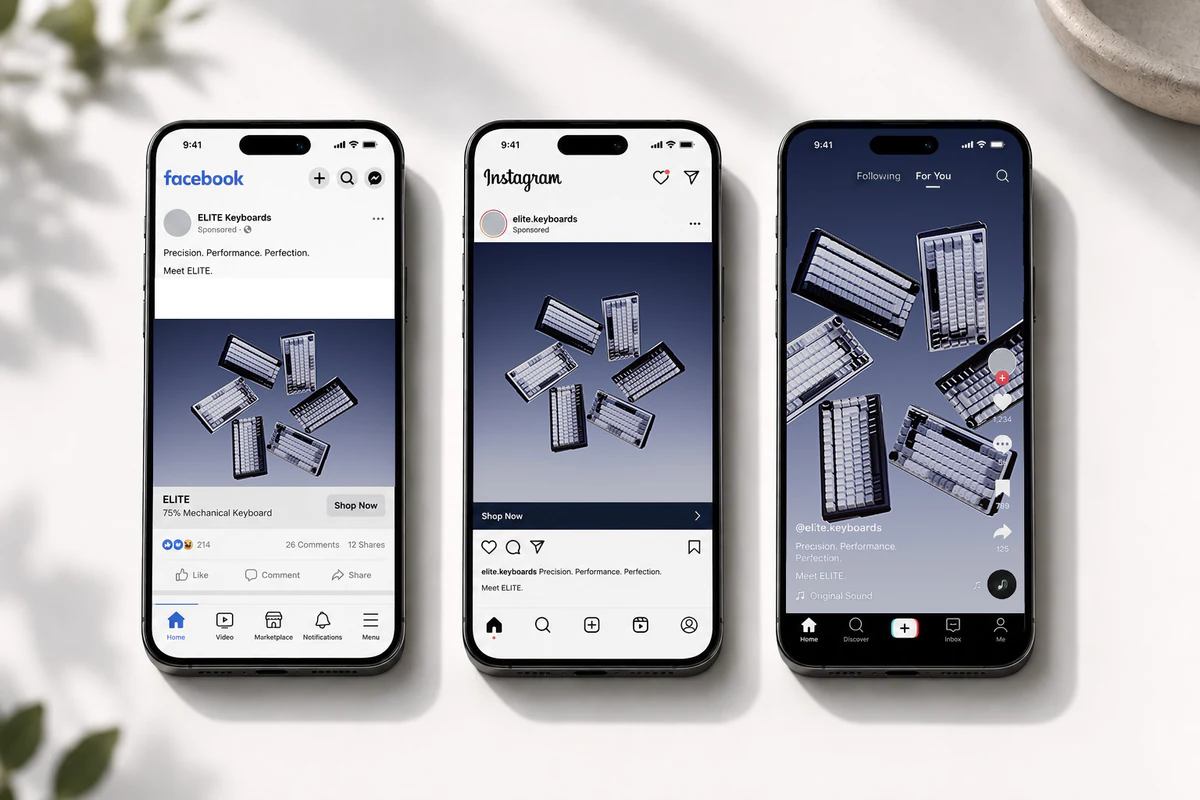
9:16, 1:1, 4:5, 16:9, every format variant from one CGI build.
XO3D keeps product visuals consistent across every paid social channel without rebuilding creative for each platform. Performance marketing teams running campaigns across Meta, TikTok, YouTube and Display need every product visual in every format, and need to iterate, test and refresh that creative regularly. Suitable product assets can support later creative versions, with scope and review agreed for each placement.
Selected clients








Sony work via ImageNova. Ferrari and Burberry work via KCD.
One build, every format
Four social formats. One 3D asset. Same visual direction.
What CGI changes for paid social
Format, testing, refresh, retargeting, solved at the asset level.
Format Delivery
Every platform spec, one build
- 9:16 vertical, Reels, Stories, TikTok
- 1:1 square, Instagram feed, Facebook
- 4:5 portrait, Facebook feed optimised
- 16:9 landscape, YouTube, programmatic
- All delivered from the same 3D render
Creative Testing
Creative variants with a defined purpose
Choose which message or visual variable each version tests. Approved product geometry can be reused where suitable, while new environments, finishes and compositions receive their own creative review.
Seasonal Refresh
New creative without a new shoot
When Q4 campaign creative needs to look different to Q2, CGI updates the environment, grade, or composition of the same product without rebuilding anything. New campaign feel, same 3D asset. The annual photography budget for creative refresh effectively disappears.
Retargeting Creative
Product-level personalisation at scale
Dynamic product ads showing the exact product a user viewed, at any angle, in any colourway, at any aspect ratio, are native to CGI production. Every SKU variant is a material swap; every format is a render crop. Retargeting creative at scale becomes a production logistics problem, not a photography budget problem.
The Performance Marketing Case for CGI
Why performance teams are switching away from photography for product creative.
Plan the source footage and campaign variants together. A new format may need a different composition or opening message; it should not automatically be treated as a crop of the hero edit.
CGI changes this production structure. The approved 3D asset becomes a reusable foundation for new formats, colourways, environments and seasonal edits. For brands with continuous demand, a Visual Content Partnership keeps that foundation active across each campaign cycle. Performance marketing teams can plan a broader testing library without restaging the product for every variation. Media results still depend on the offer, audience, placement and creative strategy, so each concept should be measured on its own evidence.
| Creative Need | Photography Approach | CGI Approach |
|---|---|---|
| New aspect ratio (9:16 to 1:1) | Crop or re-shoot depending on composition | Re-render at new ratio, same build |
| New colourway variant | New photography session | New finish reference and material review |
| A/B test: background A vs B | Two separate setups and shoots | Two environment renders, same product asset |
| Seasonal creative refresh | New shoot with seasonal styling | Grade and environment update, no rebuild |
| Dynamic product ad per SKU | Photography per SKU required | Render per SKU, same model, material swaps |
FAQ
Common questions, answered.
How quickly can XO3D produce social format variants once the asset is built?
Can CGI match the energy and motion quality needed for TikTok and Reels?
Can you produce user-generated content (UGC) style CGI for social?
Your next project
Plan a testable set of creative.
Change one meaningful creative variable at a time and record the audience, placement and result. Agree which edits need a new composition and which can use approved footage.
A route to consider
Visual Content Partnership
Ongoing creative direction and production for a defined sequence of campaigns, product updates and agreed deliverables.
Bring these three things.
- Which message are you testing?
- What placements and runtimes are required?
- How will creative performance be evaluated?
Start with an outline. We review the product, intended outputs and timing before agreeing the production scope.