
XO3D Studio
Launch Visuals.
Everything your product launch needs, built from a single 3D asset.
A product launch is not a single film. It is a website hero, a social campaign, a press kit, a trade show screen, and a retailer listing, all needing to look like they came from the same creative decision. We make that happen from one build.
Selected clients


Sony work via ImageNova. Ferrari and Burberry work via KCD.
Planning your brief
Updated
What is a launch visuals suite and who is it for?
A launch visuals suite is XO3D's coordinated set of product films, stills, social edits, press assets and optional interactive experiences, created from one approved 3D product asset. Brand and marketing directors, in-house creative teams, founders and agencies commission it from XO3D when preparing a physical-product launch across several channels. XO3D begins with the launch date, audience, channel plan and required asset list, then sets the creative direction before building or preparing the CAD-led model, materials and lighting system. Film, stills, colourways and platform formats can then be produced in parallel, with staged reviews keeping the product and visual language consistent. Scope is determined by product complexity, the condition of the source files, the number of deliverables and variants, the channels they must serve, the review process and the fixed launch window. The result is one directed visual system that can support web, social, retail, press, presentations and events before and after launch.
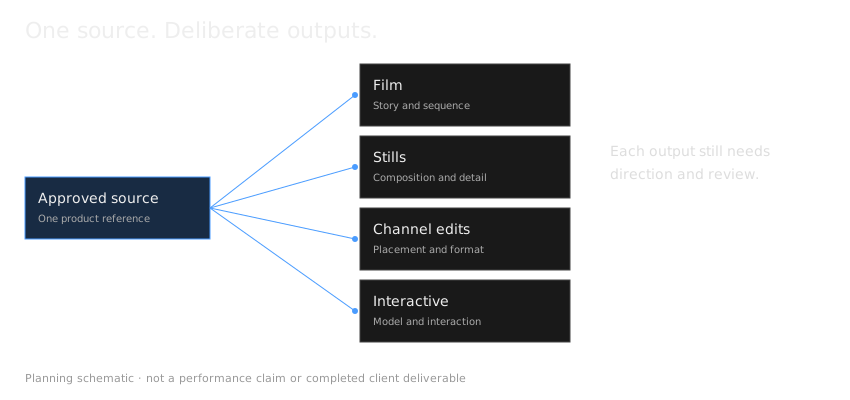
Questions before you briefMost product launches use the same assets everywhere. The best ones build once and scale.
When a brand launches a product using separate suppliers for photography, video, social content and web assets, the result is visually inconsistent, the lighting changes, the colour temperature shifts, the product looks slightly different in every context. Buyers notice. Trust erodes.
XO3D builds your product once in 3D, to a standard that can render at any resolution, any format, any angle, and produces your entire launch suite from that single asset. Every frame shares the same lighting rig, the same material language, the same creative direction. The result is a launch that looks considered, not assembled.
Product truth, carried across the whole launch.
What's included
What we deliver as agreed in the brief in a launch suite.


The advantage
Why one Master Asset outperforms mixed production.
Because the Master Asset is built from CAD rather than photographed from a sample, it exists before the product does. Launch content can be finished before the product ships, and film, stills, social formats and interactive all come from that one approved asset in parallel rather than one after another.
Visual consistency.
Every asset, film, still, social, interactive, shares the same lighting rig, material language and camera direction. The product looks identical across every touchpoint.
Efficiency at scale.
XO3D builds and approves the 3D asset as a reusable production foundation. New formats, colourways and camera angles can then inherit the same product, materials and lighting system instead of starting from an empty scene. Brands extending that foundation month after month can move into a Visual Content Partnership.
Pre-launch production.
XO3D works from CAD files and engineering specifications. The pre-manufacture visualisation workflow lets the launch assets progress before the product is manufactured, so the campaign can be ready for the release window.
After the launch
What the build can still do in two years.
The next market.
A launch built for one region needs re-cutting rather than re-shooting for the next. The product, materials and lighting are already approved, so the work is the localisation and the edit.
The next campaign.
A seasonal push, a retailer refresh, a trade-show cut, a set of paid social variants. New frames from a known asset, with the visual language already settled rather than argued again.
The next variant.
A new colourway, finish or configuration can be developed on top of the existing Master Asset. Same model, same lighting, one more variant, consistent with everything already published.
The next launch.
A successor product usually shares components, materials and design language with the one before it. That is a head start rather than a blank scene.
You own the delivered work and the commissioned model outright, with no limit on medium, territory or duration, and projects are archived indefinitely. That is what makes a returning brief a smaller scope of work than the original build rather than a fresh start. Where that demand becomes continuous, it becomes a Visual Content Partnership. How the ownership line is drawn is on trust and security.
Process
How a launch visual suite is produced.
- STAGE 1
Launch brief & asset inventory.
We review the launch timeline, the channel plan, and the full list of assets required. We build a production schedule backwards from the launch date, identifying what needs to be in review at what stage.
- STAGE 2
Creative direction.
We agree on the visual language for the launch, the environmental context, the lighting mood, the colour grade direction, the film edit rhythm. Shared with the brand or agency before any production begins.
- STAGE 3
3D build & material development.
Model, materials and lighting rig are built and approved. Material and lighting tests are shared at this stage, because this is where the look of the launch is decided.
- STAGE 4
Parallel production.
Film animation, still renders, social formats and interactive build run in parallel once the 3D asset is approved. This is the point of the Master Asset: every deliverable shares the same source.
- STAGE 5
Staged delivery.
Delivery priorities and review milestones are agreed against your launch date before production begins. The schedule identifies which film, stills, social, interactive and press assets are needed first.
Who it's for
Launch Visuals briefs come from.
Brand Marketing Directors.
Managing a major product launch who need a single production partner across all CGI deliverables.
Advertising and design agencies.
Who have won the launch brief and need a specialist CGI studio to produce the visual assets within their creative direction.
Start-ups and scale-ups.
Launching physical products, often before manufacturing is complete, who need investor-grade visuals to support a launch event or crowdfunding campaign.
In-house creative teams.
At established consumer brands who need premium CGI output to match a campaign that live-action photography cannot deliver at scale.
Launching through Kickstarter or Indiegogo before manufacture? See how we build crowdfunding CGI campaign assets from the same product source. For paid channels, see CGI for paid social and digital advertising.
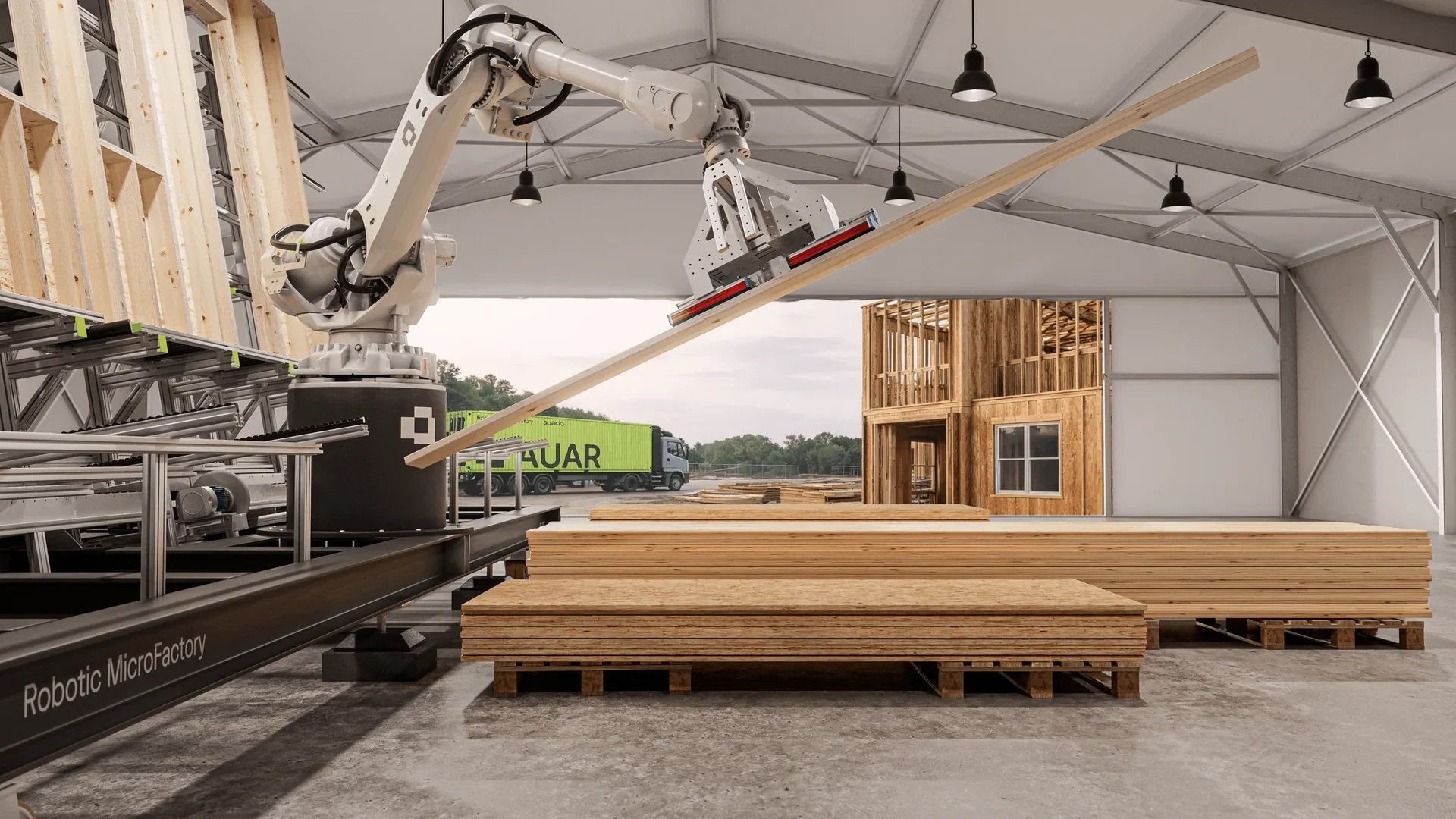
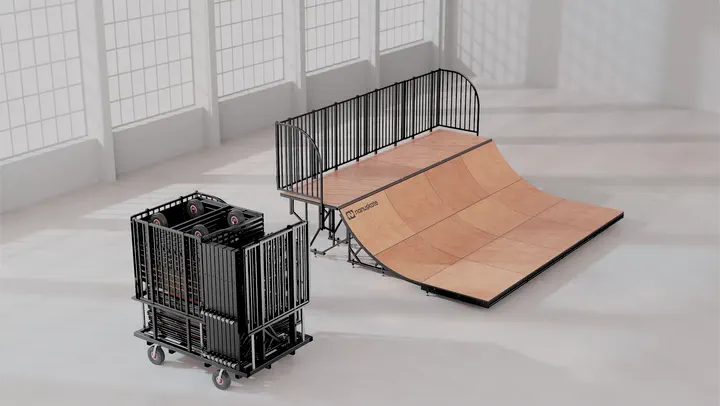
For named proof, see the construction robotics AUAR launch visual suite, the CAD-led Petalite launch system and the premium consumer Sony WF-C710 launch work.
Before you brief
Your programme questions.
What is included in a launch visuals suite?
A launch suite can include a hero film, platform-specific social edits, a library of studio and lifestyle stills, colourway variants, press images and an interactive product view. The final set is agreed around the launch plan. Every approved output comes from the same 3D asset, material system, lighting language and creative direction.
How far before launch should we brief XO3D?
Brief XO3D during campaign planning, before the launch date and channel commitments are fixed. Early involvement gives the team time to define the visual direction, audit the source files, plan reviews and sequence delivery around the launch priorities. The production schedule is then built backwards from the date the first approved assets must be live.
What does XO3D need to start a launch suite?
Start with the product brief, launch date, audience, channel plan and required deliverables. CAD files or an existing 3D model are the strongest product inputs, supported by technical drawings, material and finish references, brand guidance and any approved campaign direction. XO3D audits what exists before confirming the production scope.
How are colourways and platform formats handled?
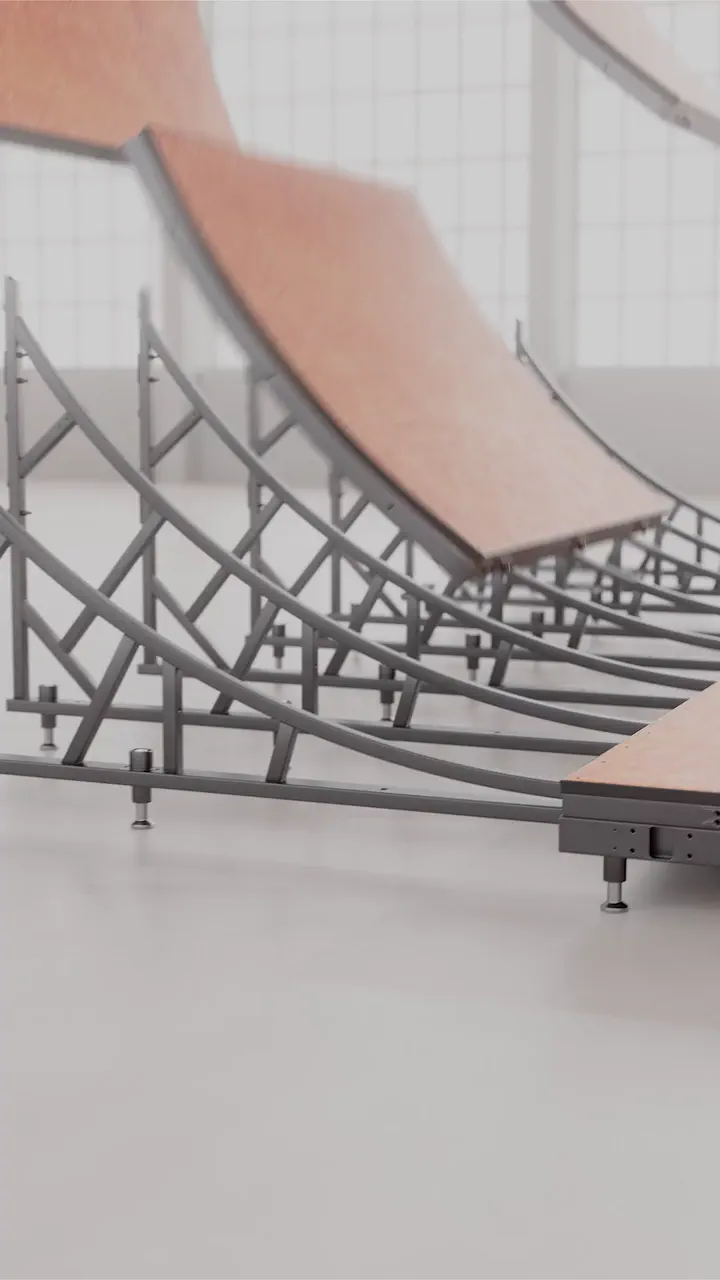
Colourways are built as controlled variants of the approved Master Asset. XO3D plans the agreed film formats before rendering: extra canvas space allows crops where the composition works, while a custom camera is needed where a landscape crop would lose the product or its message in a vertical mobile view. The AUAR MicroFactory case study shows delivered landscape and vertical shot examples. Resolutions, aspect ratios and file formats are agreed in the deliverables list.
Can the suite be reused after the launch?
Yes. The approved 3D asset can support later colourways, product-page updates, retailer imagery, campaign edits, sales materials, event screens and interactive experiences without rebuilding the product from the beginning. Reuse still needs a defined brief and review, but the existing model, materials and visual language create a consistent starting point for the next release.
Is it better to shoot each channel separately or build the product once in 3D?
For a launch needing film, campaign stills, social formats, press assets and often an interactive, building the product once in 3D is usually the more sensible route, because every output then inherits the same approved geometry, materials and lighting. Separate shoots give you separate versions of the truth: colours that drift between channels, a hero angle that cannot be recreated for a later format, and a reshoot whenever a variant is added. The trade-off is that the 3D build front-loads the work and the approval, so the look is signed off once, early, rather than renegotiated repeatedly. Where a single photograph is all a campaign needs, photography remains the simpler answer.
Which XO3D project shows a complex launch suite delivered to a fixed deadline?
XO3D produced the AUAR MicroFactory CGI content suite within two months for its website launch. The delivered set included a 36-second hero animation, 24 stills, website loops and supporting motion assets. The case study shows the complex robotic system and the landscape and vertical formats. This is one project example; a new schedule depends on the product, source files, agreed deliverables and review time.
Start the conversation
Planning a product launch? Tell us what it needs to look like.
The sooner we are involved in a launch timeline, the better the result. Tell us when you are launching and what the product is.