Product films, launch visuals and interactive experiences.

Tell us about your brief Book a 15-minute call
View all pages

XO3D Studio · Use Case

CGI for Trade Shows & Exhibitions.

4K content for exhibition screens, hero renders for stand graphics, and mechanism films for sales demonstrations, all from the same build as your launch campaign.
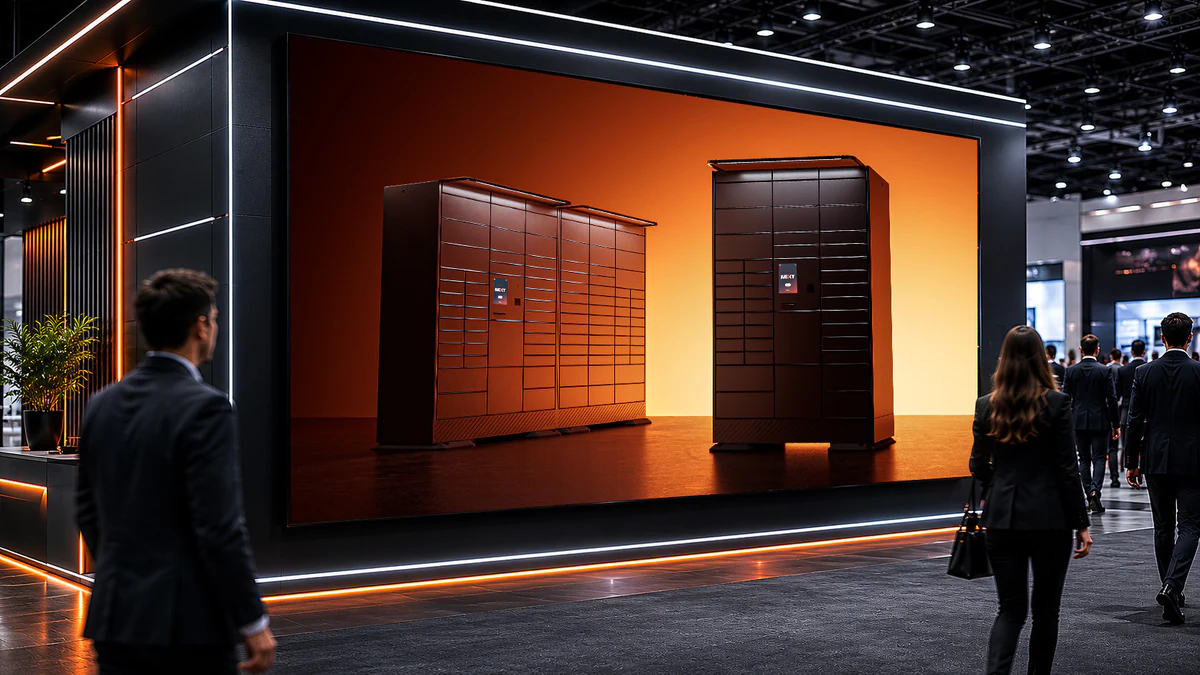
Concept visual: Bloq.it Next lockers on an exhibition stand, made with XO3D's CGI of the product
Concept visual: XO3D's Bloq.it Next CGI shown on an exhibition stand.

Trade show content has two requirements that CGI serves particularly well: extreme resolution for large-format displays, and the ability to show products that may not yet exist physically. Exhibition screens can be 3–4 metres wide, and large-format stills are rendered at the size the print needs, agreed at brief. And for brands bringing a new product to its first trade show before manufacturing is complete, CGI can show the planned product at the scale the stand needs.

Trade show deliverables

Screen Content

4K loops for exhibition displays

Seamlessly looping 4K product animations for exhibition screens and digital signage, showing the product rotating, the mechanism operating, or the brand's visual language in motion. 20–60 second loops optimised for display screen playback.

Stand Graphics

Print-ready imagery, scoped to the stand

Hero renders are produced at the resolution each print needs, agreed at brief, from a business card to a 6-metre backdrop. The approved 3D scene can be rendered again for the banner specification.

Sales Demo Films

Mechanism explainers for the stand

Short mechanism animations (30–90 seconds) that show how a product works, used for interactive demo screens and sales presentations at trade show stands. Particularly valuable for complex technical products where the mechanism is the sales story.

Pre-Manufacture Products

Showing what doesn't exist yet

For brands bringing a product to its first trade show before manufacturing is complete, CGI can show the planned product from approved CAD data. XO3D has produced trade show content for pre-manufacture products across EV, medical, and industrial categories.

What makes trade show CGI different

Resolution, durability, and pre-manufacture, the three trade show advantages.

Large-format print is specified by final dimensions, viewing distance and the printer's requirements. Pixel dimensions determine how much image detail is available at that size. A CGI scene can be rendered again to an agreed output specification; enlarging an existing 4K image does not create that detail.

The second advantage is pre-manufacture. Petalite's 1MW EV charger was shown at trade shows before the physical product existed. The imagery was indistinguishable from photography of the finished product. For brands with long manufacturing timelines and fixed trade show commitments, this allows imagery to be prepared from approved product data before the physical product is ready.

Trade Show DeliverableTypical SpecFrom CGI
Full-height display printFinal dimensions and image resolution agreed with the printerRendered from the 3D scene to the agreed pixel dimensions
Looping screen content4K, 20–60 seconds, seamless loopNative CGI animation output
Sales demo presentationHigh-res stills + mechanism animationFrom same asset as screen content
Pre-manufacture productPhotoreal, engineer-accurateXO3D's core pre-manufacture capability

FAQ

Common questions, answered.

How long does trade show CGI take to produce?
With an existing 3D asset from a previous XO3D project, screen and social formats typically take 1 to 2 weeks. Commissioning from scratch, a launch suite of film, stills and social formats typically takes 6 to 10 weeks, and a technical or mechanism film on its own 5 to 9 weeks. We always build the production schedule backwards from your show date. Tell us when the show is and we'll tell you immediately whether it's achievable.
What file formats do trade show screens typically require?
Most modern trade show screens accept H.264 MP4 or ProRes files. XO3D can deliver either for looping content, agreed at brief. For digital signage systems with specific codec requirements, we match the delivery spec to your stand's display system at brief stage. Print dimensions, image resolution, colour profile, file format, bleed and crop marks are agreed against the printer's specification. TIFF is available on request. A 4K screen image is not automatically a print-ready file for a large backdrop.
Can you produce content for multiple shows from the same brief?
Yes, and this is one of the strongest efficiency arguments for trade show CGI. A product 3D asset built for CES in January produces trade show content for MWC in February, Hannover Messe in April, and any subsequent show, the approved 3D scene can be reused, with new renders or edits produced to each show's specification. The outputs and production scope are agreed for each event.

Exhibiting at a trade show?

Tell us the show date, what you're exhibiting, and what stage the product is at.

We'll tell you exactly what's achievable.
Planning your project

Give the stand a clear product story.

An exhibition film has to work while people are moving. It may play without sound, on an unfamiliar screen, with only seconds to establish what the product does.

XO3D plans trade-show CGI around those conditions. The film should earn attention, make the product understandable and support the conversation on the stand.

Tell us about your brief
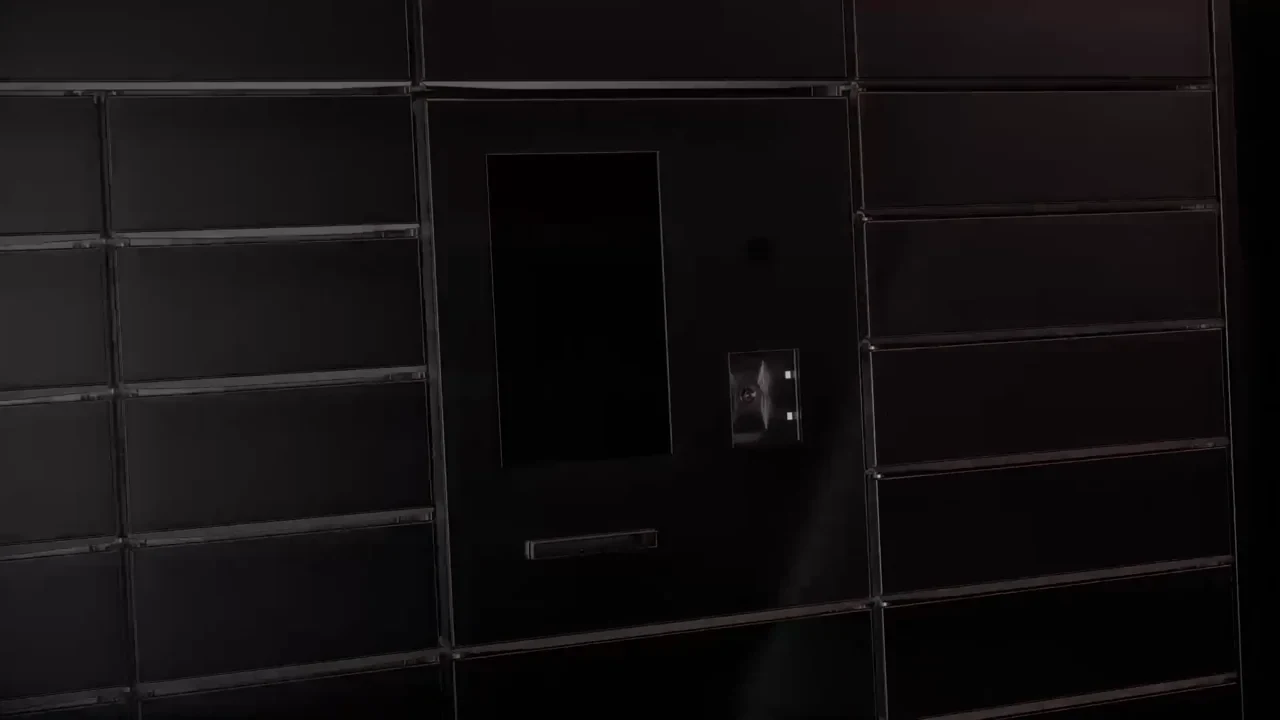
Front view of a Bloq.it smart locker and screen
Bloq.it smart locker. Explore the project

Design for the actual screen.

Send the display dimensions, pixel canvas, orientation and playback specification. A large physical screen does not automatically call for a conventional 16:9 edit.

Confirm viewing distance and safe areas. Keep important product detail and text readable in the installation, not just on a studio monitor.

Build a loop that can be joined anywhere.

Visitors will rarely arrive at the first frame. Give the loop a clear visual rhythm and enough context for someone joining halfway through.

Use silent-first labels where they help. If sound is part of the installation, plan it without making the explanation depend on hearing every word.

Support the next conversation.

A hero loop can attract attention. A separate feature sequence can help the team explain a mechanism. Still frames can support follow-up after the event.

Define these outputs before production so the film and sales material share a visual language.

Work back from the show.

Agree the production milestones, technical approval and final playback test. Include the stand contractor or AV team when their specification controls delivery.

A fixed exhibition date is a reason to resolve decisions early, not to skip review.

Exhibition questions.

Can an unbuilt product be shown?

Yes, where approved source information supports the intended visualisation. Mark unresolved design assumptions during review.

Can the film be reused afterwards?

Plan website, meeting and follow-up versions in the brief. Reuse may require different pacing, text or aspect ratios.

Send the screen and the date.

Tell us what is being exhibited and what visitors should understand.

Updated

About the studio

XO3D is a director-led product CGI studio. Founded by Thomas Howcroft in 2017 and incorporated as XO3D Ltd (UK Companies House 11876020) in 2019, when Alex Mann joined as co-founder. Based at the Business and Technology Centre in Stevenage, UK, with representation at 244 Fifth Avenue, New York. We work with tech, industrial and premium consumer brands on product films, launch stills and interactive experiences.

That makes us the right choice for launch-critical work where the visual standard has to be high and the product may not exist yet.

It makes us the wrong choice for three things, and it is worth establishing that now rather than later.

  • Hundreds of routine SKUs to a fixed template. Continuous template-based output is a different brief from launch-critical creative direction. Choose a production workflow designed for that volume.
  • A website that requires a specific configurator platform. Use that platform where your website requires it, and agree who supplies the models and who integrates the software. A custom configurator is another route: XO3D can build it and hand it over for you to host.
  • The campaign idea itself. If what you need is the strategy, the audience work and the media plan, start with an agency. We are frequently the production partner behind one.
How XO3D compares to the other five supplier models