
Why Should Marketers Use Product Rendering?
TL;DR
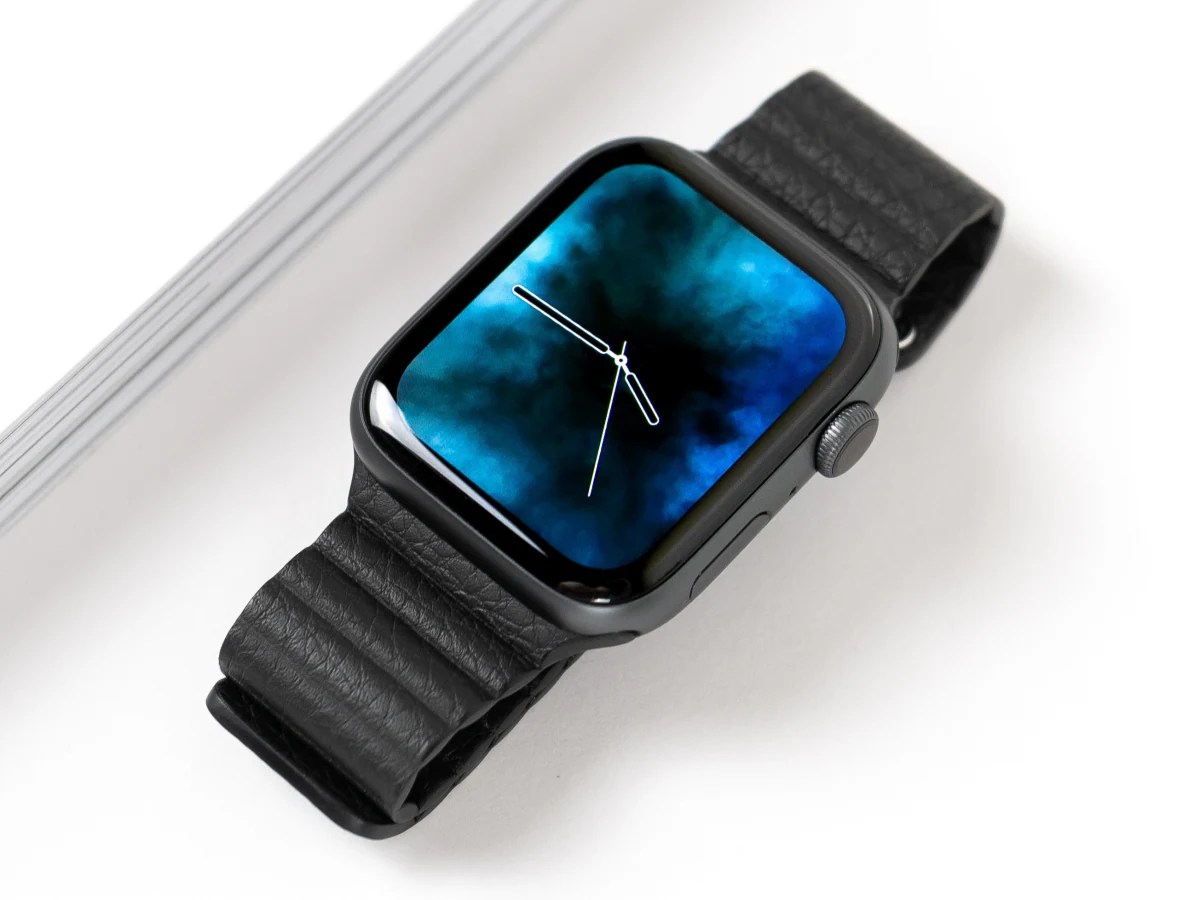
Product rendering does four things photography structurally cannot do at all, impossible camera angles, marketing visuals before a physical sample exists, perfect consistency across an entire catalogue, and unlimited controlled revisions to lighting and material without a reshoot.
Product rendering does four things photography cannot do at all, not “does them more efficiently,” but genuinely cannot replicate: camera angles no physical lens can occupy, marketing visuals before a physical sample exists, exact consistency across an entire catalogue, and unlimited revisions to lighting and material without a reshoot.
Each of these is a structural difference in what the two techniques are capable of producing, not a matter of preference or polish.
Impossible camera angles and cutaways
A camera has to physically exist somewhere to take a photograph. That constraint disappears entirely with a 3D model.
A render can show a product from inside a sealed mechanism, mid-cutaway with layers peeled back to reveal internal components, or from an angle that would require the camera to occupy the same physical space as the product itself.
None of this is a photography technique done well; it’s a category of image photography cannot produce under any circumstances, because there’s no physical vantage point that corresponds to it.
For a product whose engineering, assembly, or internal mechanism is part of its story, hardware, appliances, technical equipment, this isn’t a stylistic choice. It’s the only way to actually show what makes the product work.
Pre-launch visuals before a physical sample exists
A render is built from a product’s engineering or CAD data, not from a physical object placed in front of a camera. This means marketing visuals can exist the moment a design is locked, long before the first unit comes off a production line.
Photography has no equivalent path. A photograph requires something physical in front of the lens: a finished sample, in the right finish, in the right condition, sitting in a studio.
If that sample doesn’t exist yet, photography simply cannot happen. Rendering removes that dependency entirely, which is why brands routinely launch marketing campaigns for products that haven’t been manufactured yet.
This also means a design change late in development doesn’t require waiting for a new physical prototype to be built, shipped, and photographed. The model updates, and the render regenerates from the same accurate source.
Perfect consistency across an entire catalogue
Photographing a full product range means multiple sessions, potentially over weeks or months, each with its own lighting setup, camera position, and studio conditions. Even with careful planning, subtle variation creeps in between sessions: a slightly different white balance, a slightly different shadow, a slightly different framing.
Rendering removes this problem at the source. Every product in a range can be lit, staged, and rendered through the identical digital pipeline, meaning lighting, colour, and camera framing match exactly across the entire catalogue, not approximately, exactly.
A customer browsing a full range sees one coherent, deliberately designed visual system rather than a collection of photographs that happen to share a product category.
This matters most for brands with wide catalogues or frequent product variants, where visual consistency is what makes a range feel considered rather than assembled.
Unlimited controlled revisions without a reshoot
Once a physical photoshoot is complete, changing anything, a colour, a material finish, a light source, a background, means scheduling a new shoot. That means new studio time, the product back in front of a camera, and the same setup rebuilt from scratch.
A rendered image has no such dependency. A colour or material can be swapped and the image regenerated from the same 3D model. A lighting setup can be adjusted and re-rendered instantly. None of this requires a physical reshoot, a new sample, or coordinating a studio and photographer’s schedule again.
This is what makes rendering the right tool for a brand testing multiple creative directions, running seasonal variations of the same core imagery, or supporting a product line with frequent colourway updates. The revision is a digital adjustment, not a new production.
Rendering makes genuine creative testing possible
Because a rendered image can be regenerated from the same source with a single element changed, a marketer can test creative direction in a way photography never allowed.
Two lighting moods, three background environments, five colour variants, all can exist as real, finished-quality options rather than a single committed choice made before the shoot ever happened.
This matters specifically because marketing decisions about mood, tone, and visual direction are notoriously difficult to make correctly on paper. A brief description of “warm, inviting light” versus “clean, clinical light” means something different to every person reading it.
Rendering lets a marketer see both options fully realised, side by side, and choose based on what the image actually communicates rather than what a written brief implied it would.
Rendering gives every marketing channel from a single, precise source
A marketing team rarely needs just one image of a product. A single campaign might need a square crop for social, a wide banner for a website hero, a vertical frame for a story format, and a detail shot for an email.
Building all of these from photography usually means either compromising one format to fit another, or running an entirely separate shoot angle for each one.
A 3D model handles this without compromise, because the camera inside a rendering scene can be repositioned and reframed infinitely, at zero cost to the product itself.
The same lit, textured product can be captured in whatever aspect ratio and framing each channel specifically requires, all matched precisely because they’re drawn from the identical underlying scene, not stitched together from separate photography sessions shot at different times.
What this looks like across a marketing campaign
Communicating a hardware product’s value, purpose, and differentiation to a customer is one of the harder problems marketers of physical products face. Customers move fast, compare constantly, and have more competing options than ever, so marketing material has to work harder to earn a second look.
High-fidelity rendering lets a marketer show a product in whatever context, from whatever perspective, and in however many variants the brief calls for, in a way traditional photography simply cannot replicate reliably.
A shopper evaluating a product can be shown it from an angle that highlights exactly the feature that matters to them, in the specific colour they’re considering, placed in a setting that helps them imagine owning it, all without the marketer needing a different physical sample for each version.
The same scene carries into motion. A product film built from the model demonstrates what a product does in seconds, rather than describing it, and runs unchanged on the website, across social and in a retailer’s listing.
What this means in practice
Product rendering is the process of building a photoreal 3D model of a product and using it as the source for every image a brand needs. Rendering clarifies a product’s design, structure, and detail with a precision that comes from working directly with the product’s own engineering data, not from a physical approximation of it.
The technique has been used in marketing for decades, but the four capabilities above are what set it apart from photography specifically, not generally. A brand doesn’t choose rendering because it produces “nicer” images.
It chooses rendering because certain images, the impossible angle, the pre-launch visual, the catalogue-wide match, the instant revision, cannot be produced any other way.
How 3D rendering actually works
3D rendering builds a two-dimensional image from three-dimensional data. It’s made up of two core components: geometry, which defines an object’s shape, and lighting, which defines how that shape appears to a viewer.
An artist constructs a 3D wireframe model from engineering data, typically a CAD file or a product’s technical specification, then uses a dedicated rendering engine to generate the final image. That software produces finely detailed, photoreal 3D graphics directly from the model’s geometry and material data.
A rendered image can be edited freely afterward, adjusting environment, lighting, or colour without any of the constraints a photograph would carry. There are no lens glares, no uneven lighting, and no manufacturing imperfections to correct for: a well-rendered image is often difficult to distinguish from a photograph.
A brief history of product rendering
Product rendering as a marketing technique traces back further than most people expect. The first computer program built specifically to create 3D models, Sketchpad, was developed in the early 1970s by Ivan Sutherland, widely regarded as the father of computer graphics.
It was basic, limited to simple shapes like cubes and prisms, but it laid the technical foundation for everything that followed.
Not long after, Edwin Catmull, a student of Sutherland’s, built the first realistic 3D animated model using Z-buffering, an early technique for determining which surfaces should be visible in a rendered scene. That work appeared in his 1972 student film A Computer Animated Hand, one of the earliest examples of CGI in motion.
The broader concept of rendered product imagery in marketing goes back even further. The first known rendered advertising image was created by Charles Mott in 1877, using early photography to advertise his lamp and chandelier company.
By the early 1900s, rendered illustration was already a standard advertising technique, prized because it let customers visualise a product clearly before buying it.
General Motors commissioned rendered illustrations of its car models as early as the 1940s, distributing them as postcards, brochures, and magazine advertisements, and later produced an early animated commercial for a new Chevrolet model, animated by John Hubley, who had previously worked on Disney’s Snow White and the Seven Dwarfs. By the 1960s, General Motors had shifted toward photography, which was faster and simpler to produce at the time.
Pixar Animation Studios later became the first company to produce a fully 3D-rendered animated film with Toy Story, a landmark moment for the technology’s creative potential.
What this history shows
Rendering has been part of product marketing for well over a century, evolving from illustration to full photoreal CGI. What’s changed is not the underlying purpose, showing a customer a product clearly before they can hold it, but the fidelity and flexibility available to achieve it.
Today’s rendering can do things illustration and even photography never could: show the impossible angle, exist before the product does, stay perfectly consistent across a catalogue, and change on demand without a reshoot. That combination is why marketers reach for it specifically, not as a substitute for photography, but as the only tool capable of producing a specific class of image at all.
Start the conversation
Have a product worth showing?
We reply to every brief personally, usually within one working day.
FAQ
Common questions, answered.
What can product rendering do that photography cannot do at all?
Four specific things, camera angles and cutaways a physical lens can never occupy, visuals built before a physical sample exists, exact consistency across every product in a catalogue, and unlimited revisions to lighting or material without a reshoot.
Can a product be marketed before it's been manufactured?
Yes. Rendering works directly from a product's engineering or CAD file, so promotional visuals can exist the moment a design is locked, well before the first physical unit is produced.
How does rendering keep a catalogue visually consistent?
Every product in a range is lit, staged, and rendered through the same digital pipeline, so lighting, colour, and camera framing match exactly across the whole catalogue, something near impossible to guarantee across separate physical photoshoots.
Can a rendered image be changed after it's finished?
Yes, and without limit. A colour, material, or light source can be adjusted and the image regenerated from the same model, with no reshoot, no new sample, and no schedule dependency on a photographer or studio.
Start the conversation
Got a product worth showing? Let’s talk about what it needs to do.
We reply to every brief personally, usually within one working day.