
CGI for EV Charging Products: How to Market Before Manufacturing
TL;DR
CGI builds investor decks, trade show content, and launch-ready visuals for EV charging hardware directly from CAD data, months before a physical unit exists or manufacturing begins.
The global EV charging market is worth over $40 billion and growing at 25% a year. Dozens of companies are racing to build the next generation of charging hardware for motorways, fleet depots, and city centres across the UK and beyond.
Most of them hit the same problem. They need a website. They need investor decks. They need trade show content. And the product doesn’t physically exist yet.
That’s where CGI for EV charging products fills the gap.
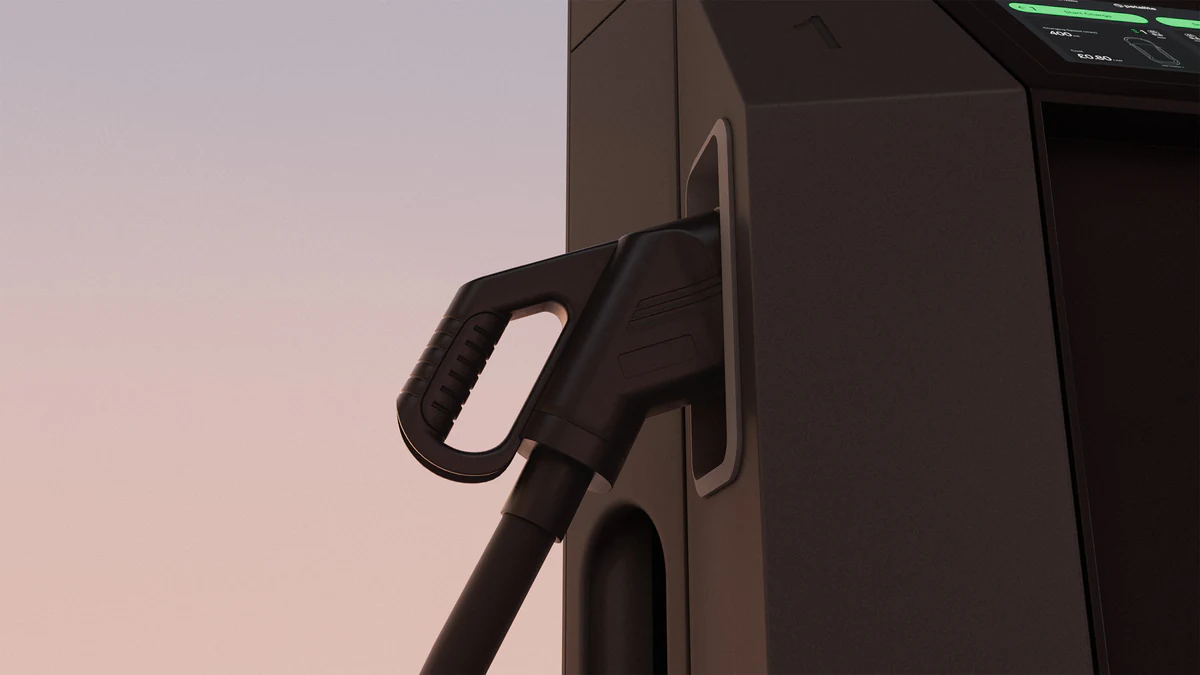
3D visualisation builds a complete marketing presence from CAD files alone, months (sometimes years) before the first unit rolls off a production line. We did exactly this for Petalite’s 1,000kW EV charging technology, building a full suite of 4K animations and photoreal stills while the product was still in active development.
This is how the process works, and why waiting for a physical product is the slower option.
Why Do EV Charging Companies Need Marketing Assets Before Manufacturing?
Investor meetings, trade show deadlines, and website launches don’t wait for a production line to be ready.
EV charging hardware has long development cycles: 12 to 24 months from locked-down prototype to volume production, sometimes longer. The commercial pressure to look ready starts much earlier than that.
Investors spend an average of 2 minutes and 18 seconds reviewing a pitch deck. If the slides are full of grey CAD wireframes and stock photography of someone else’s charger, the deck has already lost them.
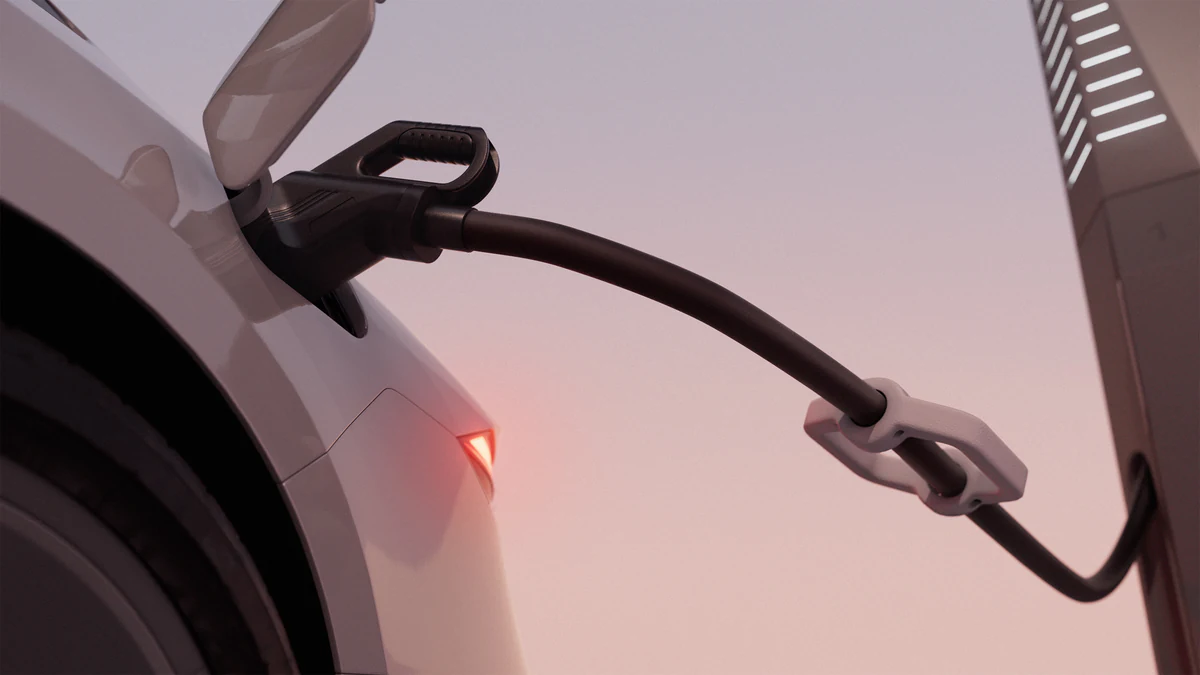
They want to see what the product looks like in the real world: deployed at a service station, connected to a vehicle, lit like it’s already sitting on a forecourt.
Trade shows don’t move their dates because a prototype is running late. Fully Charged, eMove360, CES. These events have fixed calendars. Miss one, and the company is invisible for another year.
When Petalite needed to present their 1,000kW SDC charging technology to global stakeholders in 2025, they were in exactly this position. The product design was still evolving. Manufacturing hadn’t started. The investor meetings were already booked.
What’s Wrong with CAD Screenshots and Stock Imagery?
CAD screenshots signal “engineering tool” to investors, not “market-ready product,” and stock imagery makes every company look identical.
Picture a company with genuinely strong technology showing up to an investor meeting with slides full of grey wireframes exported straight from SolidWorks. The engineering might be impressive. The visuals aren’t, and perception matters more than most founders want to admit.
CAD software is designed for engineers, not for marketing. The output looks technical because it is technical: no realistic materials, no environmental context, no emotional pull. An investor glances at a CAD screenshot and thinks “early stage.” They glance at a photoreal render and think “ready for market.”
Stock imagery is the other trap.
It’s instantly recognisable: generic photos of charging stations that aren’t the company’s own, plugged into cars that aren’t relevant, in locations that don’t match the actual deployment strategy. It erodes trust fast.
Physical prototypes solve the authenticity problem, but they take months to produce and can’t easily show internal components or multiple product variations. Shipping a 200kg charging unit to a photography studio in central London is its own logistical project.
Low-quality renders can be worse than no renders at all. If a viewer can immediately tell an image is computer-generated (bad lighting, plastic-looking materials, floating shadows), it undermines credibility rather than building it.
Investors already know CGI is likely involved somewhere. The goal is for that fact to never cross their mind while they’re looking at the deck, because they’re too locked into the product itself.
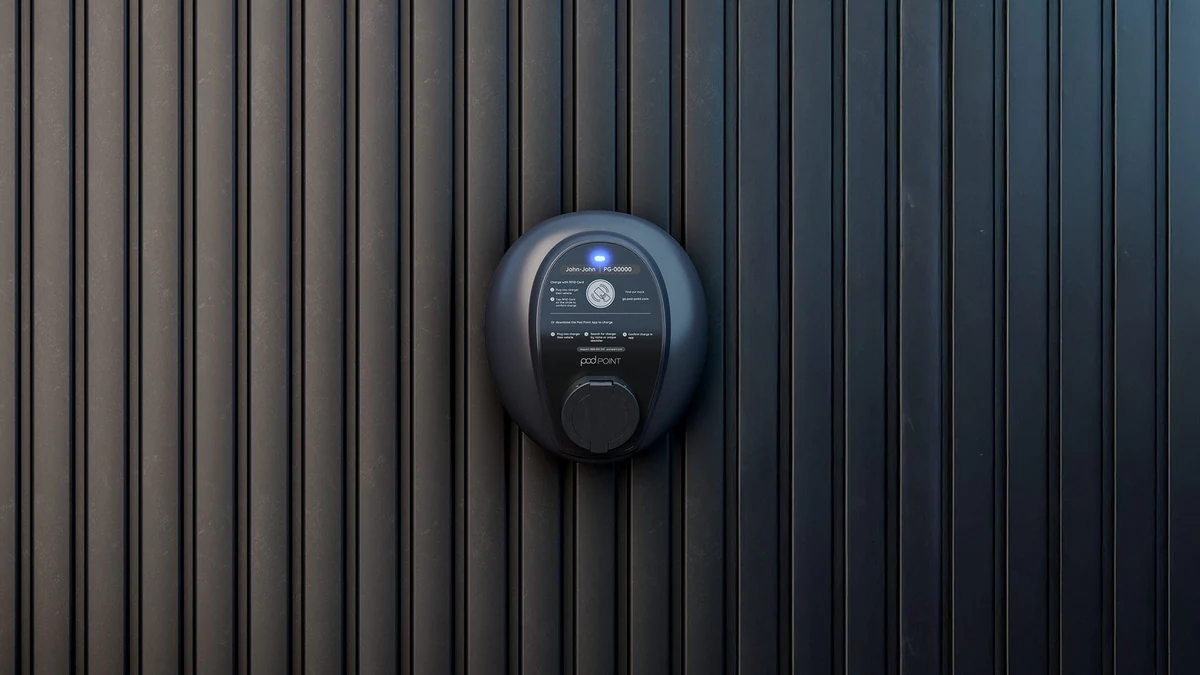 XO3D Pod Point EV Charger Featured Image
How Does CGI Bridge the Pre-Manufacturing Marketing Gap?
A single 3D model built from existing CAD data generates every marketing asset a launch needs, and updates instantly when the design changes.
A new photoshoot isn’t required every time the engineering team tweaks the casing design or changes a connector. The 3D model gets updated once. Every render, every animation, every social media asset updates with it.
The process starts with the CAD files.
Raw engineering data gets cleaned up: topology repaired, overlaps resolved, real-world scale locked in. Then the creative work begins: physically based rendering (PBR) materials matched to the intended finishes (metals, plastics, coatings, screens), custom lighting rigs, and environmental staging.
From that single model comes hero images for the website, exploded views showing internal technology, lifestyle renders showing the product deployed in real-world settings, cinematic animations, social media assets in every format, and print-ready materials for trade shows.
For the Petalite project, we transformed their raw CAD data into 4K engineering animations, HD homepage loops, explainer animations, 6K lifestyle stills, and studio renders, all from a product that was still being designed.
When the design evolved mid-project (which it did, repeatedly), we updated the assets to match the latest iteration without starting from scratch.
What Can You Show Investors with 3D Product Animation?
Everything photography can show, plus things it physically can’t: internal components, modular scalability, and the product deployed in environments that don’t exist yet.
This is where CGI for EV charging products pulls ahead of traditional photography.
Even with a finished charger sitting in a studio, a camera can’t show the power modules inside the casing. It can’t demonstrate how four units daisy-chain together at a fleet depot. It can’t visualise the cable management system or the cooling architecture.
Animation can.
For investor presentations, the deliverables that make the biggest difference are exploded and cutaway views revealing the engineering inside, scalability animations showing single-unit to multi-charger deployment, cinematic product films that tell the story of the technology in under 60 seconds, and UI experience mockups showing the driver interface.
Research suggests visual aids in presentations increase deal-closing likelihood by up to 85%. For hardware start-ups raising capital, that’s not a marginal improvement.
Petalite’s 3D animations helped stakeholders grasp their modular scalability in under a minute. A slide bullet point reading “modular and scalable architecture” doesn’t land the same way. Not even close.
What Does CGI Make Possible That Photography Doesn’t?
For hardware that doesn’t physically exist yet, CGI isn’t a substitute for photography. It’s often the only option that can produce the image at all.
A traditional product photoshoot involves studio rental, photographer fees, physical product shipping, set design, and post-production, and every one of those steps has to repeat for every product variation, every angle, every new environment worth showing.
CGI removes that repetition. The model gets built once. Additional angles, scenes, colour variations, and environments come from the same asset.
Showing a charger at a motorway service station, then at a commercial fleet depot, then at a residential car park uses the same model each time, with only the scene changing.
IKEA worked this out years ago. 75% of their catalogue imagery is CGI, a shift that dates back as far as 2014. The images were realistic enough that IKEA’s own editors once flagged CGI shots as better than the actual photographs, without knowing which was which.
What Does the CGI Process Actually Look Like?
It starts with existing CAD files, and a launch suite typically takes 6 to 10 weeks from brief to final delivery, depending on complexity.
The workflow follows a clear sequence that keeps stakeholders aligned from day one.
First, CAD clean-up.
Engineering files get rebuilt for production: repaired geometry, proper naming and grouping, real-world scale confirmed. This structure keeps things stable when designs evolve mid-project.
Then storyboarding.
Before any rendering starts, the team maps out the full narrative: key messages, camera angles, the order information gets revealed. For the Petalite project, this early alignment through storyboards and animatics reduced revision rounds significantly and made sure every shot earned its place.
Materials and lookdev come next.
Every surface gets a PBR material matched to the intended finish: brushed aluminium, injection-moulded plastic, rubber cable sheathing, backlit screens. The goal is an image where you genuinely can’t tell whether you’re looking at a render or a photograph.
Lighting rigs get built for both studio-style hero shots and lifestyle environments. Product rendering at this level means balancing realism with clarity, keeping engineering details readable even inside atmospheric environmental scenes.
Finally, delivery in every format needed: web-optimised film, 4K and 6K stills, deck-ready exports, social media cut-downs. Ready for launch day and every marketing touchpoint after it.
Does This Approach Only Work for EV Chargers?
No. Any hardware product that needs marketing before manufacturing benefits from the same CGI workflow, from battery storage systems to industrial robotics.
We’ve focused on EV charging here because the market timing is urgent: the UK alone is projected to hit £9.68 billion in EV charging infrastructure by 2030. But the underlying problem is universal across hardware.
Solar inverters, heat pumps, battery storage units, medical devices, aerospace components. If a product has complex internal engineering that’s difficult to photograph (or impossible to photograph because it doesn’t exist yet), CGI is how that story gets told visually.
The common thread is always the same: long development timelines and commercial pressure to present a polished market presence long before production begins.
Build the Visual Story Before the First Unit Ships
The EV charging market isn’t slowing down. The companies that build brand presence and investor confidence now, while competitors are still waiting for prototypes and scheduling photoshoots, will be the ones capturing market share when production scales.
A finished product isn’t required to tell a compelling product story. The CAD files and the right visual partner are.
See how we helped Petalite visualise their 1,000kW EV charging technology for global investors: view the Petalite case study.
Start the conversation
Have a product worth showing?
We reply to every brief personally, usually within one working day.
FAQ
Common questions, answered.
Why do EV charging companies need marketing assets before manufacturing?
Investor meetings, trade show deadlines, and website launches don't wait for a production line. With 12-24 month development cycles, the commercial pressure to look market-ready starts long before the first unit is built. A pitch deck built on grey CAD wireframes reads as early-stage engineering, not a product ready for the market.
What's wrong with CAD screenshots and stock imagery for investor decks?
CAD software is built for engineers, and its output looks like it: no realistic materials, no environmental context. Stock imagery is generic and instantly recognisable as not-your-product, which erodes trust rather than building it. A physical prototype solves both problems but takes months and can't easily show internal components or product variations.
How does CGI bridge the pre-manufacturing marketing gap?
A single 3D model built from CAD data generates every marketing asset a launch needs: hero images, exploded views, animations, lifestyle renders, and social content. It updates when the design changes, so a new photoshoot is never required. A launch suite of film, stills and social formats typically takes 6 to 10 weeks from brief to delivery.
Does this approach only work for EV chargers?
No. Any hardware product with a long development cycle and complex internal engineering benefits from the same workflow, from battery storage systems to industrial robotics and medical devices.

Start the conversation
Got a product worth showing? Let’s talk about what it needs to do.
We reply to every brief personally, usually within one working day.