
ROEST
Coffee Roaster 3D Animation & CGI Renders.
XO3D’s launch-ready product animation and stills for ROEST, explaining the P3000 roasting process, from bean loading through to cooling.
Hero film
The full hero film.
The film in three stages. This is the order the film shows, not a measured roast profile.
- LoadGreen beans enter the hopper.See the hopper reveal, shot 02
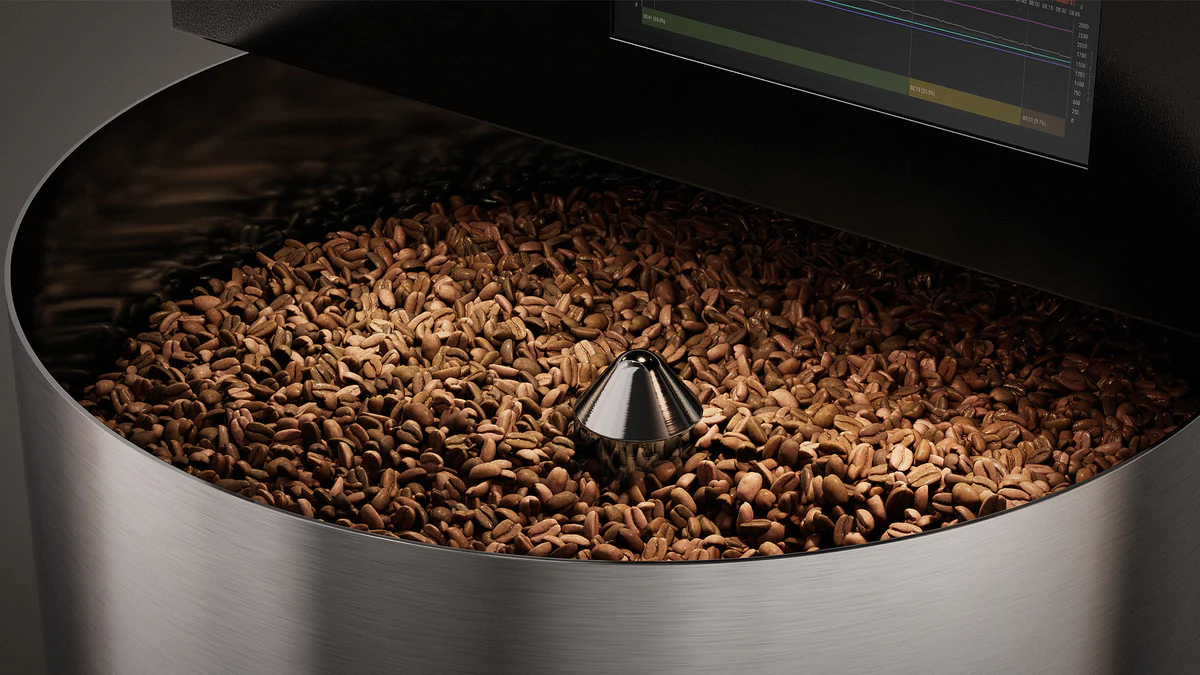
- RoastThe beans churn inside the drum while the screen tracks the roast.See inside the drum, shot 04
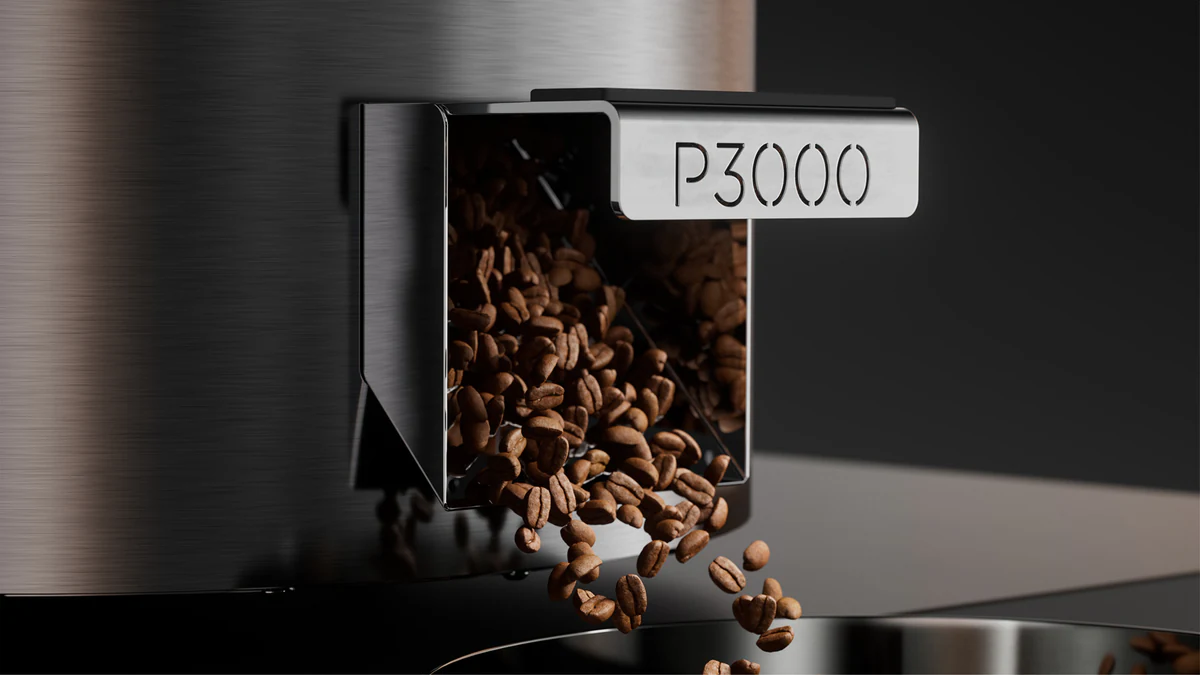
- CoolThe film follows the roasted beans out of the machine.See the bean dispensing detail, shot 06
Watch the ROEST film on its own page.
Project brief
Bringing a precision coffee roaster to life in CGI.
A brand trusted by hundreds of speciality roasters, ROEST has carved a niche making precision-focused roasting systems for small- to mid-scale production roasteries. Their machines are highly automated, data-driven and widely acclaimed by professionals who value consistency, efficiency and flavour quality.
ROEST asked us to develop a comprehensive suite of marketing visuals and Brand Motion built around the product, showcasing both the precision-engineered L100 and the award-winning P3000. The animation takes viewers through the P3000’s advanced roasting process, tracing the path of the beans from loading to cooling, with every stage revealing the roaster’s intelligent automation, precision sensors and airflow control.
CGI suited the brief: full control over lighting, angles and materials, interior shots of the drum that would be hard to photograph, and room to make late-stage changes without a reshoot. The aim was to show professional roasters how the P3000 works, in one consistent visual language across film and stills.
Project answer
Why use CGI for this project?
- What we made
XO3D created launch-ready product animation and stills for ROEST's P3000 coffee roaster.
- Why CGI
CGI allowed interior camera views of bean loading, roasting and cooling, with exact control over materials, airflow storytelling and late-stage changes.
- What was delivered
ROEST received a product film and render suite explaining the P3000 process from loading through to cooling.
Brief to output
The brief and the visual answer.
ROEST asked for a film that explains the P3000 process and a suite of marketing stills for two roasters. This is what each part of the brief became.
| Output | What it does | On this page |
|---|---|---|
| P3000 product film | A 34-second film that explains the roasting process, from loading to cooling, including interior views of the drum. | See the process shots |
| P3000 still library | Hero and detail stills of the P3000, composed for web, decks, sales material and trade press. | See the P3000 stills |
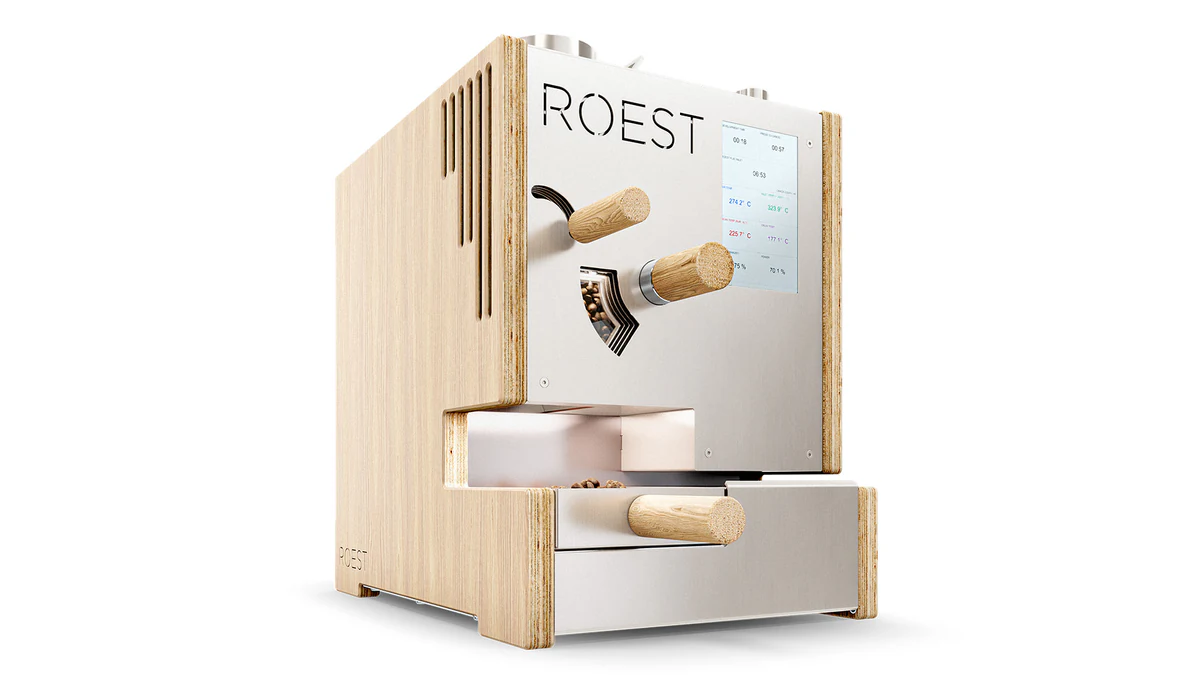
| L100 still suite | A separate still suite for the L100 sample roaster, made to share one visual language with the P3000 work. | See the L100 stills |
The stills were made for web, decks, sales material and trade press. That is the use they were planned for; this page does not record where ROEST has since published them. For this kind of work, Explore product CGI films or See the brand motion service.
Film gallery
See this project in motion.
The work
From brand motion to the inside of the drum.
Every shot below was produced from one Master Asset, giving ROEST consistent visual direction across hero stills, product film and social-cut variants.
Close-up logo reveal.
A precision-led opening moment, pulling tight on the ROEST logo to anchor the brand before the product story unfolds.
Hopper reveal.
Macro detail across the P3000 hopper, communicating engineering quality and the start of the roasting journey.
Coffee bean hero reveal.
Cinematic hero composition placing the bean centre-frame, a sensory cue that ties the machine back to the craft.
Inside the drum.
Animating the churning beans inside the roasting drum, a view that is hard to photograph in a working roaster.
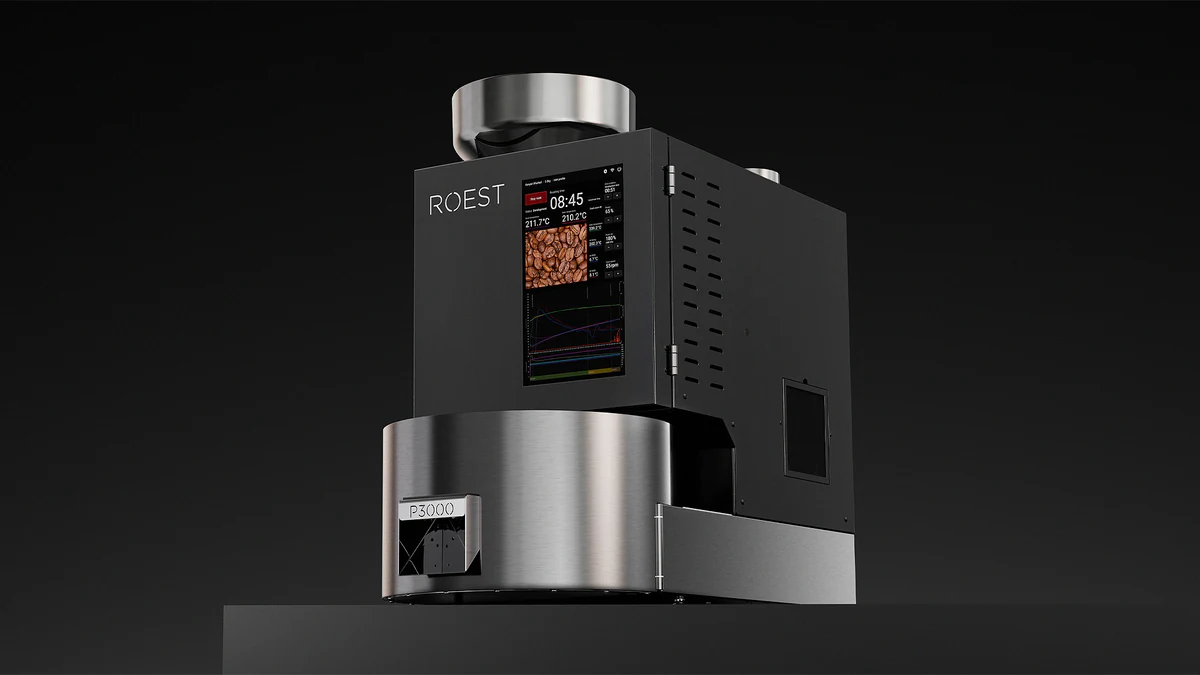
Product hero rendering.
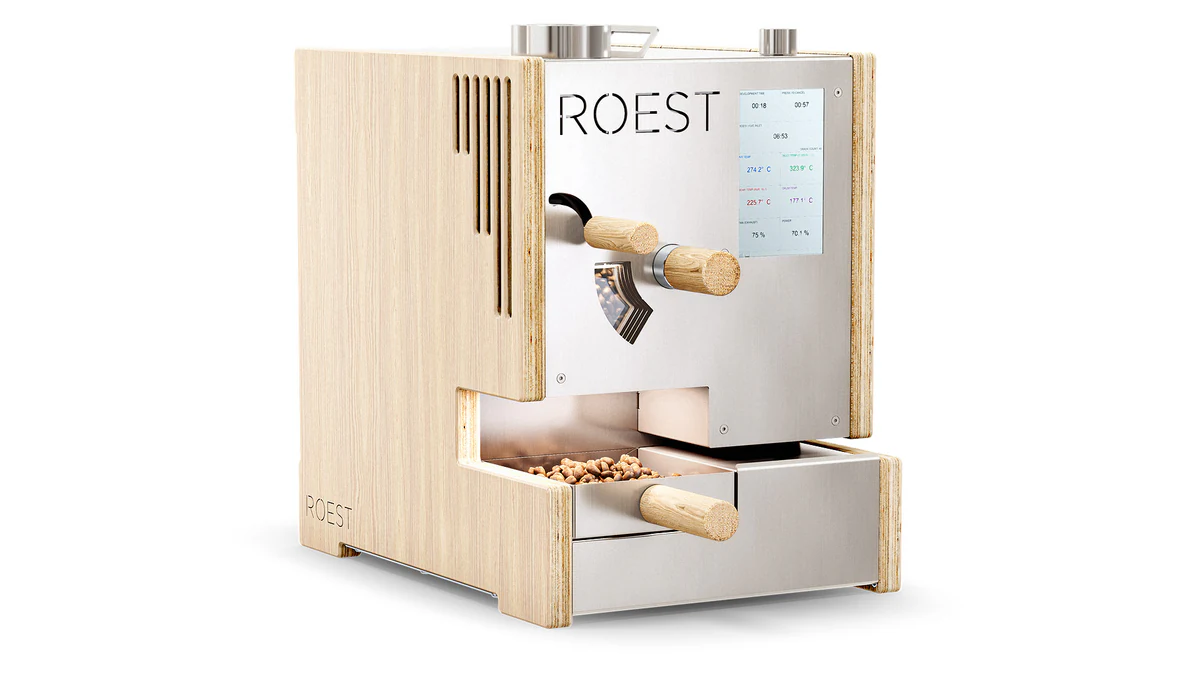
Studio-grade hero stills of the P3000, built for web, sales material and trade press alongside the animation.
Bean dispensing detail.
A close pass on the dispensing mechanism, the kind of feature shot that lifts a spec list off the page.
Beans pouring, angle one.
Square-format pour shot built for social, short, looping and tactile.
Beans pouring, angle two.
A second angle on the same moment, giving the marketing team multiple cuts from one Master Asset.
Macro detail
Close-up renders of the bean and the drum.
CGI lets us frame the bean and the drum at a scale and angle that would be hard to set up with a camera, tying the engineering back to the craft.
Behind the renders
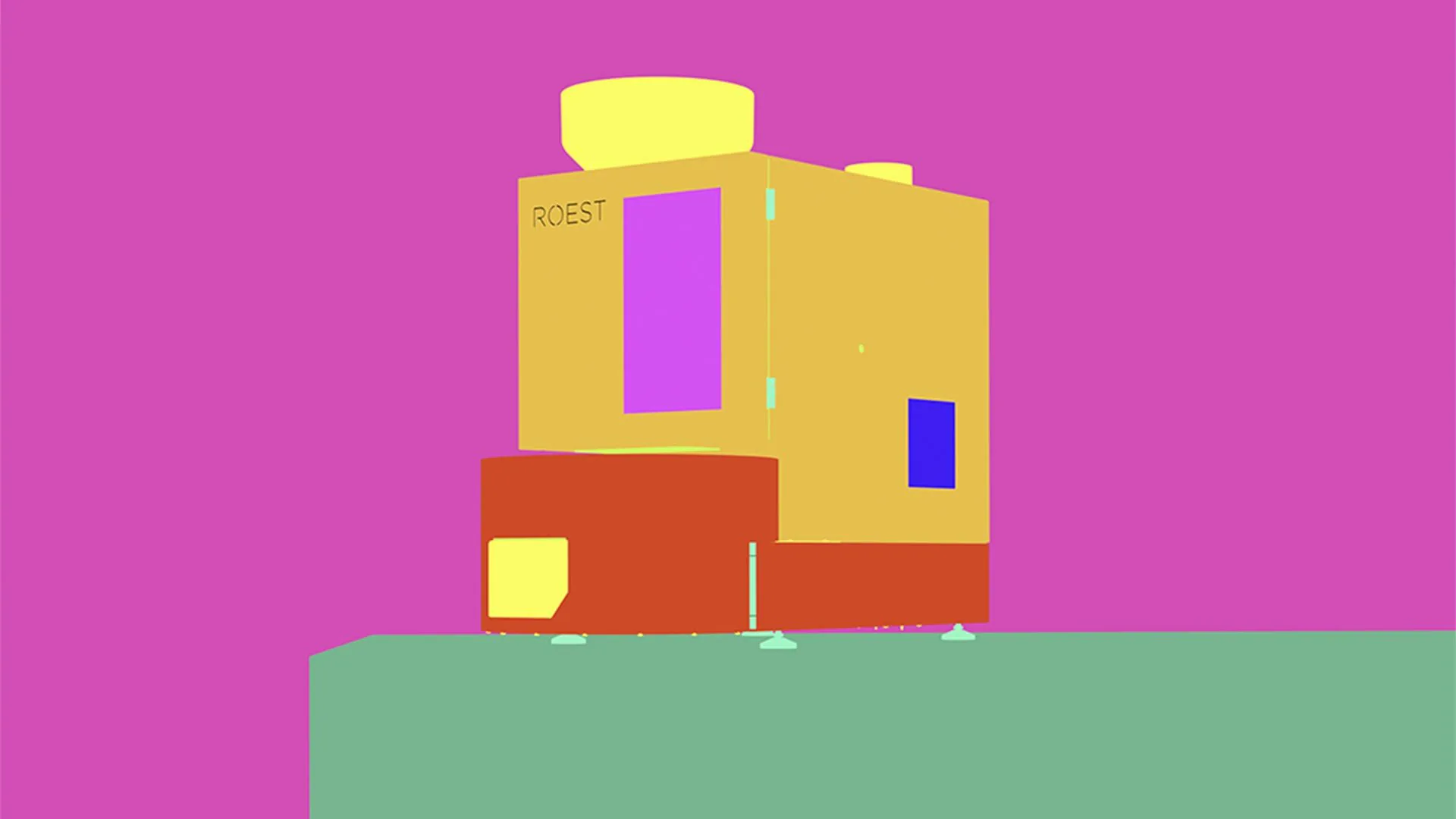
Grey-model animation tests.
Before final lighting and shading, every shot is blocked out in clay-grey passes, locking timing, camera and motion before final materials and lighting are developed. See how the model was built from the supplied CAD, grey stage to final render.
Stills suite
Marketing imagery delivered alongside film.
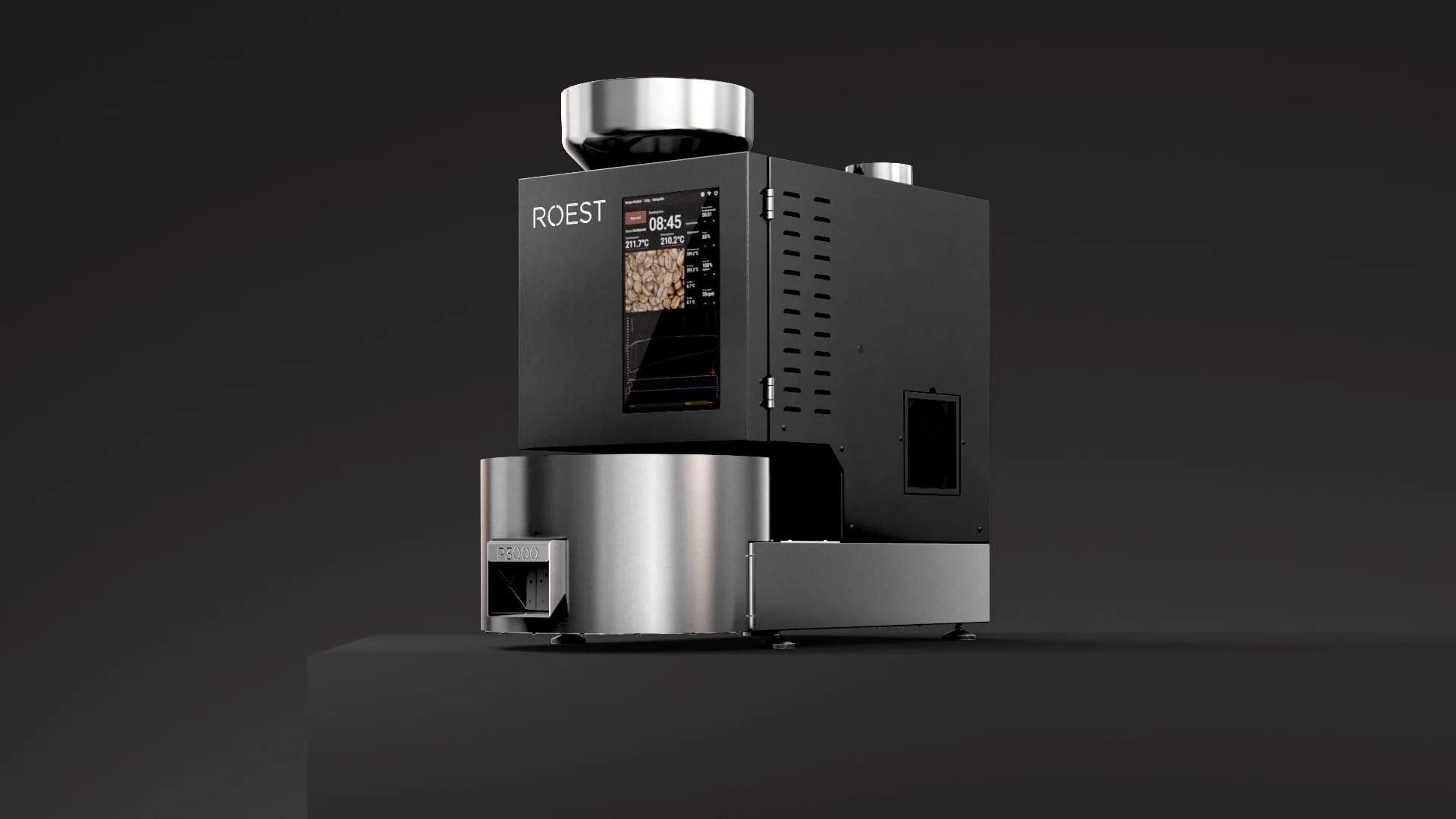
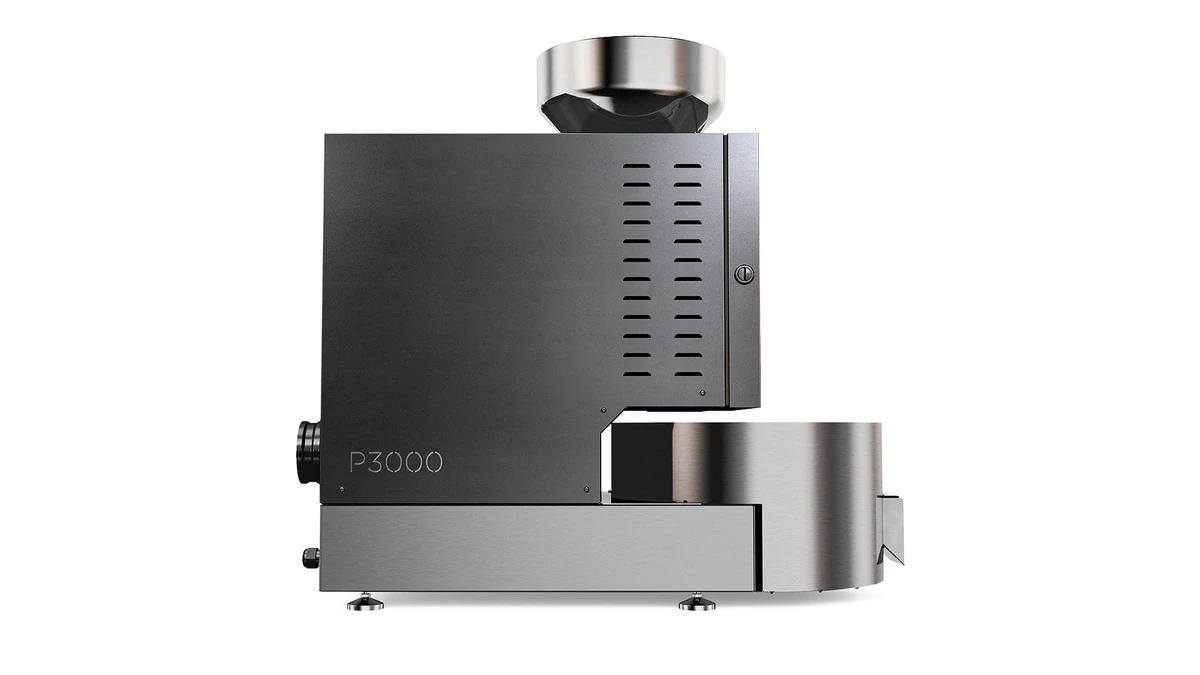
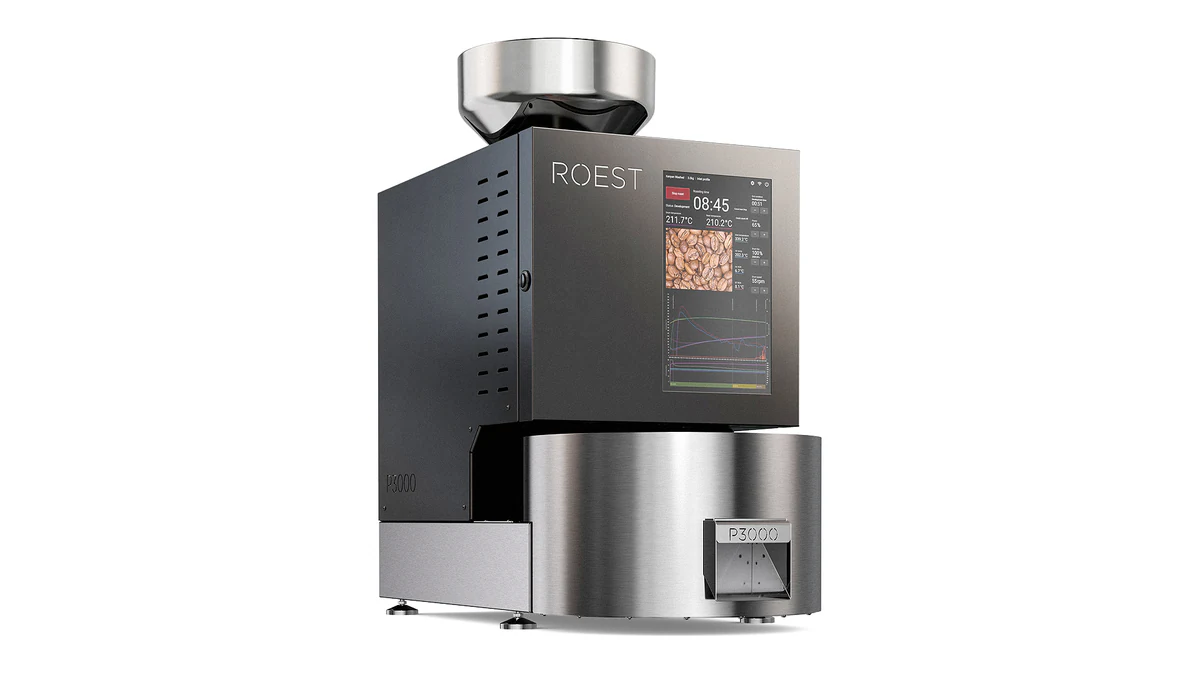
P3000 still library
A bank of hero stills for every channel.
Studio-grade CGI renders of the P3000, composed for web, decks, sales material and trade press.
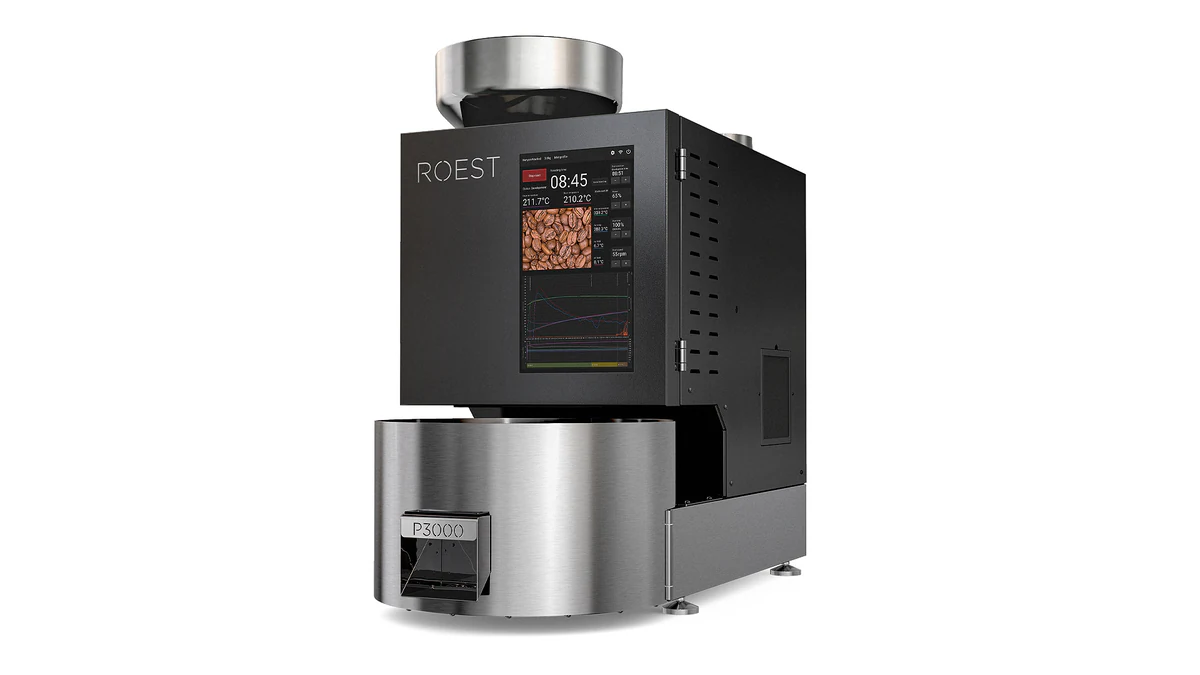
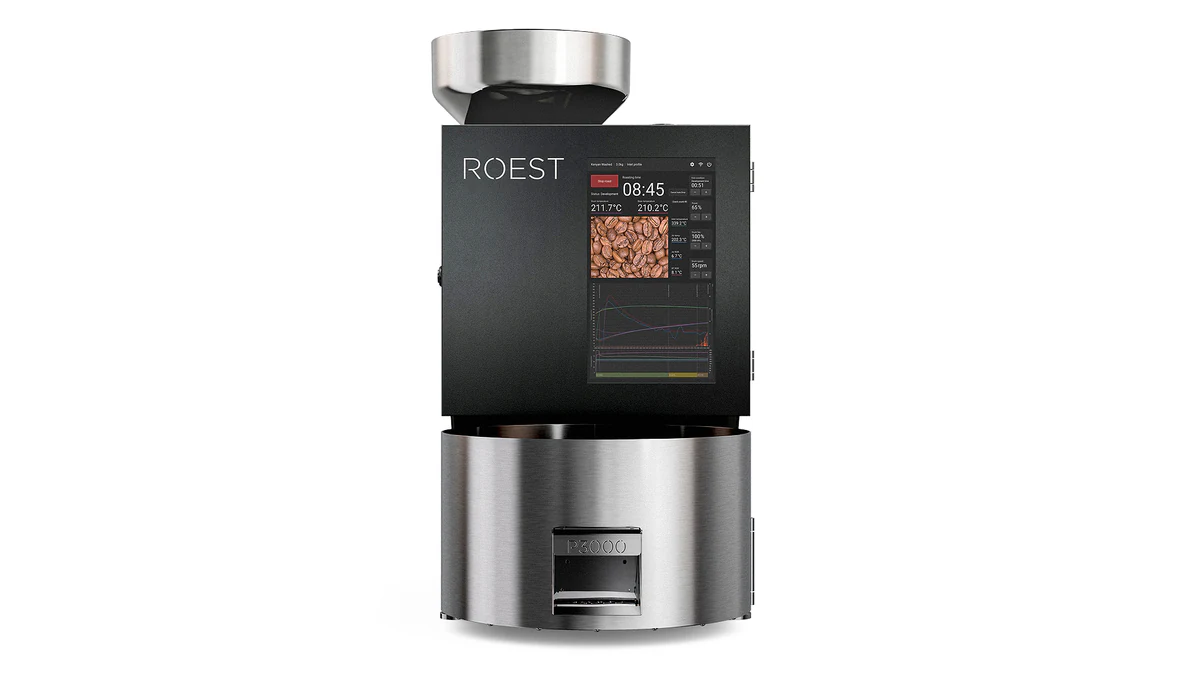
L100 sample roaster
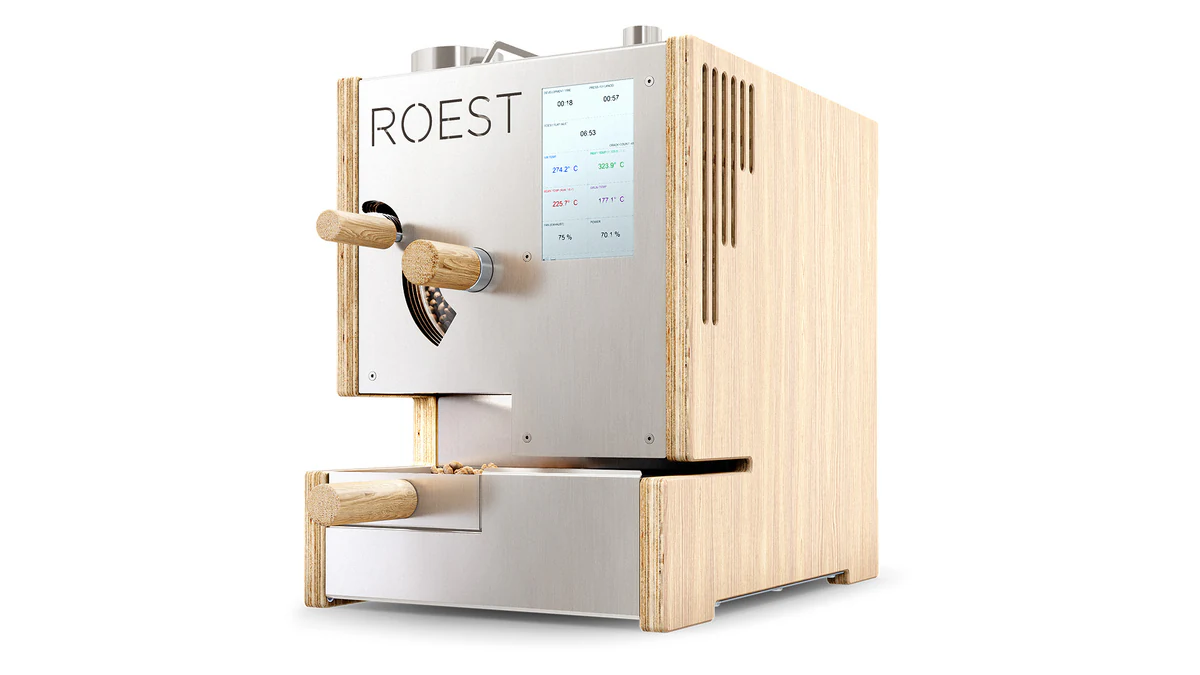
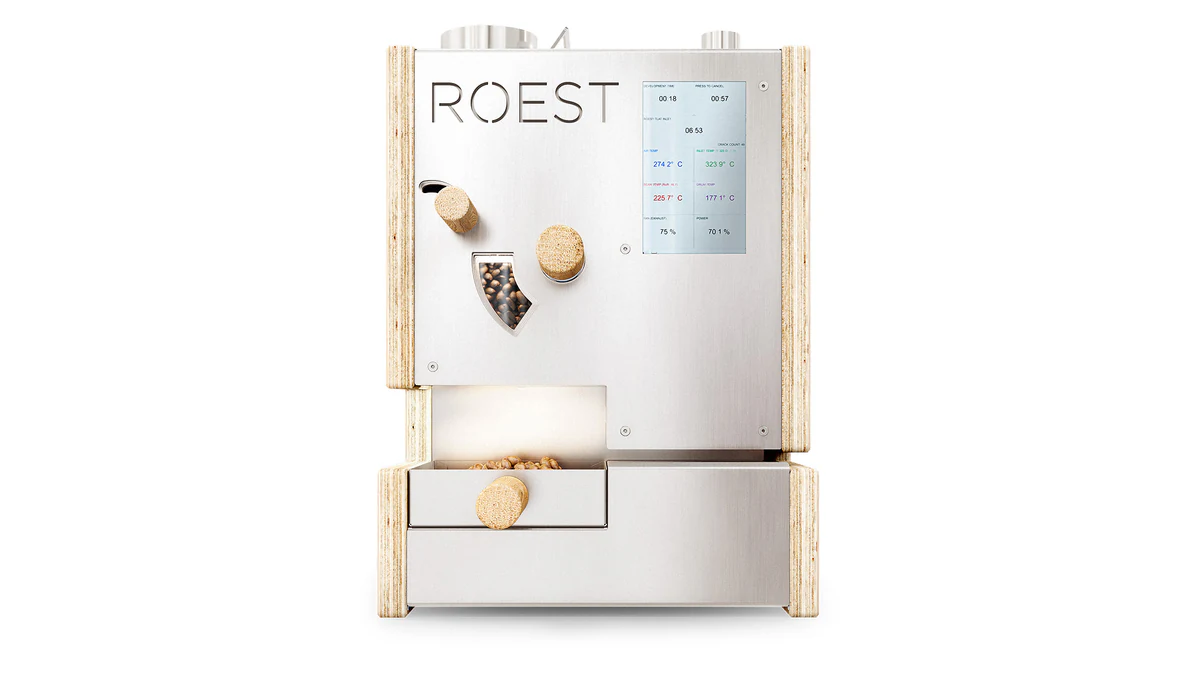
A matching CGI suite for ROEST’s sample roaster.
Alongside the P3000, we produced a dedicated still suite for the precision-engineered L100, built from the same pipeline so both products share one visual language across the brand.
Screen UI
The same shot, static and animated.
The ROEST P3000 screen shown twice from one shot: with a static interface and with the interface animated. The two clips are frame-matched, 5 seconds each.
Where to see it
Three decisions behind the work.
Each decision in the commentary above, and where its result shows on this page.
An animated screen instead of a static one
The static screen artwork was replaced with a frame sequence from the animated interface, and the affected footage was re-rendered. Compare the static and animated screen.
Only the geometry the camera sees
Internal CAD parts that the shots never showed were removed, some exterior surfaces were remeshed and details including the hopper were remodelled before lighting. See the hopper reveal.
Dark metal that still reads as metal
The first lighting pass on the hero still looked too dark and not reflective enough, so the lighting was adjusted to keep detail in the dark surfaces. See the product hero rendering.
For a new brief, the practical point is to name moving displays and close-up details before shots are approved. Changes after approval are still possible, but they mean re-rendering. How product CGI look development works.
Questions
Common questions about this kind of film.
Can a product film show internal movement?
Yes. In this film the camera goes inside the P3000 to show the beans churning in the drum, a view that is hard to photograph in a working roaster. Like the rest of the film, it was built in 3D from the supplied CAD, so it shows the intended process rather than a filmed record of a real roast.
What happens if a screen design changes?
On this project ROEST decided midway that the machine screen should show an animated interface. The static screen artwork was replaced with a frame sequence and the affected footage was re-rendered. Confirm early which displays need to move, because a change after shots are approved means rendering those shots again.
What is useful to send for a similar brief?
Start with the product CAD or geometry, the screen or interface artwork, references for the finishes, and the channels the film and stills are for. Each project is scoped on its own brief, so say which parts of the process the film needs to explain.
Planning something similar? Prepare your CGI brief.
Your next project
A brief of your own.
Use the Coffee Roaster 3D Animation & CGI Renders project as a reference for the decisions you want to discuss. Identify the product detail, camera treatment or explanation that matters to your own audience, then scope the new work around your product.
A route to consider
Product CGI Films
A product film developed through creative treatment, storyboard, animatic, product review and final picture and sound.
Bring these three things.
- What is useful about the Coffee Roaster 3D Animation & CGI Renders reference?
- What is different about your product?
- Where and when does the work need to appear?
Start with an outline. We review the product, intended outputs and timing before agreeing the production scope.

What problems arose, and how we solved them
Studio Commentary.
Midway through the project, ROEST decided the on-screen interface of the machines should be animated rather than shown as a static menu.
Jack Robertson, the 3D artist on this project, replaced the static screen artwork with a frame sequence from the animated interface, then re-rendered the affected footage. The lesson for a new brief is to confirm which displays need to move before shots are approved.
The supplied CAD also included internal geometry that was unnecessary for the visible shots. Jack removed internal parts, remeshed some exterior surfaces and remodelled details including the hopper before lighting.
For the hero still, the metal needed to read as reflective without losing detail in the dark surfaces. Jack adjusted the lighting after the first pass looked too dark and insufficiently reflective.