Nanuskate
Nanuskate Modular Skate Ramp.
A 71-second launch film and stills for Nanuskate’s modular skate ramp, made before production. The film shows how the ramp goes together and packs away for transport, and one square-planned composition serves the 16:9, 1:1 and 9:16 cuts.
Hero film
The full hero film.
The 71-second launch film, with sound. Watch the full Nanuskate film on its own page.
The Brief
Movement, modularity, and a brand worth trusting.
Nanuskate’s sports and fitness product is all about movement and modularity, including how it connects, scales and transports. That is hard to communicate with early-stage photography alone, especially before the full system and environments are ready.
They needed visuals that could demonstrate skate-anywhere portability, fast setup (“assemble in minutes”) and seamless connections, while keeping the brand feeling premium, technical and credible.
We translated the product’s modularity into a premium, high-clarity visual narrative using photoreal CGI, explainer animation and brand-led lighting rigs, showcasing setup speed, connection logic and real-world usability in a way photography can’t achieve pre-launch. Its close-up and connection shots feature in our guide to camera shots in product animation.
Project answer
Why use CGI for this project?
- What we made
XO3D created launch CGI for Nanuskate's modular skate-ramp system before full production.
- Why CGI
Early-stage photography could not show how the system connected, scaled and transported across different configurations, while CGI could demonstrate each state clearly.
- What was delivered
Nanuskate received animation and stills for early customers, investors, stakeholders and product-launch material.
Film gallery
See this project in motion.
Material look development
How did the composite ramp surface avoid looking uniform?
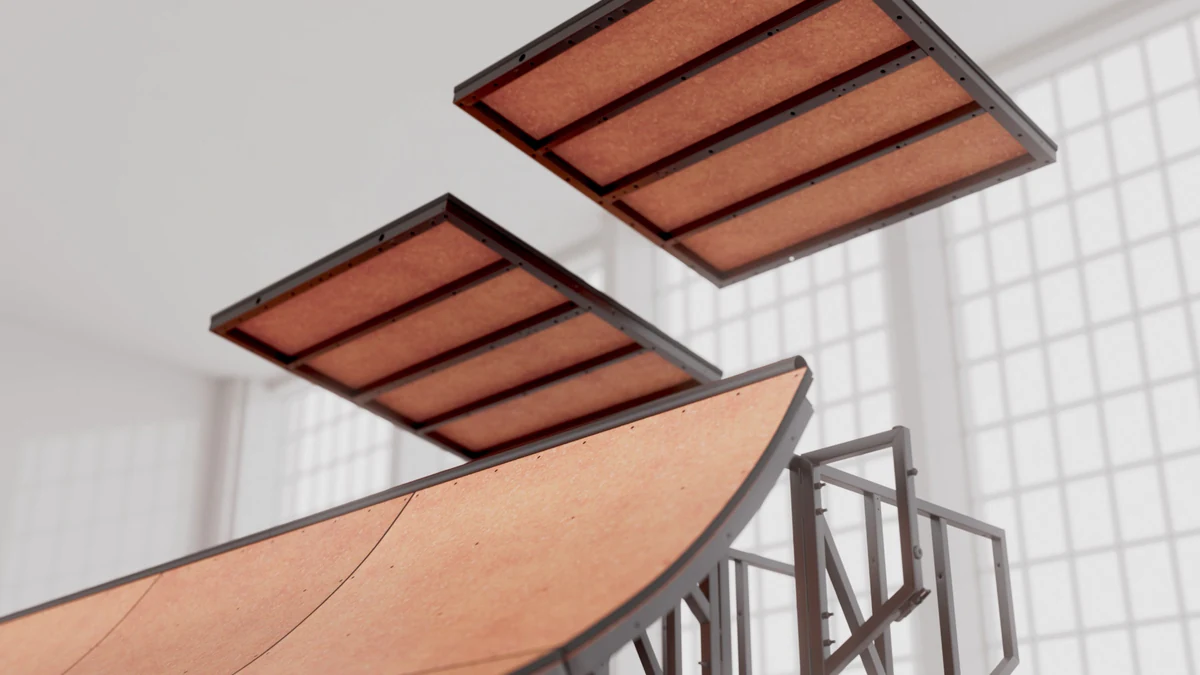
Jack Robertson, the lead 3D artist on this project, built the plastic composite finish from scratch because no material in the studio library closely matched it. He worked from images supplied by Nanuskate and photographs of comparable finishes. No physical sample was provided for this project.
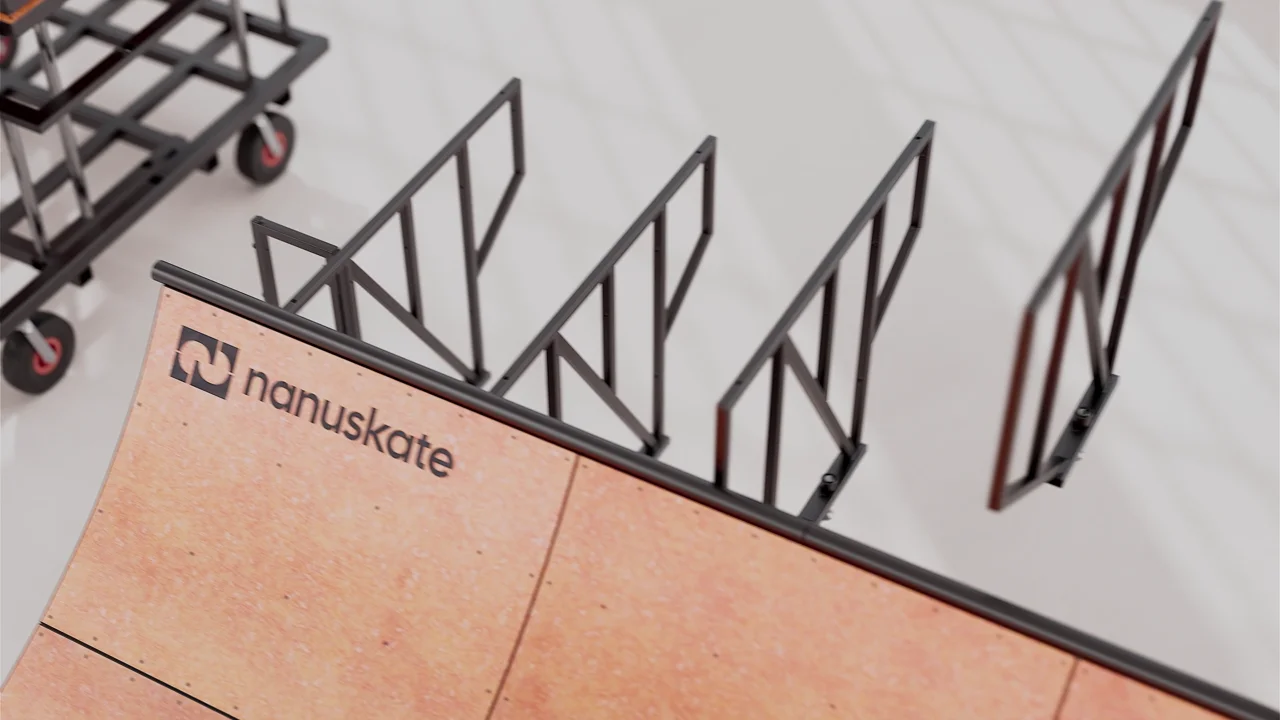
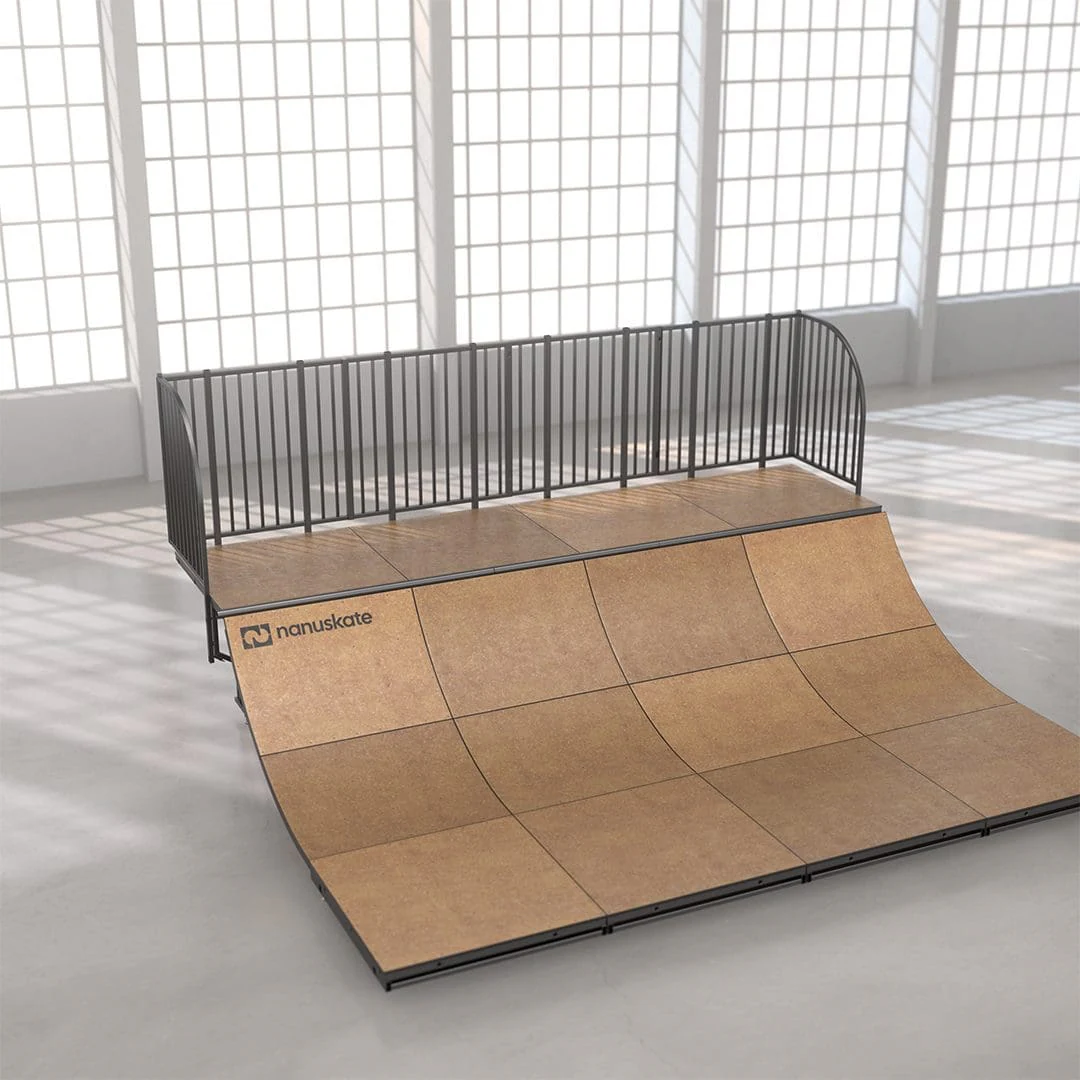
The first pass read as one uniform surface. Jack introduced a slight colour shift on each panel so the assembled ramp reads as individual panels. The reference images also showed fine speckling and small pellet-like detail. The finished panel variation can be seen in the film and stills on this page. For the wider process, see how look development works.
The Work
From hero film to vertical social, one pipeline.
A CGI library of hero films, square explainers, vertical social cuts and greycard reviews, all built from the same models, lighting and materials.
A premium reveal that sets the brand standard.
We built the headline product film around what matters most, setup speed, connection logic and real-world usability. Brand-led lighting rigs and photoreal CGI deliver the kind of visual quality typically reserved for much larger brands.
Skate-anywhere portability, demonstrated.
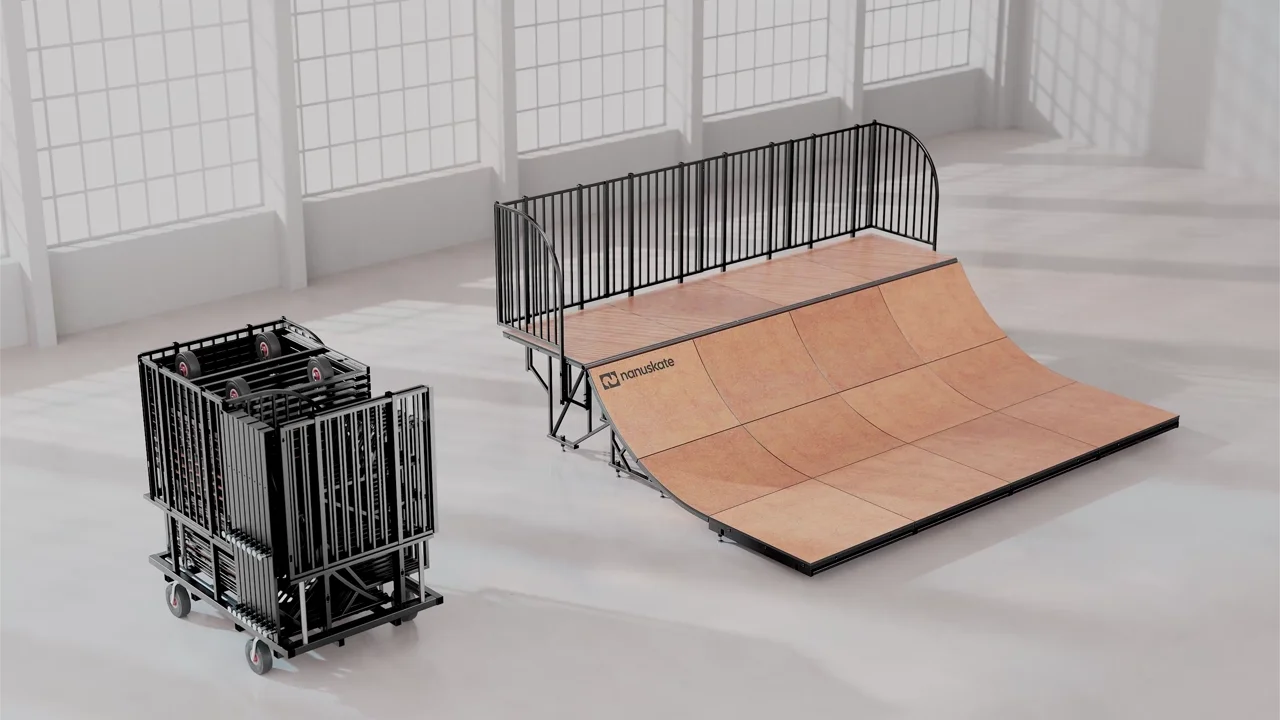
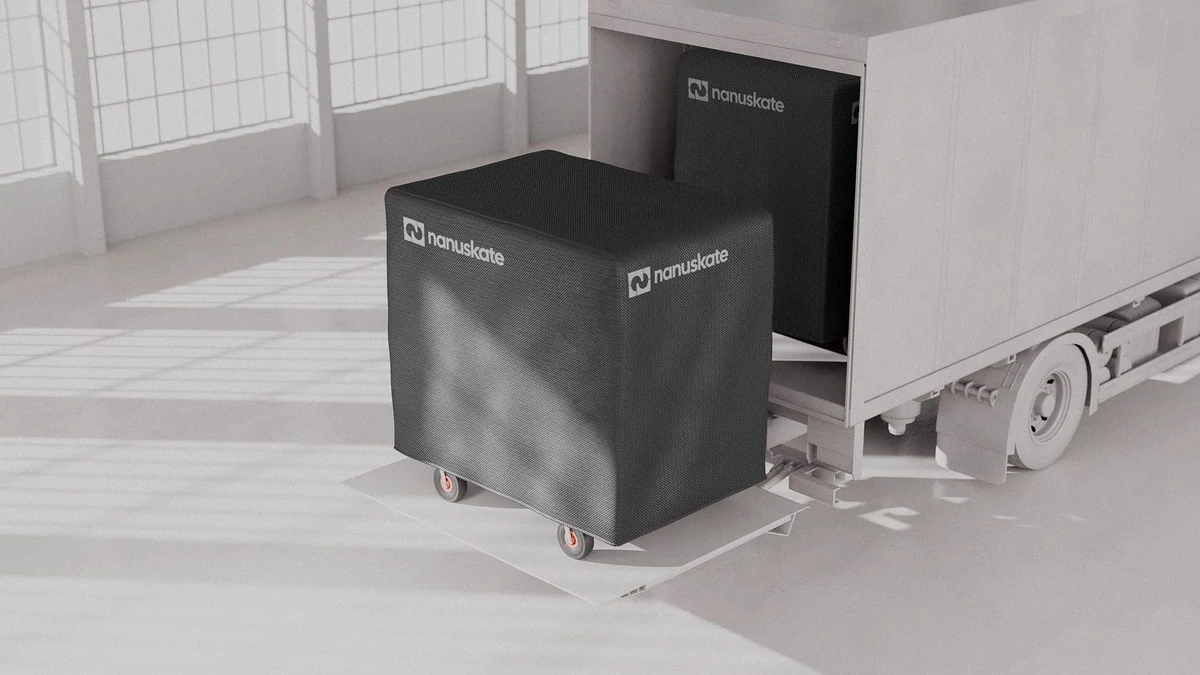
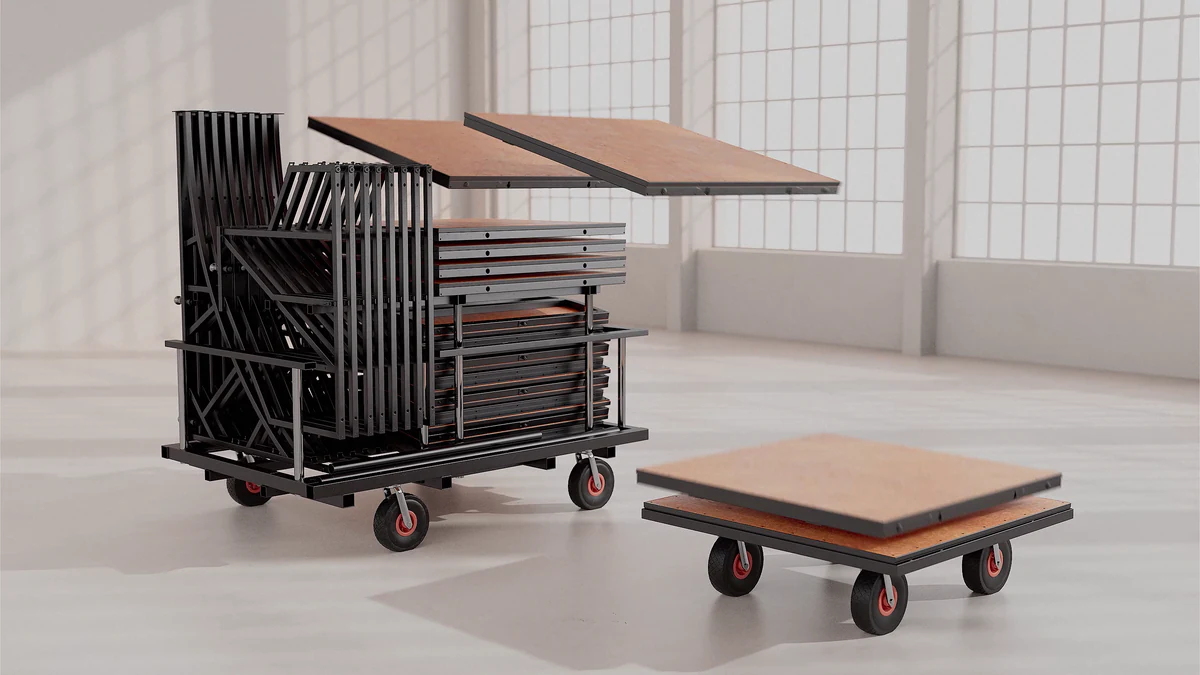
A 1:1 square sequence shows the modular cubes alongside a transport vehicle, communicating the “take it anywhere” promise that early-stage photography couldn’t capture before production.
Modularity made obvious.
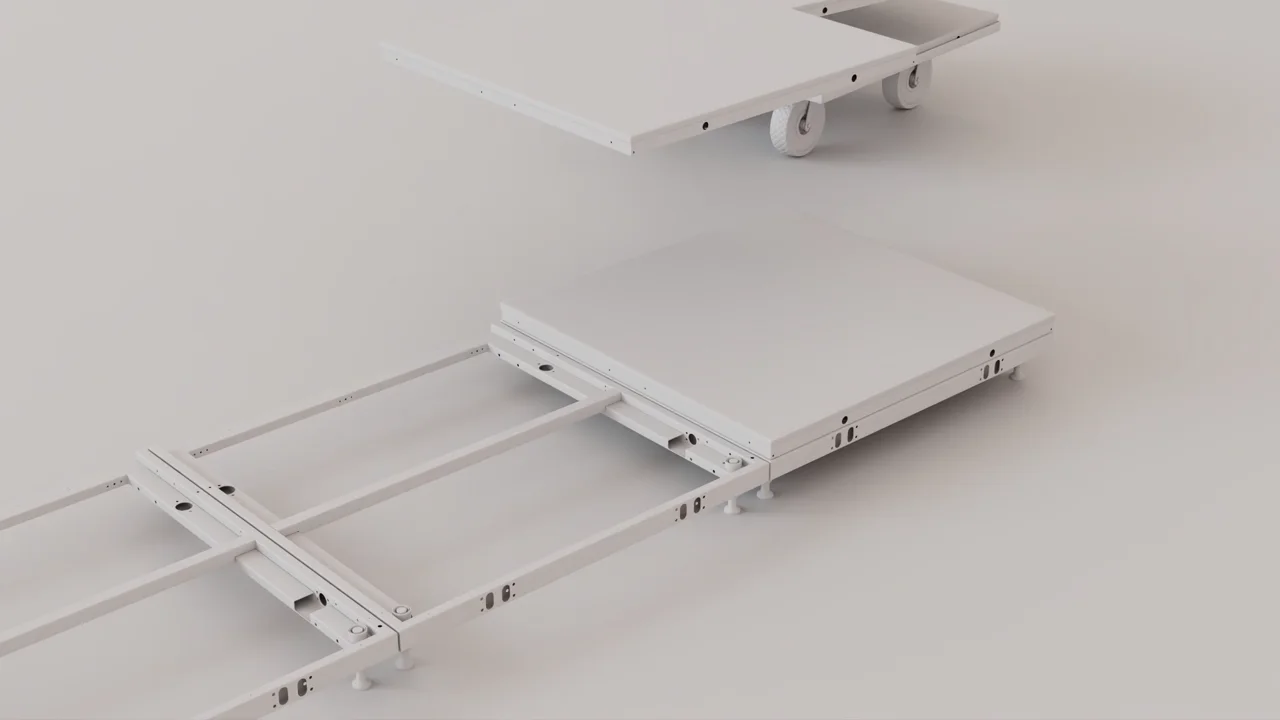
Exploded and step-by-step motion shows how the components align, lock and extend. Nanuskate reviewed the order of parts, the timing and the connection logic in greycard before final lighting, so the sequence on screen is the one the client approved.
Material detail at the macro level.
A close-up on the metal foot connector, showing its material and finish at a scale the wider shots cannot.
Real-world scale, photoreal lighting.
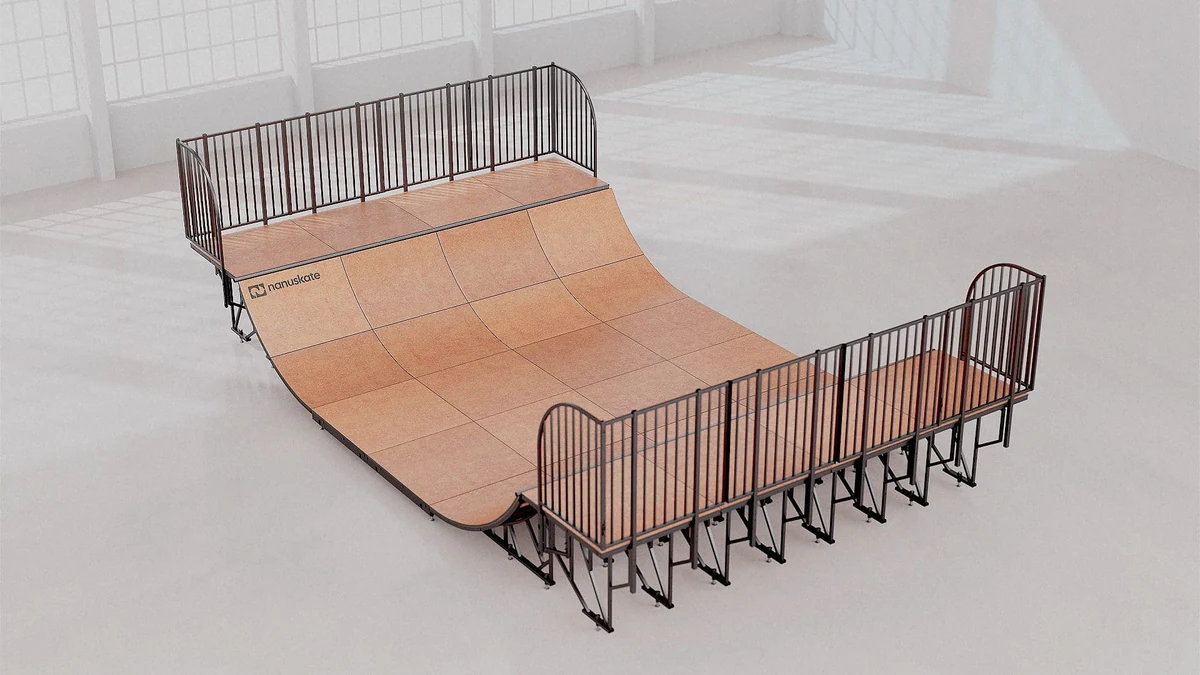
A second hero cut places the ramp in a credible lifestyle environment, using the same brand-led lighting rig as the headline film, so the Nanuskate visual language stays consistent across every asset in the library.
How parts lock, explained in motion.
A focused connection animation shows the locking mechanism in detail. It answers the question every first-time viewer asks: how do the parts hold together?
Marketing-Ready Assets
Square cuts for web, social and decks.
A library of 1:1 cuts produced from the same CGI source, drop-in ready for product pages, paid social and investor materials. See how we approach visuals for investor presentations.
Vertical Social
Channel-ready cuts for paid and organic.
Native 9:16 cuts engineered for Instagram, TikTok and paid social, built from the same source assets so the visual language stays consistent across every touchpoint.
Formats
One composition, three formats.
Jack Robertson, the lead 3D artist, planned the film in a square composition, with guides marking where the landscape and vertical edges fall. Checking frames against those guides during production kept the important action inside each format without reanimating shots for the vertical cut.
Each format had its own job. The 16:9 film carries the full launch story. The 1:1 cuts were planned for product pages, and the 9:16 cuts for Instagram, TikTok and paid social. Planning this way does not make every crop automatic: each format was still checked.
Process
Greycard passes, locking the assembly order.
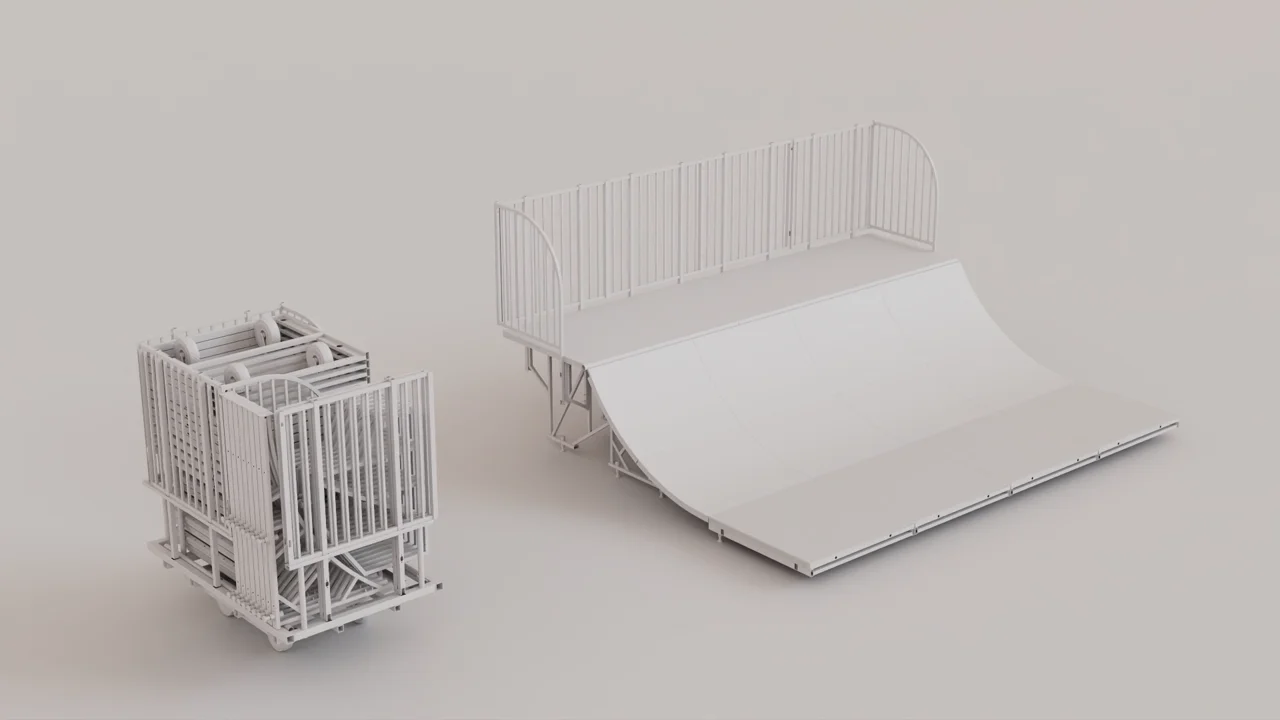
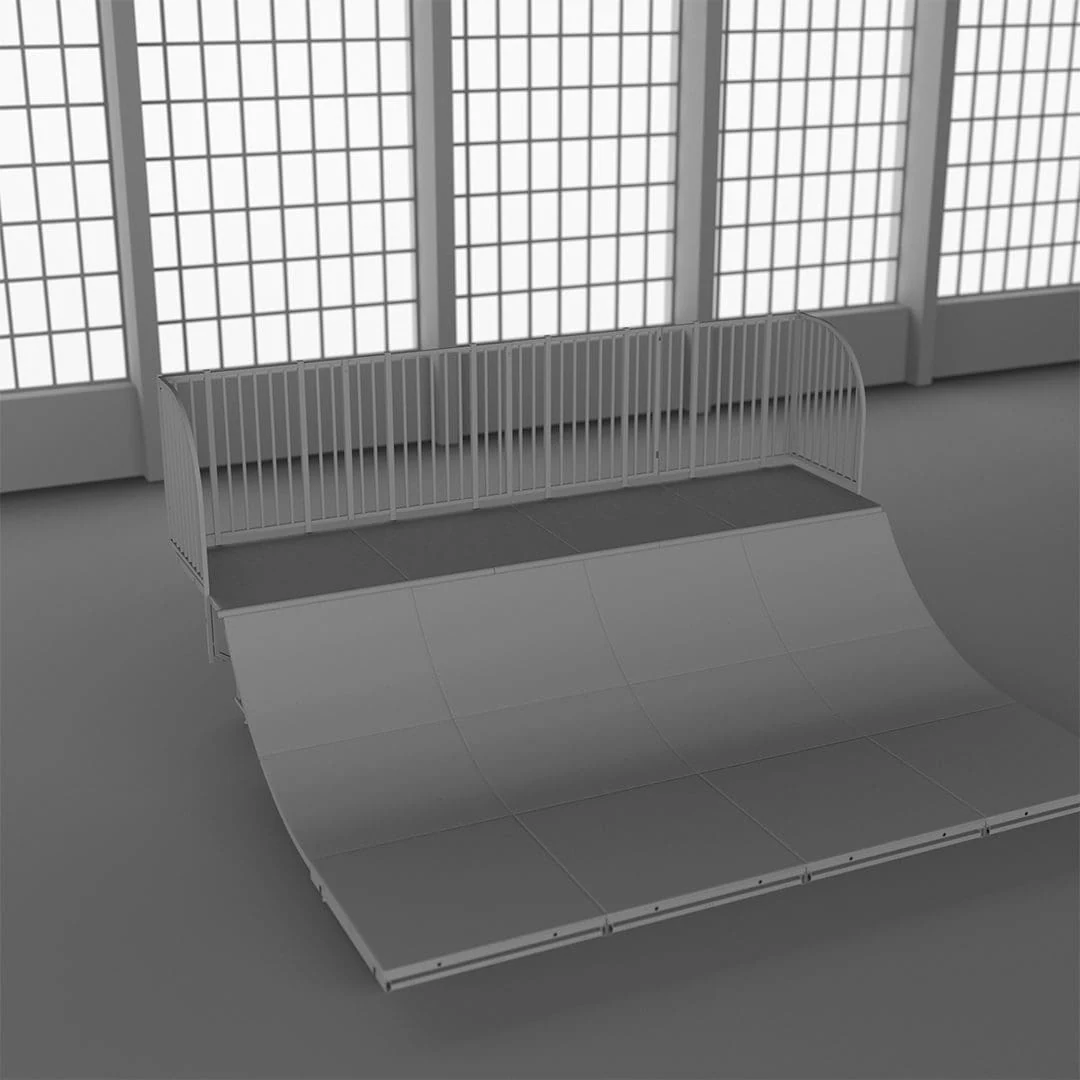
Before final lighting, every assembly step was reviewed in greycard. These passes let us confirm the order of parts, motion timing and connection logic with the client, so the sequence in the final film is the one the client approved.
Assembly
How the assembly became understandable.
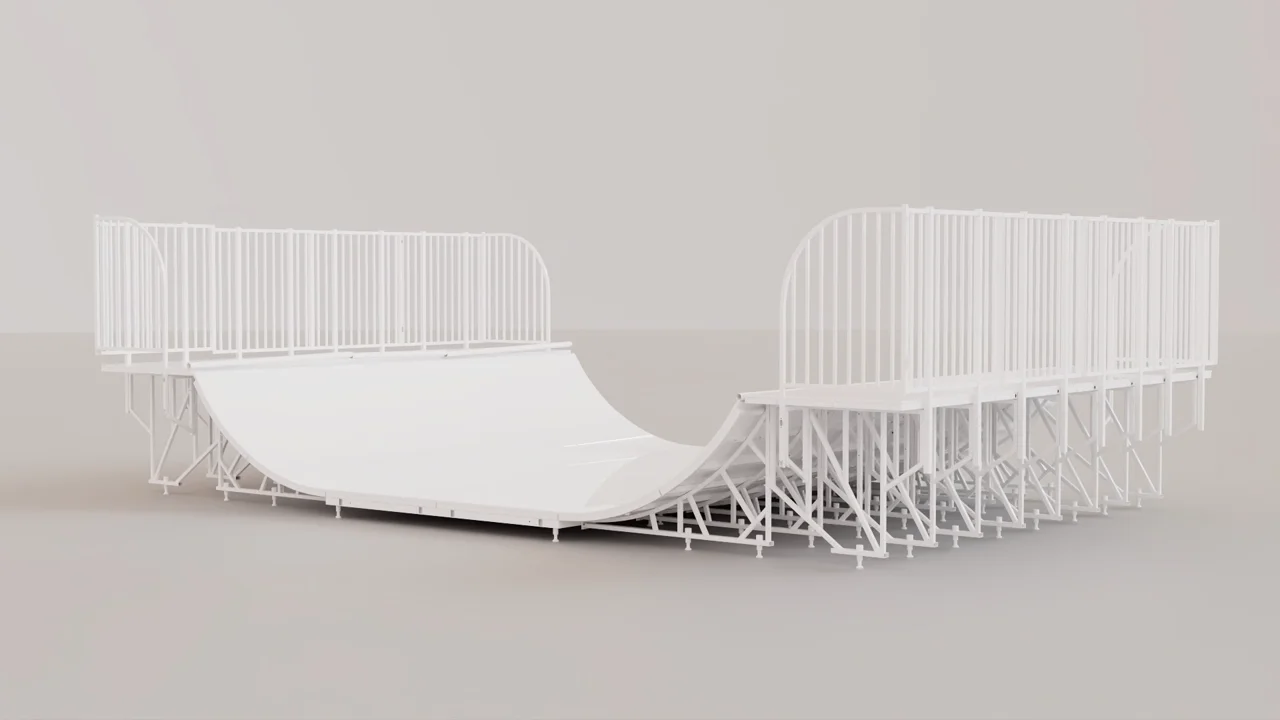
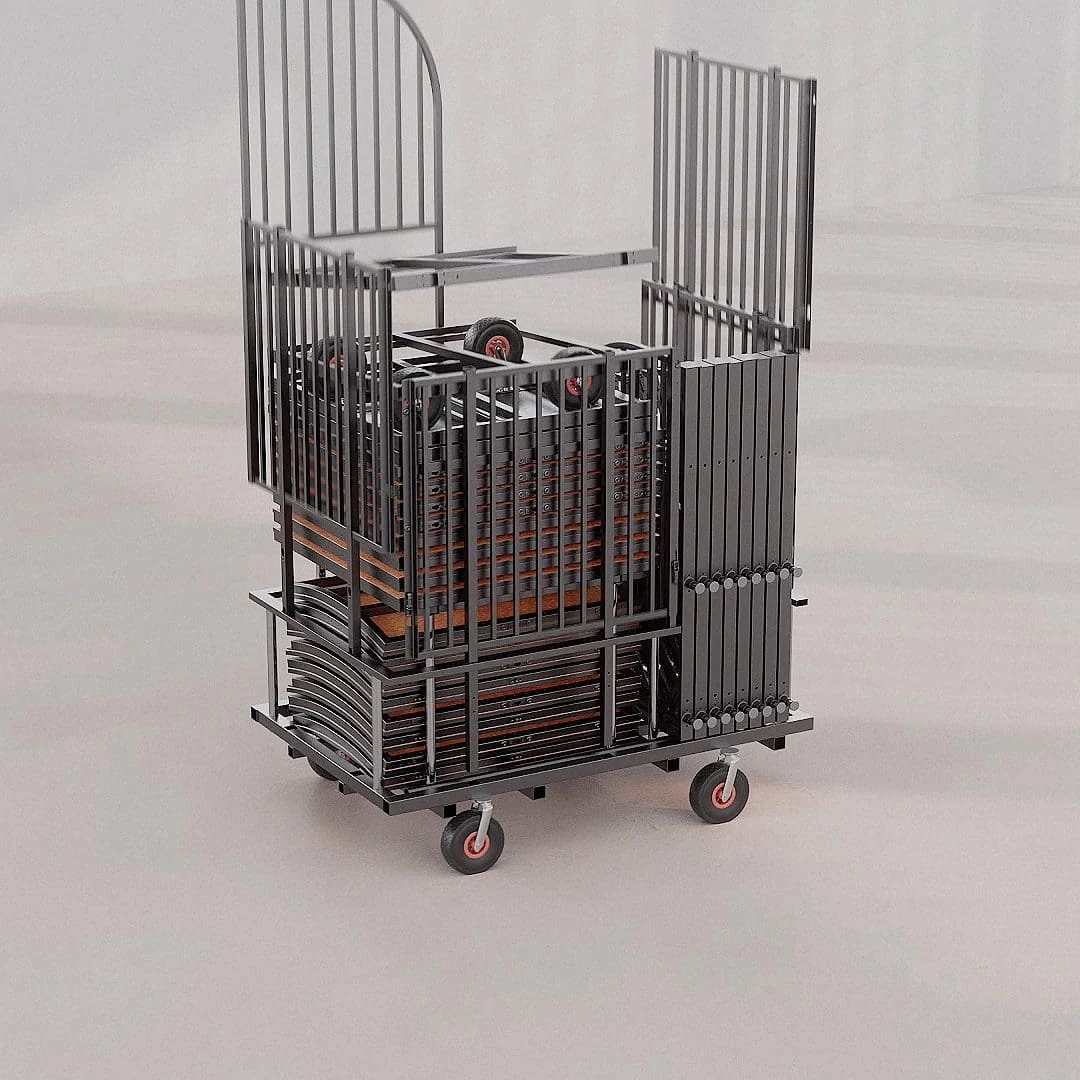
The ramp goes together in a specific order, and a viewer who has never seen it has to follow that order without a manual. The film breaks the build into single steps: the packed parts on their trolley, the frames on the floor, the deck panels lowered onto the frames, then the finished ramp.
Before final lighting, Nanuskate reviewed the order of parts, the motion timing and the connection logic in greycard, as untextured grey renders. That review checked the sequence the film shows. It was not a measurement of the parts or a test of the physical ramp.
For a product that has to be shown in steps, see how we approach exploded-view animation and how CGI can visualise a product before production. If your product needs the same treatment, bring the assembly order, the source files you have and where the film will appear, and discuss a similar project. A full brief is optional.
Assembly
The ramp goes together.
A build-up of the Nanuskate ramp assembly, cut from the launch film.
Behind the Scenes
A pipeline built for visual consistency.
Every shot was developed inside one CGI pipeline, same models, same lighting language, same materials. The result is a library of assets planned for web, social and decks.
The deliverable
A launch render library from one pipeline.
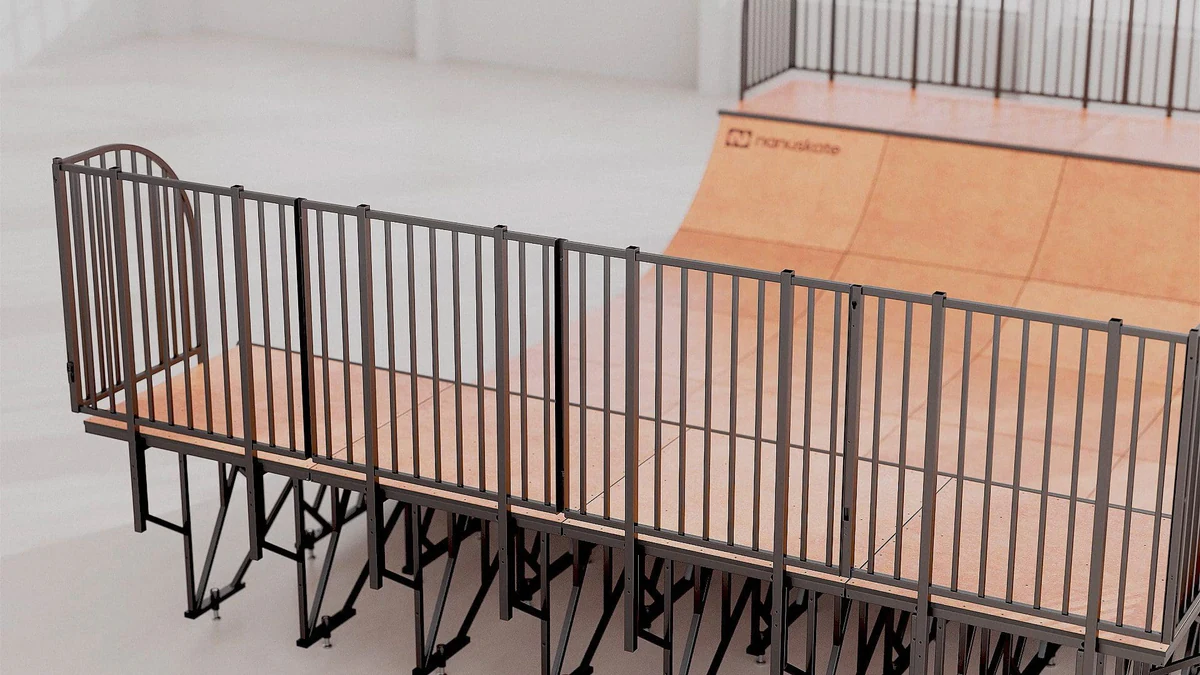
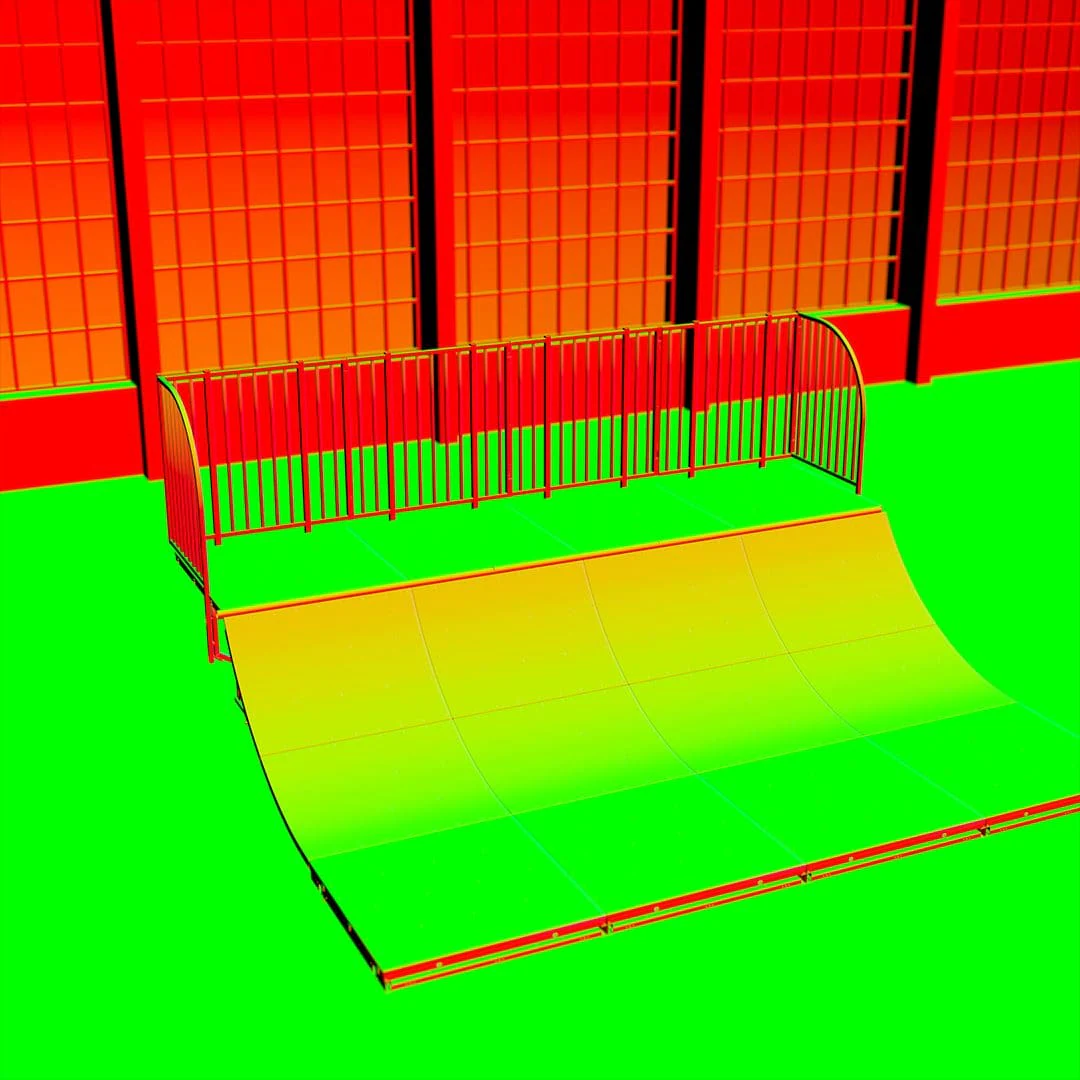
Hero stills, technical passes and lifestyle compositions, all built from the same CGI pipeline so the Nanuskate visual language stays consistent across product pages, decks and paid social.
Hero stills
Lifestyle stills, modular ramp library
Engineering review
Technical passes, AO, raw and normals
Client Review
“Exceptional to work with, very creative and would thoroughly recommend. The team took the time to fully understand what we required, hit the timescales and were a pleasure to work with.”
Colin MacandrewNanuskate
Your next project
A brief of your own.
Use the Nanuskate Modular Skate Ramp project as a reference for the decisions you want to discuss. Identify the product detail, camera treatment or explanation that matters to your own audience, then scope the new work around your product.
A route to consider
Technical CGI
An explanation of a product or mechanism built from approved source information, with technical review before finishing.
Bring these three things.
- What is useful about the Nanuskate Modular Skate Ramp reference?
- What is different about your product?
- Where and when does the work need to appear?
Start with an outline. We review the product, intended outputs and timing before agreeing the production scope.
Related work
More from the studio.
Petalite
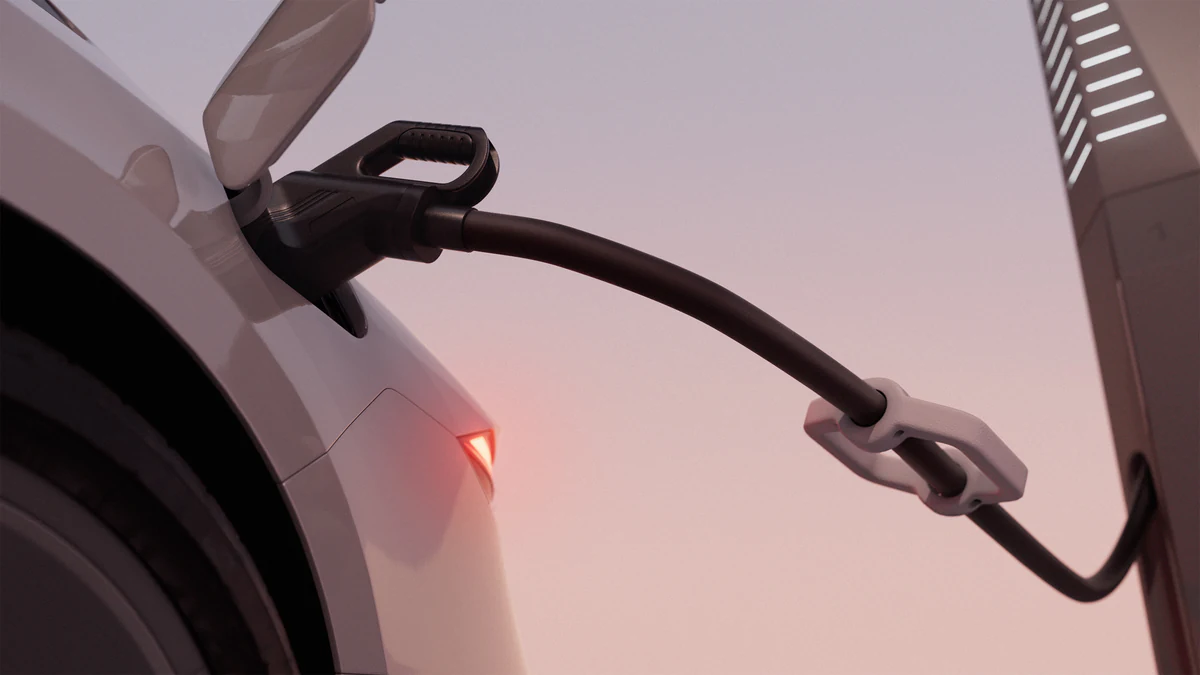
Engineering-grade CGI for EV charging infrastructure, hero stills, explainer animation and stakeholder-ready visual content.
View case study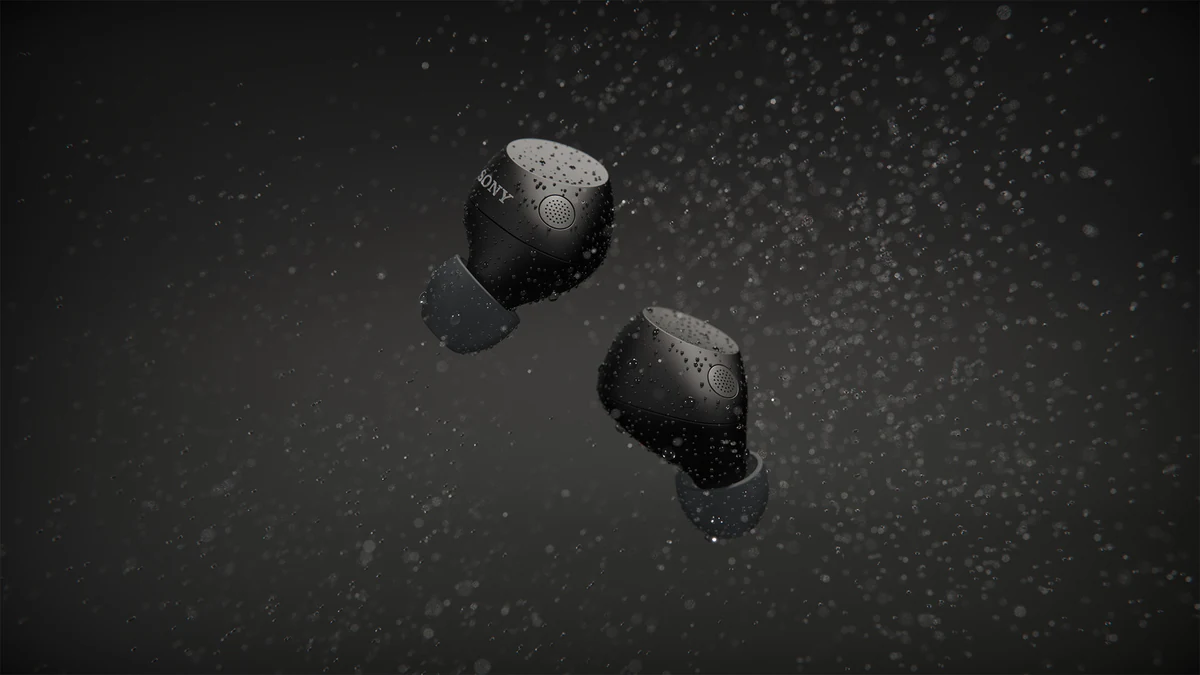
Sony
Sony WF-C710 for ImageNova: two short animated segments for the launch commercial, plus rendered colourways composited into product photography.
View case study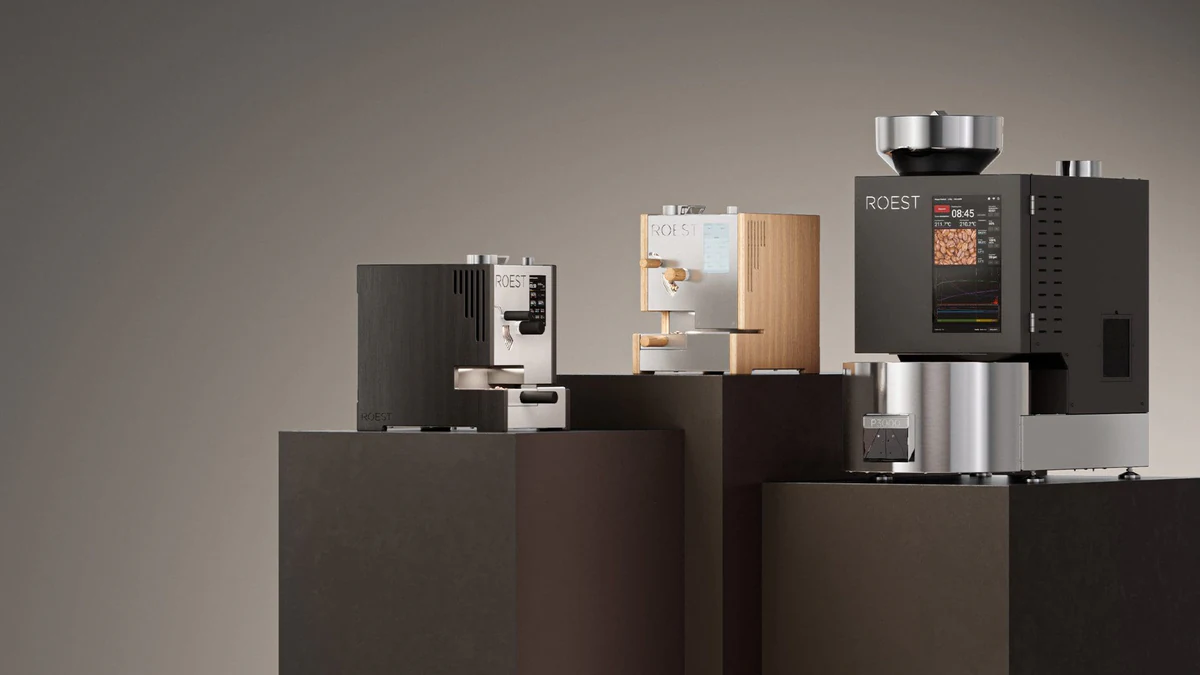
ROEST
Premium product animation for ROEST coffee equipment, precision engineering communicated through cinematic CGI.
View case study
What challenges were there during production?
Studio Commentary.
The ramp required a specific order in which the parts must be assembled.
Showing this in a clear, consumable way required communication with the client to ensure that it was completely, technically accurate.
We built a clean, step-by-step assembly sequence which shows the journey from parts to full assembly.
Jack Robertson, the lead 3D artist on this project, planned the film in a square composition with guides showing the landscape and vertical delivery areas. Checking those frames during production kept the important action inside each format without reanimating the shots for the vertical cut.