
XO3D Studio · Industry
Product CGI for Musical Instruments & Pro Audio.
XO3D creates CGI of precision instruments for musicians whose expectations of quality, visual and acoustic, are among the highest of any consumer category.
Musical instrument and professional audio CGI serves a buyer who brings genuine expertise to their purchasing decisions. A guitarist examining string imagery knows exactly what a wound string should look like at the wrap point. A woodwind player evaluating reed imagery understands what a correctly cut vamp geometry signifies about manufacturing precision. A studio engineer looking at microphone capsule imagery can assess quality from the diaphragm geometry.
XO3D produced product CGI for D'Addario's Organic Reeds launch. D'Addario makes strings, reeds and other accessories for musicians. The brief needed imagery that kept a large range of reeds and packaging consistent across the launch.

Published work
Published work: D'Addario Organic Reeds.
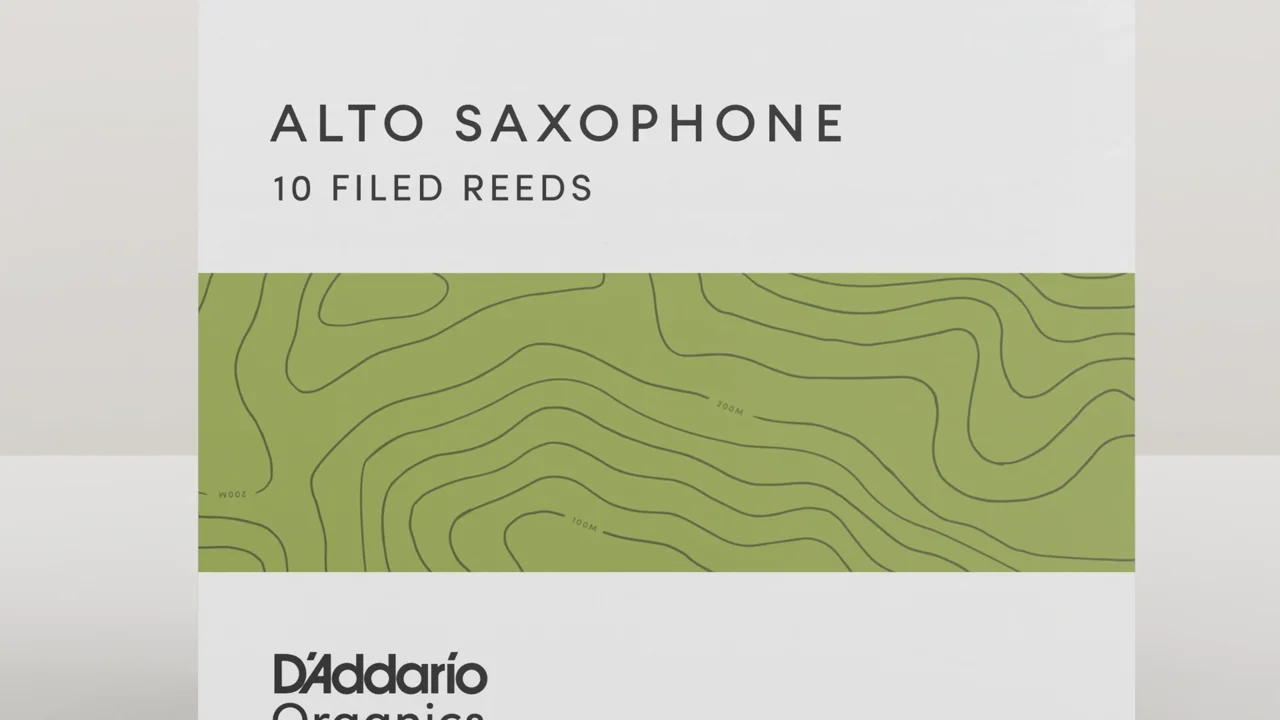
The published work here is D'Addario's Organic Reeds launch. XO3D produced the launch catalogue, packaging variations, stills and animations, all from one controlled 3D source. The brief covered reed types, strengths, instruments and packaging variants, so the catalogue had to stay consistent across every variation.
Explore the family presentation, the detail views and the review passes in the D'Addario Organic Reeds launch catalogue to see how the product story was developed. The three panels below point to the parts of that case study a buyer can inspect.
Family presentation
The Reserve and Select Jazz boxes shown together in one family shot. It lets a buyer see the range side by side before choosing a product.
See the render libraryReed detail
One product, Select Jazz filed for tenor saxophone, shown as a main render and ten detail angles, from the box to the single reed in its sleeve.
See the Tenor Sax detail setProduct and packaging reveal
A launch endcard that pairs the reed with its packaging in motion, used across launch communications.
See the endcard film
Plan your own catalogue the same way.
A range like this is easier to brief as a matrix. List each product, its packaging, the views it needs and where each image will be used. The row below is a synthetic example, not D'Addario data.
| Product identity | Packaging variant | View | Intended placement |
|---|---|---|---|
| Synthetic example Example reed, one cut and strength | Single box | Front, angled and close detail | Product page gallery |
Review before finish
Separate motion approval from surface approval.
On the D'Addario launch, the endcard and the packaging-unwrapping movements were reviewed in greycard before final lighting and materials. A greycard pass shows the product in plain grey, so the client can judge timing, framing and how the reed and box move without being distracted by the finish. Surface detail is judged afterwards, on the lit and textured film.
That was this project's review purpose. Each commission agrees its own review stages, so this is not a fixed workflow or revision count. Compare the two stages in the case study:
Stage one: greycard
The endcard movement in plain grey, used to review the reed and box arrangement, the motion and the framing.
See the greycard passesStage two: finished film
The finished endcard, with final lighting and materials on the reed and its packaging.
See the finished endcard
The sector
What musical instrument and pro audio CGI covers.
Reeds and their packaging
The work published here is D'Addario's Organic Reeds launch: reed and packaging stills, catalogue variations and launch animation, built from one controlled 3D source.
Read the case studyGuitars, keyboards, microphones and more
If your product is an instrument, a piece of audio equipment or another accessory, send us the brief. We will look at the product, the details buyers inspect and the references you can supply, and agree what the work needs before quoting.
Discuss your briefHow we deliver
Bring the product decisions into the brief.
Musicians look closely at the details of the products they use. The way to meet that is to agree the right references for each material and look at the product-specific details together, before production starts. Bring what you have of the following:
- Approved product geometry, CAD or reference photography.
- Dimensions.
- Labels and packaging artwork.
- The approved variants: ranges, strengths, sizes or colours.
- The close-ups the buyer needs to see.
- The channels and formats the images or films are for.
- Whether the work needs sound.
This is a starting list for scoping the work, not a list of accepted file types. Use the product CGI brief template to organise it. For the outputs themselves, see directed product stills and campaign visuals or product CGI films.
FAQ
Musical instrument & pro audio CGI questions.
What reference would a new instrument brief need?
Do you work with organic materials like cane reeds?
Your next project
Connect material detail to the product.
Plan the views around construction, finish and the musician's interaction with the product. Keep any claim about acoustic performance separate from what the CGI can demonstrate visually.
A route to consider
CGI stills and campaign visuals
Directed product stills with an agreed shot list, material references, environments and delivery formats.
Bring these three things.
- Which construction details need close views?
- Which product variants are approved?
- Does the brief include sound or a silent presentation?
Start with an outline. We review the product, intended outputs and timing before agreeing the production scope.