
XO3D Studio · Films
AUAR Automated Architecture Microfactory 3D Product Animation
XO3D's hero animation for AUAR's Automated Architecture Microfactory: a director-led CGI film from CAD showing a construction robotics system as a real product.
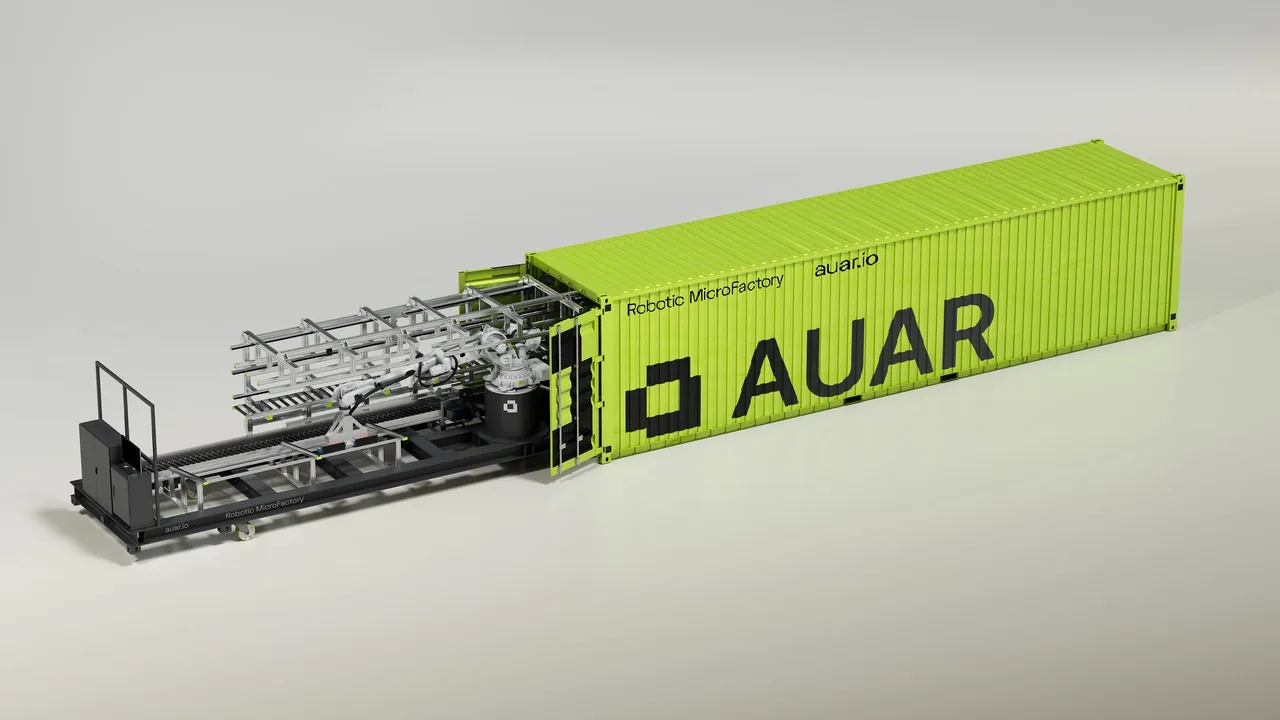
AUAR supplies homebuilders with deployable MicroFactories: industrial robot cells running Physical AI that manufacture wall and floor panels on site. This hero animation was built from AUAR’s supplied model, movement references and brand guidance, before the robot cell existed as a finished physical product, giving AUAR a complete CGI content suite for the launch of their new site.
The MicroFactory film in two beats
Connor Hamilton-Smith, the creative director on this project, identifies two story beats. First, the MicroFactory is shown deployed from its container. Then the robot cell builds a timber panel. A short transition from container to robot lets the film reach the working sequence sooner. Wide views show how the container, the rail-mounted cell and the timber stock relate to each other. Close views pick out selected details, such as the grippers and tooling. The film explains the intended system; it does not test or certify how the robot performs. Read the full AUAR production story.
What you see in the film
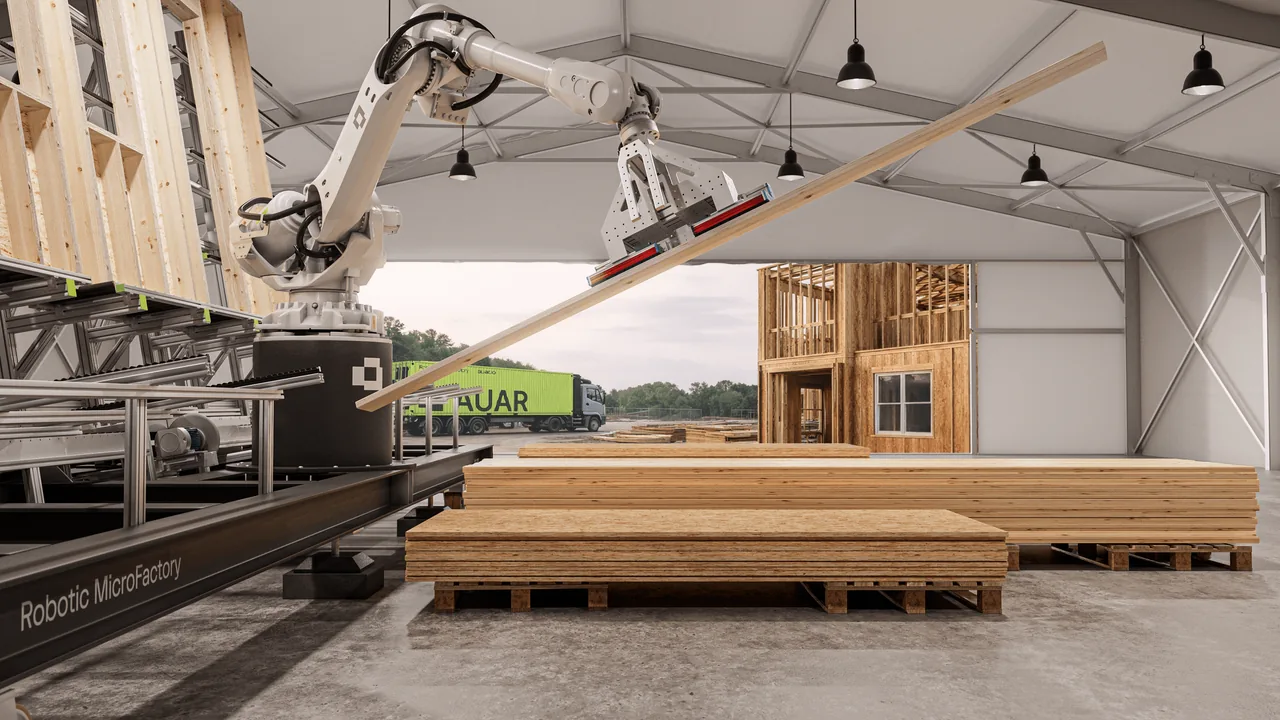
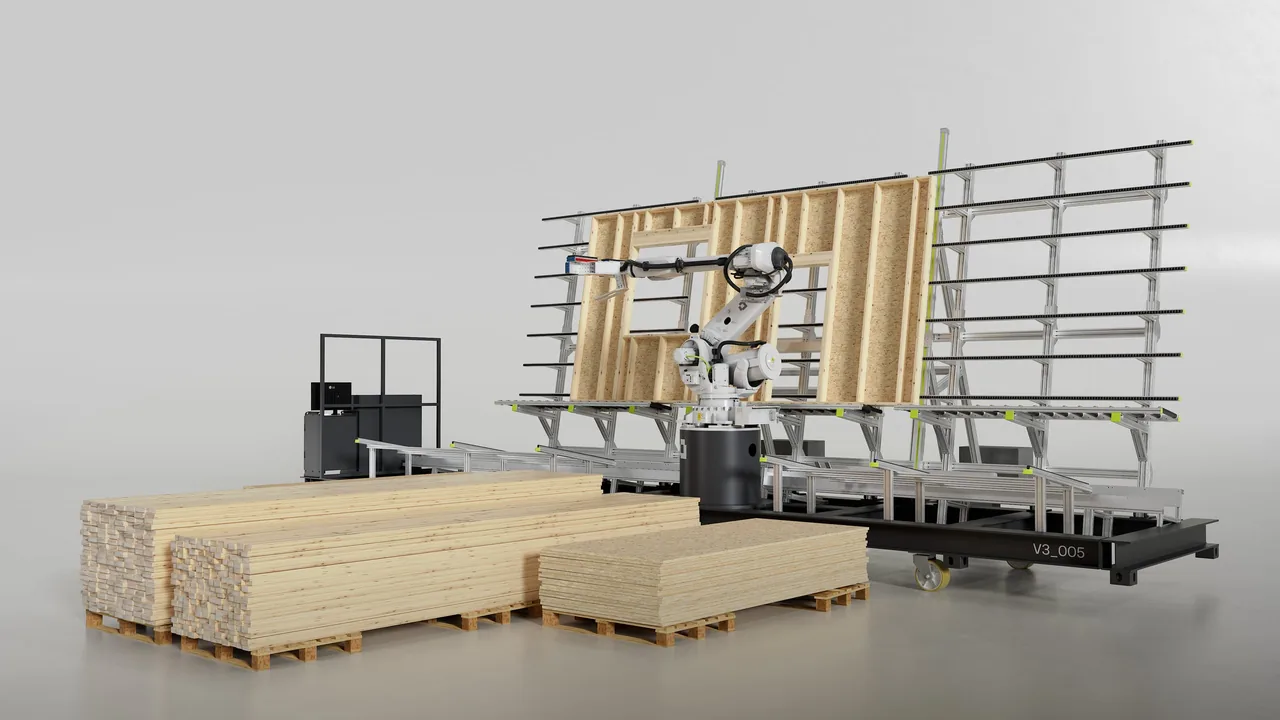
This is a visual description, not a transcript. The film opens on a bright AUAR shipping container beside the deployed MicroFactory. Wide views reveal the full rail-mounted robot cell, timber stock and a partly assembled wall panel. The camera moves through overhead and macro angles as robotic arms, grippers and tooling lift, position and work with timber components. It closes on the completed wall panel and a wide view of the full MicroFactory. There is no spoken dialogue. Music and designed mechanical sound support the animation.
This is a product film for a robotic manufacturing system, not an architectural walkthrough. For related briefs, see robotics and automation CGI and technical CGI.
Why it reads as real
Warm, natural lighting keeps the system reading as approachable and human rather than clinical. Real containers, pallets and timber stacks anchor the MicroFactory at its true working size, so the “factory in a container” claim is believable at a glance. Wide frames explain the full system; macro frames reward the engineering detail. See the full case study for the process, the grey-to-final pairs and the interactive turntable.
Using this film as a reference
If this film is close to what you need, say which job it does for you:
- Explaining an overall system, where the viewer has to understand how the parts relate before the detail matters.
- Making a component readable, where one mechanism or part carries the message.
- Showing a pre-manufacture product in context, where the product is not yet built but has to look real, at true scale.
Your film starts from your own product, source files and audience. The briefing guide sets out what to bring.
Three stills from the same production
From AUAR's launch still library, made from the same build as the film. They are stills, not frames taken from the film.
Project credits
- Executive Creative Director
- Thomas Howcroft
- Executive Creative Director
- Alex Mann
- Creative Director
- Connor Hamilton-Smith
- 3D Modeller
- Joseph Cletus
- Sound Engineer
- Gulliver Tickell
Directed and produced by XO3D. Credits as recorded on the case study; each credit is the person's role on this project only.
Where to look next
- Bloq.it smart locker film Another technical product explained in motion: the locker's vault slides out of its bay to show that it is a module.
Coverage: Stash featured the film as XO3D Frames Up Robot MicroFactory for AUAR on 28 July 2026.
Your next project
From film reference to your brief.
If AUAR Automated Architecture Microfactory 3D Product Animation is a useful reference, tell us which part: the reveal, a product detail, the pace or the way the operation is explained. A new film begins with your own product information and audience.
A route to consider
Product CGI Films
A product film developed through creative treatment, storyboard, animatic, product review and final picture and sound.
Bring these three things.
- Which moment in AUAR Automated Architecture Microfactory 3D Product Animation is relevant?
- What is your product message?
- Which runtime and delivery channels are required?
Start with an outline. We review the product, intended outputs and timing before agreeing the production scope.