XO3D Studio · Industry
Product CGI for EV & Cleantech Brands.
XO3D creates product CGI from engineering source for a sector where technical credibility and commercial ambition must coexist, often before the product exists physically.
Selected clients








Sony work via ImageNova. Ferrari and Burberry work via KCD.
Overview
Engineers and investors need different views of the same system.
The EV and clean technology sector presents a hard CGI challenge. The products, from EV charging infrastructure to battery storage and power conversion equipment, are technically complex, and many of the people who see them are technically literate. A visualisation that misrepresents a mechanism, simplifies an engineering feature for visual convenience, or uses generic industrial aesthetics signals that the studio doesn't understand the product. In a sector where trust is everything, that matters.
At the same time, cleantech brands must communicate to non-technical investors, policy makers, and consumer audiences who need to understand the product's significance without being lost in its engineering. CGI that serves engineers and non-engineers needs a plan for each audience. See how our Technical CGI service handles both.
Our published proof in this sector is the Petalite charging system. Battery storage, power conversion and other cleantech products are briefs we can scope from your source, not past case studies. New to the topic? Read Plan CGI before manufacturing for EV charging hardware.

Featured Work · Petalite
One system, several audiences.
Case Study · EV Infrastructure
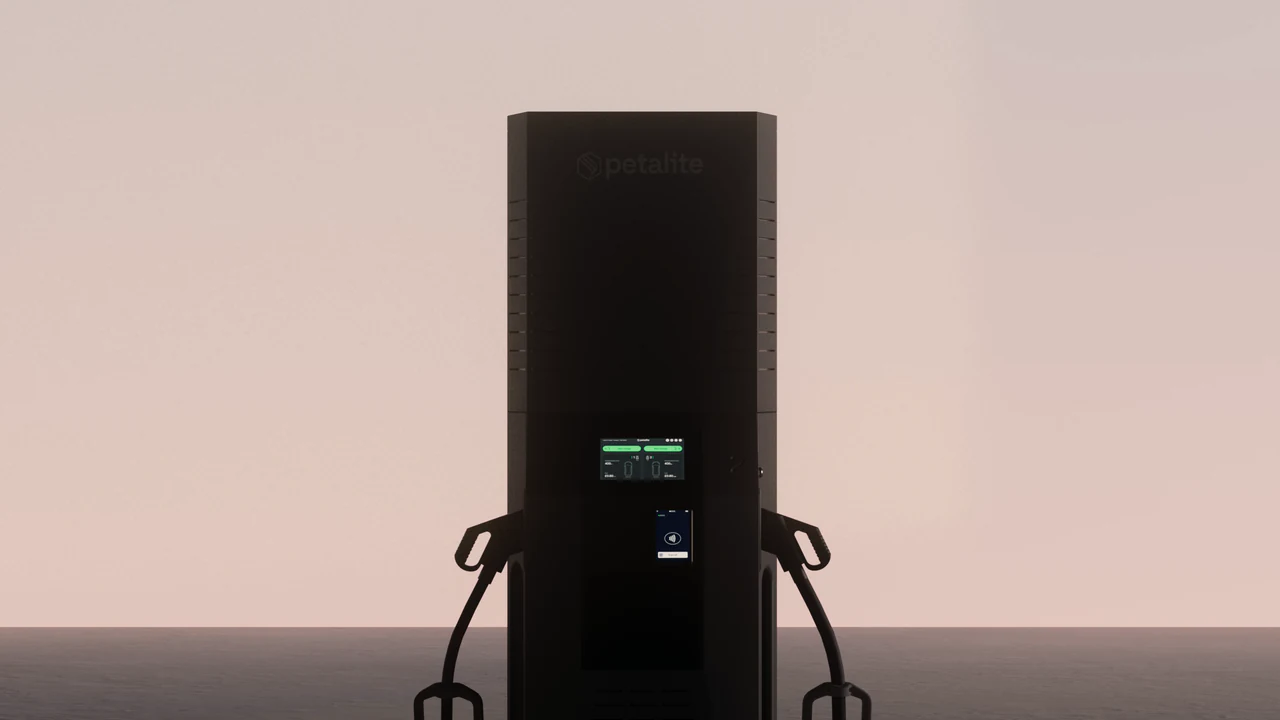
Petalite's 1MW modular charging system had to be explained to more than one audience: people who need the engineering logic, and people who need to see what the charger is and how a driver uses it. XO3D built one production model from Petalite's CAD while the charger was still in development, then made outputs for different jobs.
The case study lists two 4K engineering films for function, scale and modular logic; two 4K explainers for the driver experience, cable behaviour and interface; an HD homepage loop; six 6K lifestyle stills and seven 4K studio renders; and vertical social cuts. They were built for presentations, the website, paid social and trade-show displays. The product details were reviewed as the design developed.
Four scales
From component to installation.
A charging system is easier to understand when each view has one job. Petalite's films move between four scales: a component, the unit, the unit in use and a whole site. Each view answers a different question. The frames below come from the Petalite project. They show the intended design for communication; they do not show measured performance, energy savings or a real installation.
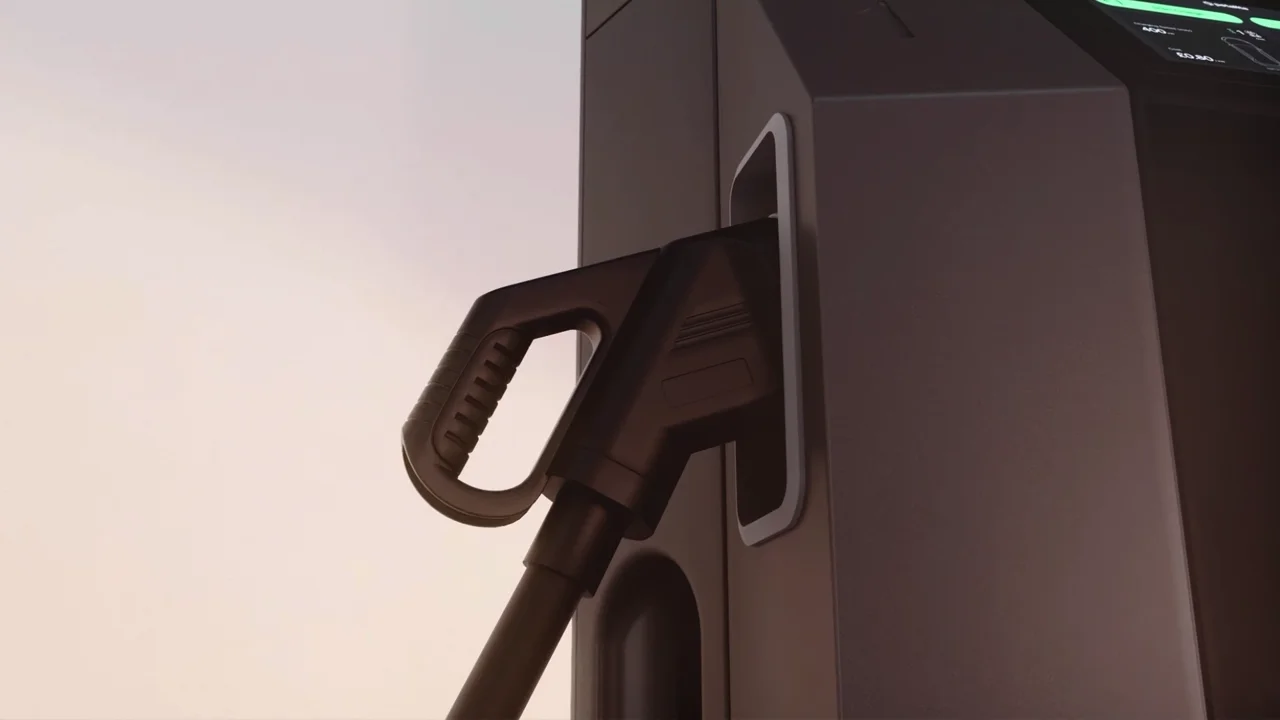
1. Component. The connector in its holster. A close view shows a part the viewer will handle.
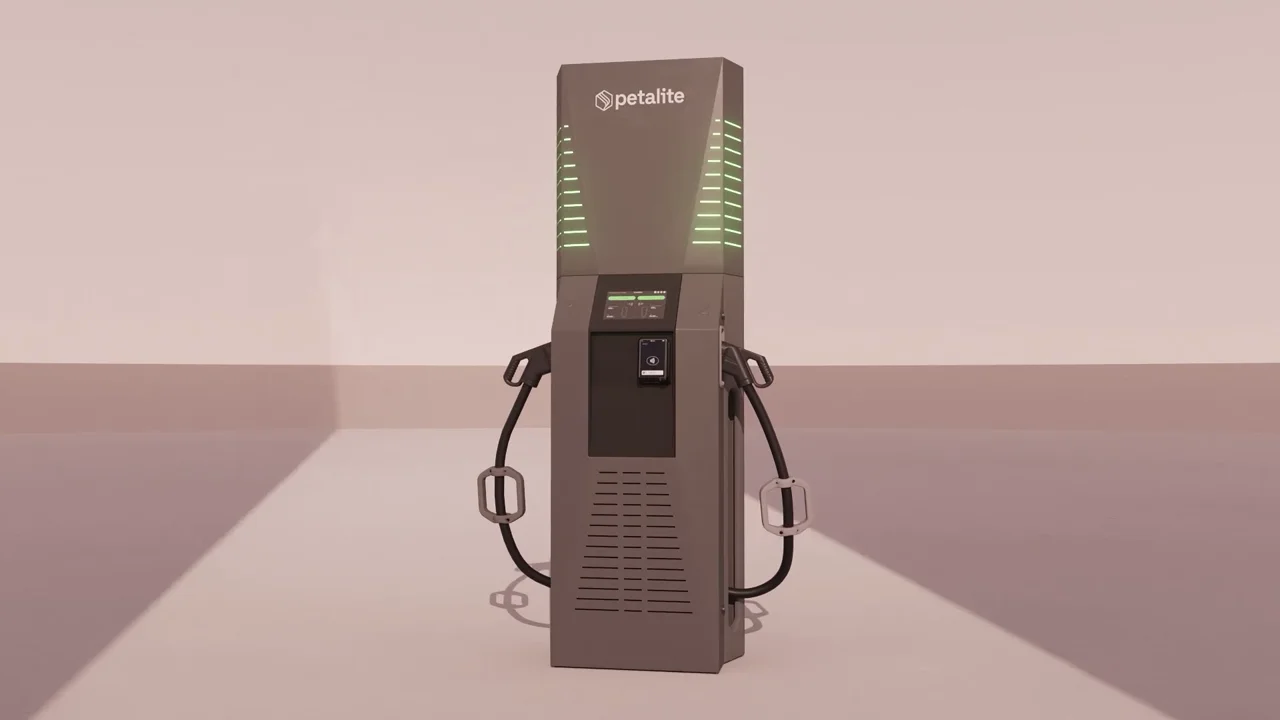
2. Unit. The whole charge post. This view shows the product's form and layout.
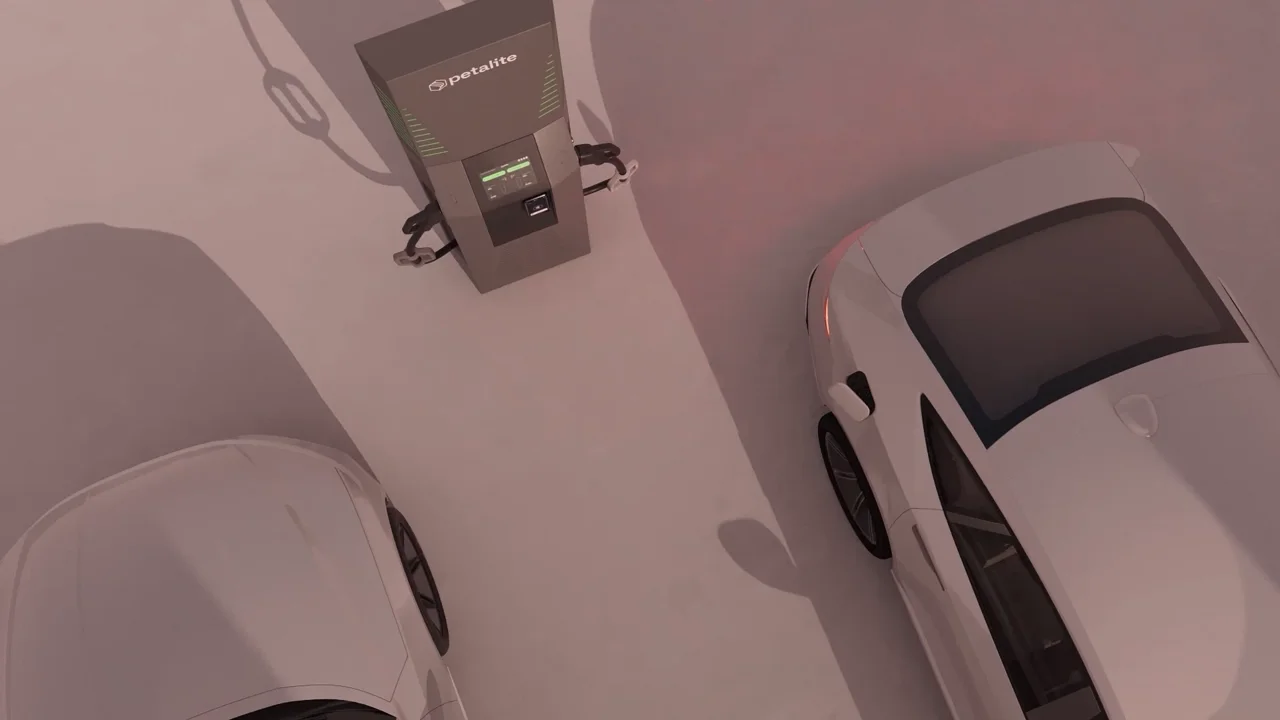
3. In use. The post beside two cars. This view shows scale and how a driver approaches it. It is a CGI scene, not a photographed site.
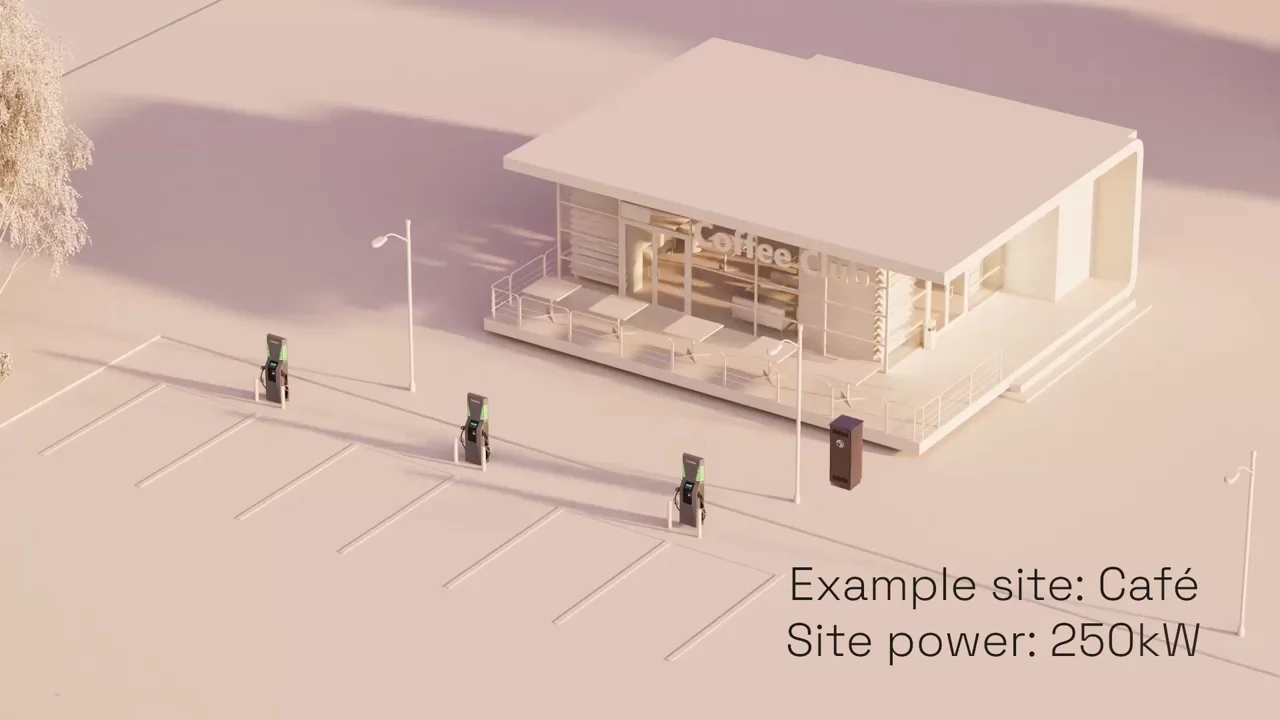
4. System. An example site from one of the Petalite animations, which steps through several example sites. It is a conceptual diagram, not a real installation.
See how technical CGI is reviewed before a mechanism or system view is used.
What We Produce
For EV and cleantech brands.
Launch before manufacturing completes
XO3D works from CAD files and engineering references to produce launch visuals before a finished product can be photographed. Petalite's films and stills were built from CAD while the charger was still in development. The schedule is planned against your launch date, with unresolved details listed for approval.
Making complex technology comprehensible
Animation sequences that show how a system works, such as modular assembly or the charging sequence, at the level of technical detail each audience needs. Mechanism sequences follow the approved source, and your engineering team reviews what they show.
Product form and function, explained
CGI for investor presentations, pitch decks and stakeholder meetings. It shows a non-technical audience what the product is, how it works and where it will be used. It explains the product; it does not replace the evidence an investor will ask for.
Built from the approved source
Renders and animations for technical sales materials and distributor documents, built from the approved CAD and reviewed by your engineers. Agree which details are exact and which are simplified for clarity. These are communication visuals, not engineering drawings or compliance evidence.
Commissioning
What to bring to the brief.
An EV or cleantech film is only as accurate as the source it is built from. These are the inputs we ask for on a new brief. They are proposed requirements for your project, not a record of how every past job ran.
| Input | Why it matters |
|---|---|
| Product revision and CAD | Names the version every output will show, so later changes can be traced. |
| Intended audience and channels | Decides which views are needed: engineering detail, the driver experience or the site. |
| Approved operating description | Your own account of how the system works, so any motion follows it rather than a guess. |
| Reference materials | Finish samples, photographs and earlier visuals, so materials and markings can be checked. |
| Named technical reviewer | The person who confirms that what each shot shows is right before it is used. |
- 01Initial scope: the outputs, audiences and source available.
- 02Version agreement: which revision each output shows, and what is still provisional.
- 03Visual review: the technical reviewer and the creative lead check the shots.
- 04Release: approved outputs are delivered for their agreed use.
If the product is still changing, plan the work with pre-manufacture visualisation. Collect the inputs with the product CGI brief template, then send your EV or cleantech brief.
FAQ
EV & cleantech CGI questions.
Can you work with products that are still in active development?
Do you sign NDAs for cleantech projects?
Can you produce CGI for both investor and consumer audiences?
Start the conversation
Working on EV or cleantech product visualisation?
Tell us about the product and what stage of development it's at. We'll tell you what's possible and how we'd approach it.