
XO3D Studio · Thinking
VFX house or product CGI studio?
A VFX house is built for film and television. A product CGI studio is built for product launches, and the product is the whole focus.

When a brand asks me whether to hire a VFX house or a specialist product CGI studio for its product launch film, I tell them it depends on what kind of launch they are trying to achieve and what they are trying to sell. But for products, a specialist product CGI studio should be able to do anything a VFX house can do.
A VFX house is built for film and television: the Marvel films, Game of Thrones, work like that. It can take on almost anything, from feature films to adverts.
A specialist product CGI studio makes marketing films for product launches, a lot of them for tech brands. It brings VFX into that work too, but everything it makes is aimed at a launch.
This page is about choosing a supplier for product marketing work. It is not about feature film or cinema VFX, which XO3D does not do. Capabilities overlap and differ from team to team, so the guide sections below set out what to check for your own brief.
People, pipeline, software
How a VFX house works differently.
The pipeline is very similar. The differences are in the software and the people.
A lot of the software a VFX house uses is a bit different from what a product CGI studio uses, though some of it overlaps: Houdini and Cinema 4D turn up in both. A VFX house also runs very specialist software for in-depth simulation, and the teams behind the biggest film franchises have software of their own.
A VFX house also has much larger teams, with different people working on each stage of a project. A product CGI studio's teams are smaller, and they specialise in product films and product launches.
Where the attention goes
The product has to be exactly right.
On a lot of the product launches we work on at XO3D, the CAD has to be accurate to the millimetre, and the product has to be represented exactly as it is.
Some VFX houses work to a much looser tolerance, especially on texturing. They tend to focus on the creative, abstract kind of shot rather than the detail of a product. At XO3D the focus is the intricate detail of the product and its textures.
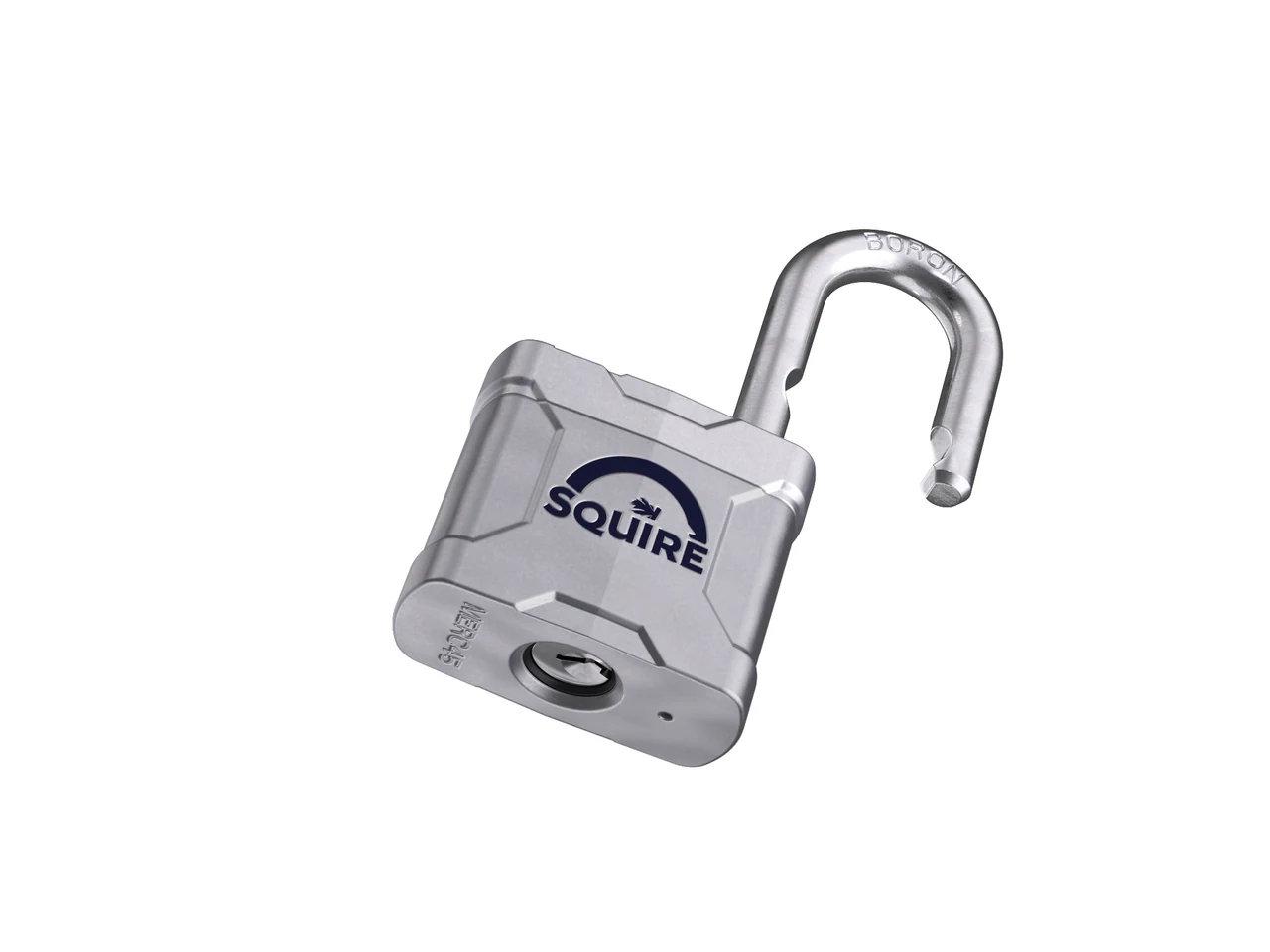
On the exploded films we made for Squire with Curious Agency, the order in which the lock's parts separate was built from Squire's engineering data, so the sequence is technically accurate, not just good to look at.
That is what goes wrong when a product is treated as a small add-on inside a bigger VFX job. The product details, the measurements and the tolerances don't get the same attention. At a product CGI studio, the product details and the launch assets are the whole focus, so the result is true to life.
Guide
Agree what “accurate” means for your product.
Whichever supplier you choose, agree the standard before work starts. Which geometry, product revision, finishes, labels and moving relationships must be shown exactly? Who owns the source files, and who approves the images? A CAD file can need preparation before rendering, and it often holds no visual materials, so finish references matter too.
The intended use sets the review standard. A marketing film needs the product to look right to a buyer. A rendered image does not certify engineering, safety or function.
When a VFX house is right
When to go to a VFX house instead.
If you are making shots for a feature film or a series, or a film's opening sequence, go to a VFX house. That is what they are built for, and it is not what we do.
If you are launching a product, you don't need a VFX house to get VFX. At XO3D we have the tools to bring VFX into the launch film and the stills.
A brand that goes to a VFX house is usually looking for a totally different output.
Guide
Which kind of supplier to investigate first.
Product CGI studios often focus on product detail, launch imagery and the assets around them. VFX teams may specialise in integration, simulation or shot work across advertising, film and other formats. The two overlap, and every team is different. Use the table to decide where to start looking, not as a rule or a ranking.
| What you need | Required outcome | Evidence to ask for | Who might lead |
|---|---|---|---|
| Product-only imagery: stills, a launch film, exploded views | Accurate product detail, finish and launch assets | Finished work on a comparable product, and who made each part | Often a product-focused studio |
| A product integrated into a filmed commercial | CGI that sits in live-action shots | Comparable composites, and who did the tracking and grade | An integration specialist, or a product studio and production team working together |
| A simulation-led shot: water, fabric, smoke, particles | A directed effect that reads at the size it is shown | A finished shot with a similar effect | A provider with demonstrated simulation work of that kind |
| A large multi-shot VFX sequence for a campaign | Many shots, often with live action and complex effects | Comparable sequences, and the team size behind them | A team that can show work at that scale |
| Feature film or episodic sequence | Shots for cinema or television | Film and television credits | A film VFX facility. XO3D is not the right supplier for this. |
Live action and CGI
How the handover should work.
When a film mixes live action and CGI, the CGI team needs the live action first. We map the camera movements in the 3D software so the CGI matches the live action perfectly and seamlessly.
Then there is a lot of back and forth between the live-action team and the CGI team to make sure the shots are seamless. It needs a perfect grade, so that the eye can't see the join or notice it. The best CGI is not noticed.
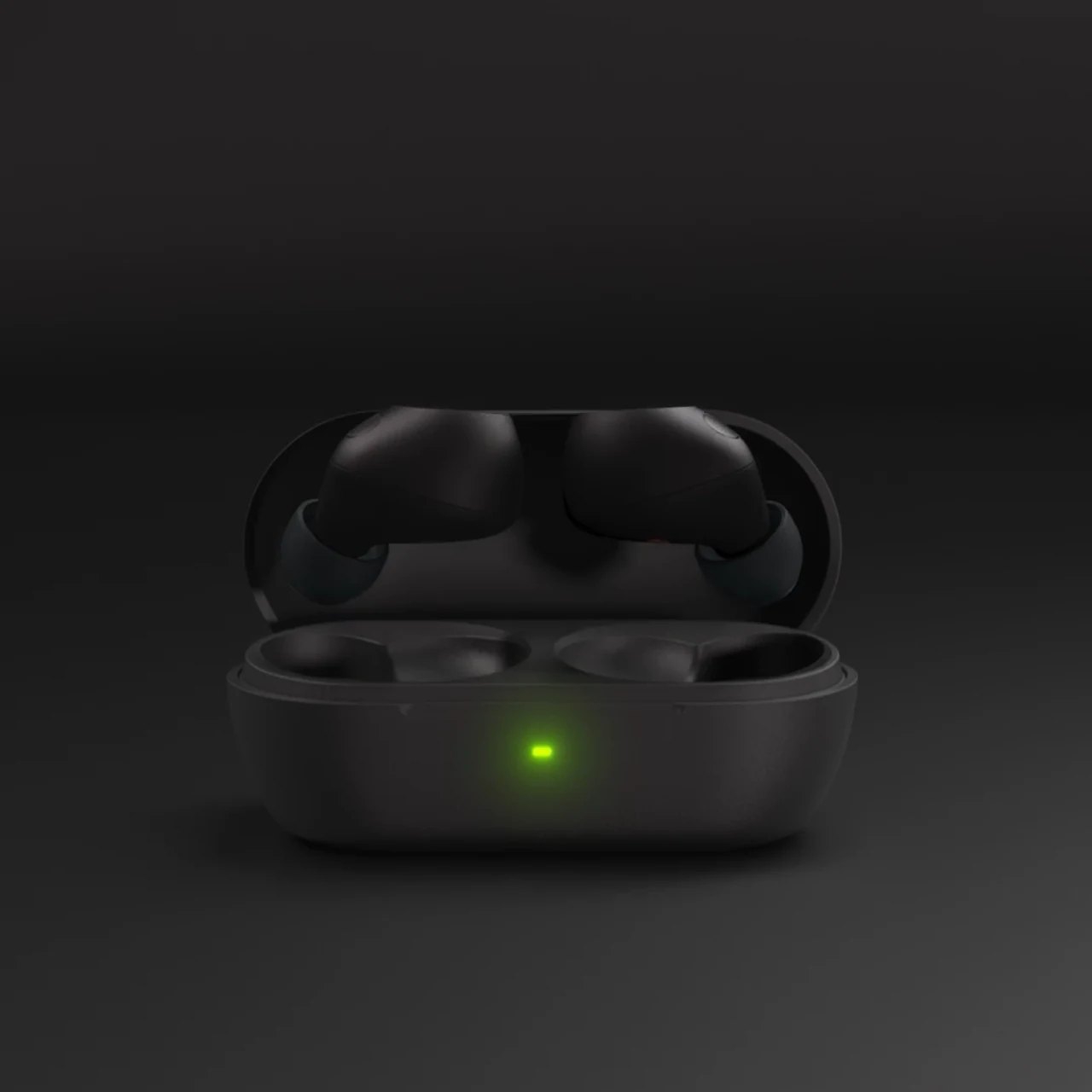
For ImageNova's launch work on Sony's WF-C710 earphones, we built two short animated segments to integrate into the full-length commercial ImageNova shot, and composited rendered colourways into ImageNova's product photography. Our guide to what product CGI is sets CGI, VFX, 3D rendering and 3D animation side by side.
Guide
Plan the handover before the shoot.
The handover works best when the production, creative and CGI teams talk early. Agree the shot design, the camera information to record, the reference to capture, the source assets, the delivery format and who approves each stage. Once the shot material exists, the CGI and the composite are aligned to the agreed creative.
If someone needs to supervise on set, name that provider and put it in their scope. On the Sony project, XO3D’s part was the animated segments and the composites; ImageNova produced the shoot.
Your CAD
Does the state of your CAD change the answer?
Not much, in my view. A lot of VFX software can't actually read CAD data properly, and CAD is much more difficult to work with, so a VFX house will usually remodel it from scratch before it can be used. That is very similar to what we have to do at XO3D.
Sometimes the CAD is all there is. We finished Petalite's 31-second launch film for its 1MW charger in 4K before a single unit was manufactured.
Guide
Treat your CAD as a source to assess.
Ask any supplier to look at what you have before they quote: CAD, meshes, photographs and physical samples. They should confirm what you are allowed to use, and list the details that are missing or still changing. Some files can be prepared and used; others need rebuilding or more reference. Which software reads a file, and how much work it needs, is decided project by project. The CAD to CGI guide covers the handoff.
Reading a showreel
How to tell them apart from the work.
Look at the showreels. You will see totally different types of work.
A VFX house shows the film and TV work it has done. On the reel of one of the very best, Wētā FX, you will find The Lord of the Rings and Avatar. Wētā is one of the top VFX houses in the world. It can't really be compared to a product CGI studio, because its work is for film and cinema, not for product launches and product marketing.
So the difference between the two showreels is obvious. One is focused on product launches. The other is focused on cinema.
Before you sign
Three questions to ask any studio.
Whichever kind of studio you are talking to, ask these three before you sign.
Have you worked on a product like this before?
Can you show me work you have done before for this kind of product?
What is your process for feedback, and how will you work with our team?
Guide
What our examples show, and what to ask next.
- Sony WF-C710, with ImageNova. A defined CGI contribution to a wider campaign. XO3D made two short animated segments for ImageNova’s commercial and composited rendered colourways into ImageNova’s photography. ImageNova ran the wider live-action and photography production.
- Squire locks, with Curious Agency. Explaining how parts relate. XO3D made the exploded films; Curious Agency was the partner on the project.
- Petalite EV charger. Planning from product information that was still changing. The film and stills were made while the CAD was still being updated.
A reel shows finished work, not who did each part. After the three questions above, these help you compare proposals:
- Can you show a comparable finished shot, and tell me exactly which part of it you made?
- Who will lead the creative, who approves product accuracy, and who leads any live-action integration?
- Which files do you need from us, and what rights do you need to use them?
- How will changes, review rounds, delivery formats and source files be agreed?
- Who is the named decision owner on your side, and on ours?
When you brief us, tell us about the product source, any live action and the details that must be right. Add who is responsible for the shoot, if there is one, and when you need the first asset. See product CGI films, our case studies, the CGI brief template or how to brief a CGI studio.
In one sentence
When to hire XO3D, and when not to.
Hire XO3D when you need precise product animation, product marketing films and stills or a product launch film, and you want to see the high-end detail of your product: exploded views, textures, the product itself in focus. Don't come to XO3D for film or TV work, such as shots for a feature film or a movie's opening sequence.
It all comes down to marketing a product. That is what XO3D focuses on: marketing films and marketing stills for product launches.
Further reading: Studio, platform, VFX house or agency? compares six kinds of 3D content partner and what each is best at.
Question
In short.
What is the difference between a VFX house and a product CGI studio?
The two overlap. A VFX house usually works on shots for film, television and large advertising, often with live action and complex effects. A product CGI studio focuses on product detail, launch films and stills. The right choice depends on the outputs you need, how much live-action integration is involved and the evidence each supplier can show.
Your next project
Put the idea into the brief.
VFX House or Product CGI Studio? starts with what you are making. If it is a product launch, use the work below to compare the treatment with your references, then identify the decisions your project needs to resolve.
A route to consider
Product CGI Films
A product film developed through creative treatment, storyboard, animatic, product review and final picture and sound.
Bring these three things.
- Does the product exist yet, or only as CAD?
- Will the film include live action?
- Which product details must stay exact?
Start with an outline. We review the product, intended outputs and timing before agreeing the production scope.